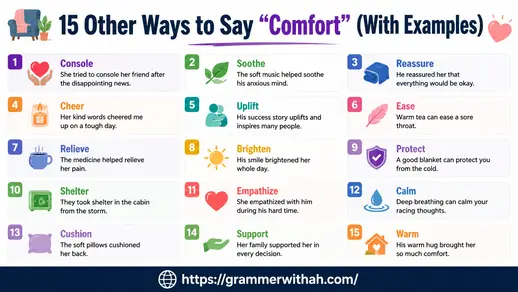
This guide to Other Ways to Say “Comfort” helps you choose warm, clear words for emotional care, physical ease, and everyday support with confidence. The words we use can change how someone understands a message or feels about a situation. Sometimes, comfort is the perfect expression, but other terms can communicate the same meaning with more warmth, kindness, and emotional depth. For example, ease, relief, solace, and reassurance are useful alternatives, although each has a slightly different meaning. Physical comfort relates to physical ease, freedom from pain, and difficulty, while emotional care, understanding, and peace of mind describe how someone feels inside. Choosing the right words helps you express feelings, keep your writing style fresh, and avoid repeating the same expressions.
Whether you’re talking to a friend, preparing a personal message, writing a card, or communicating professionally, thoughtful expressions can create a stronger personal connection. Words such as solace, consolation, support, encouragement, and empathy show compassion and genuine care. Similarly, supportive words and comforting language can provide reassurance when someone experiences sadness, stress, or worry. A simple message can sometimes feel more meaningful than a long explanation. Good communication depends on choosing words that help others feel understood and valued. These expressions also strengthen relationships, encourage positive feelings, and build an emotional connection with people.
In this guide, you’ll discover 15 other ways to say comfort, along with their meanings, definitions, tones, and practical examples. Some alternatives describe relaxation, security, and a calm physical state, while others focus on emotional support, compassionate care, and mental peace. For instance, relief from stress can help reduce pain or relieve worry, while encouragement can build confidence and improve emotional well-being and physical well-being. These expressions give you fresh vocabulary for personal support, professional situations, and everyday conversations. Understanding the suitable choice makes it easier to communicate naturally, express relief, and offer assistance when someone needs help. Whether you’re writing a card or having a conversation, the right expression can help you comfort someone and share the feelings you genuinely want to express.
What Does “Comfort” Mean?
Comfort means a feeling of physical ease, emotional peace, or freedom from worry, pain, and distress. It can describe something that makes a person feel relaxed, safe, or happy. For example, a soft blanket may provide physical comfort, while a kind conversation can bring emotional comfort to someone going through a difficult time. The word also works as a verb when you want to describe helping someone feel better. For instance, you might comfort a friend after a disappointing experience. Depending on the situation, comfort can communicate kindness, relief, security, reassurance, or a sense of well-being.
Common Situations Where “Comfort” Is Used
People use the word comfort in many everyday situations. In personal conversations, it often describes the emotional support someone receives from friends, family members, or partners. A person might say that talking to a close friend brings comfort during a stressful time. In text messages, the word can express sympathy, care, and reassurance.
Comfort also appears in conversations about physical surroundings. For example, people discuss comfortable clothes, furniture, homes, and workplaces. In professional communication, it can describe employee well-being, customer satisfaction, or a welcoming environment. Writers also use the word when discussing emotional health, relationships, and personal experiences. Depending on the situation, an alternative may sound more specific, warmer, or more natural.
Is It Professional or Polite to Say “Comfort”?
Yes, comfort is both polite and professional when used appropriately. It works well in personal conversations, workplace communication, customer service, and formal writing. For example, a company might discuss customer comfort when describing its services, while a manager might offer comfort and support to an employee experiencing a difficult situation.
The word is also friendly and emotionally warm when used with people you care about. However, it can sometimes sound broad or slightly general. If you want to express emotional reassurance, words such as solace or reassurance may communicate your intention more clearly. Similarly, ease may work better when discussing physical comfort or convenience. The best choice depends on your audience, message, and intended feeling.
Advantages and Disadvantages of Saying “Comfort”
Advantages
One major advantage of using comfort is its versatility. It describes both physical and emotional experiences, making it useful in everyday conversations and professional writing. Most English speakers understand the word easily, so it rarely creates confusion. It also carries a positive and caring meaning when used to describe emotional support, relaxation, or safety. Another benefit is that it works as both a noun and a verb, giving writers more flexibility.
Disadvantages
Although comfort is a useful word, it may not always express a specific feeling. For example, emotional reassurance and physical relaxation are different experiences, but both can be described as comfort. Repeating the same word can also make writing less interesting. In some situations, a more precise expression communicates the intended message better. Words such as relief, solace, and security help explain exactly what kind of comfort someone experiences.
Synonyms for “Comfort”
- Ease
- Relief
- Reassurance
- Solace
- Consolation
- Support
- Warmth
- Coziness
- Peace of Mind
- Security
- Contentment
- Well-Being
- Make Someone Feel at Ease
- Take Comfort In
- A Sense of Calm
1. Ease
Meaning
Ease describes a state of being relaxed, comfortable, or free from difficulty. It is especially useful when comfort involves physical relaxation or freedom from stress. The word can also describe a situation that feels simple and natural.
Definition
Ease means freedom from discomfort, worry, tension, or difficulty.
Detailed Explanation
Ease is one of the most natural alternatives when describing a comfortable physical or emotional condition. Unlike comfort, which can refer to emotional support or physical well-being, ease often emphasizes the absence of tension or difficulty. It creates a relaxed and uncomplicated feeling. You can use it when discussing a peaceful environment, an easy conversation, or someone’s ability to relax around others.
Scenario Examples
- Scenario: A friend feels nervous before meeting new people.
Example: I hope everyone makes you feel at ease at the party. - Scenario: You’re describing a relaxing workplace.
Example: The new office was designed for the ease and comfort of employees. - Scenario: Someone feels relaxed while talking to you.
Example: She speaks with ease whenever we’re together.
Best Use
Use ease in everyday conversations, professional writing, and situations involving relaxation or freedom from stress. It also works well when describing physical comfort and natural communication.
Tone
Tone: Relaxed, friendly, and natural.
Ease sounds gentle and uncomplicated. It emphasizes how comfortable or relaxed a person feels rather than the emotional support they receive.
2. Relief
Meaning
Relief describes the feeling someone experiences when pain, worry, stress, or difficulty becomes less intense. It is closely related to comfort because both can involve feeling better after an unpleasant experience.
Definition
Relief means a reduction in pain, worry, pressure, or distress.
Detailed Explanation
Relief is more specific than general comfort because it usually follows a stressful, painful, or worrying situation. While comfort can exist even when nothing is wrong, relief suggests that something unpleasant has improved. It communicates a sense of release and emotional lightness. Choose this expression when you want to describe the positive feeling that comes after receiving good news, solving a problem, or escaping a difficult situation.
Scenario Examples
- Scenario: Your friend finally receives good news about an important examination.
Example: I know passing that exam must have brought you so much relief. - Scenario: A stressful project is finally completed.
Example: Finishing the presentation gave our entire team a sense of relief. - Scenario: Someone has been experiencing physical pain.
Example: This warm compress should provide some relief.
Best Use
Use relief when discussing stress, worry, physical pain, difficult experiences, or situations that have improved. It works in personal conversations, medical contexts, and professional communication.
Tone
Tone: Reassuring, positive, and emotionally expressive.
Relief communicates that a burden has become lighter. It often carries more emphasis on improvement than the general word comfort.
3. Reassurance
Meaning
Reassurance describes words or actions that help someone feel less worried, uncertain, or afraid. It provides emotional comfort by reminding people that they are supported or that things may turn out well.
Definition
Reassurance means something that restores confidence or reduces someone’s worries.
Detailed Explanation
Reassurance is particularly useful when comfort comes from communication rather than physical surroundings. It focuses on helping someone feel safe, confident, and less anxious. Unlike comfort, which can describe a general feeling, reassurance usually involves a message, promise, explanation, or supportive action. It is a thoughtful choice when someone needs encouragement or wants to know that everything is being handled.
Scenario Examples
- Scenario: Your partner feels worried about an upcoming interview.
Example: Your encouragement and reassurance mean so much to me. - Scenario: A customer is concerned about a delayed order.
Example: Our support team will provide regular updates and reassurance throughout the process. - Scenario: A student is nervous about making a presentation.
Example: Her teacher offered reassurance before she stepped onto the stage.
Best Use
Use reassurance in personal conversations, relationships, customer service, workplace communication, and situations involving uncertainty or anxiety.
Tone
Tone: Caring, supportive, and respectful.
This expression feels thoughtful because it focuses on reducing someone’s concerns and rebuilding confidence.
4. Solace
Meaning
Solace refers to emotional comfort during sadness, grief, loneliness, or disappointment. It describes something that helps a person feel less alone when going through a difficult experience.
Definition
Solace means comfort or emotional support during a period of sadness or distress.
Detailed Explanation
Solace has a deeper emotional meaning than ordinary comfort. It is often associated with difficult experiences, such as losing someone, facing disappointment, or dealing with personal struggles. The word can describe support from another person, a meaningful memory, or an activity that brings peace. It sounds slightly more literary and formal than comfort, making it useful when expressing sensitive emotions with care.
Scenario Examples
- Scenario: Someone is grieving the loss of a loved one.
Example: She found solace in the memories they had created together. - Scenario: A friend is going through a lonely period.
Example: I hope our conversations bring you some solace. - Scenario: Someone feels overwhelmed by daily responsibilities.
Example: Spending time in the garden became a source of solace for him.
Best Use
Use solace in emotional conversations, sympathy messages, thoughtful writing, personal reflections, and discussions about grief or difficult experiences.
Tone
Tone: Gentle, compassionate, and heartfelt.
Solace feels emotionally deep and sensitive. It is especially appropriate when ordinary words seem too simple to express someone’s pain or sadness.
5. Consolation
Meaning
Consolation describes something that makes a disappointed, sad, or upset person feel better. It is often associated with receiving encouragement or finding something positive after an unpleasant experience.
Definition
Consolation means comfort given to someone who is disappointed, unhappy, or grieving.
Detailed Explanation
Consolation is similar to comfort, but it usually appears when someone is dealing with disappointment or sadness. It can come from another person’s kind words or from something positive that helps make a difficult situation easier to accept. Unlike reassurance, which reduces worry or uncertainty, consolation focuses more on easing emotional disappointment. It is also common in expressions such as a small consolation, which describes something positive in an otherwise disappointing situation.
Scenario Examples
- Scenario: Your friend loses an important competition.
Example: Knowing you gave your best effort should be some consolation. - Scenario: A student doesn’t get the result they expected.
Example: Her parents offered words of consolation after the examination. - Scenario: A team loses a championship but performs well.
Example: Their strong performance was a small consolation after the defeat.
Best Use
Use consolation in conversations about disappointment, failure, sadness, and loss. It also works in formal writing and thoughtful personal messages.
Tone
Tone: Sympathetic, thoughtful, and gentle.
Consolation sounds caring without ignoring the difficult situation. It acknowledges disappointment while offering something positive.
6. Support
Meaning
Support describes the help, encouragement, or assistance someone receives from another person. It can provide comfort during difficult situations by making people feel understood and less alone.
Definition
Support means help or encouragement given to someone who needs assistance.
Detailed Explanation
Support is broader and more action-focused than comfort. It does not always describe an emotional feeling; it can also involve practical help, advice, or standing beside someone during a challenge. For example, listening to a friend can provide emotional support, while helping someone complete a task offers practical support. Choose this expression when you want to emphasize what someone does rather than simply how comfortable another person feels.
Scenario Examples
- Scenario: A friend is dealing with a difficult family situation.
Example: Thank you for giving me so much support when I needed it. - Scenario: A manager wants employees to feel valued.
Example: Our team provides support to every new employee during their first few weeks. - Scenario: Your partner is working toward an important goal.
Example: I’ll always support you, even when things get challenging.
Best Use
Use support in friendships, relationships, workplace communication, education, customer service, and situations involving practical or emotional assistance.
Tone
Tone: Encouraging, dependable, and caring.
Support sounds active and reassuring. It emphasizes being available and helping someone through a situation.
7. Warmth
Meaning
Warmth describes a feeling of kindness, friendliness, affection, or emotional closeness. It can create comfort by making someone feel welcomed, valued, and accepted.
Definition
Warmth means kindness and affection expressed through words, actions, or behavior.
Detailed Explanation
Warmth is especially useful when comfort comes from human connection. It describes the friendly atmosphere someone creates through a kind attitude, thoughtful words, or caring behavior. Unlike relief, which follows the reduction of stress, warmth focuses on emotional closeness and positive feelings. It can also describe physical warmth, such as the heat of a blanket or a cozy room, so context matters.
Scenario Examples
- Scenario: A family welcomes a new member into their home.
Example: They greeted us with genuine warmth and kindness. - Scenario: You’re writing a thank-you message to a friend.
Example: Your warmth always makes difficult days feel easier. - Scenario: A hotel wants to describe its welcoming atmosphere.
Example: Our staff welcomes every guest with warmth and genuine care.
Best Use
Use warmth in personal messages, relationships, hospitality, customer communication, and descriptions of friendly environments.
Tone
Tone: Affectionate, welcoming, and friendly.
Warmth communicates emotional kindness. It is especially effective when you want to highlight the human connection behind a comfortable experience.
8. Coziness
Meaning
Coziness describes a pleasant feeling of warmth, relaxation, and physical comfort. It is often associated with comfortable surroundings, peaceful environments, and relaxing moments.
Definition
Coziness means a warm, comfortable, and pleasant physical or emotional feeling.
Detailed Explanation
Coziness is more specific than comfort because it usually describes a relaxed atmosphere or comfortable surroundings. Think of a warm blanket, soft lighting, a peaceful living room, or a quiet evening at home. The expression can also suggest emotional closeness when people enjoy a peaceful moment together. However, it is generally more casual and less suitable for serious situations involving grief or emotional distress.
Scenario Examples
- Scenario: You’re describing your favorite place to relax.
Example: I love the coziness of my little reading corner. - Scenario: A friend visits your home during winter.
Example: The fireplace adds so much coziness to this room. - Scenario: You’re sharing a picture of a relaxing evening.
Example: Nothing beats the coziness of a quiet night at home.
Best Use
Use coziness in casual conversations, home descriptions, lifestyle writing, social media captions, and discussions about relaxing environments.
Tone
Tone: Casual, peaceful, and inviting.
Coziness creates a friendly image of warmth and relaxation. It works best when describing pleasant surroundings rather than serious emotional support.
9. Peace of Mind
Meaning
Peace of mind describes a feeling of calmness that comes from knowing everything is safe, settled, or under control. It provides comfort by reducing uncertainty and worry.
Definition
Peace of mind means a calm mental state without unnecessary worry or anxiety.
Detailed Explanation
Peace of mind is a useful expression when comfort comes from feeling secure about a situation. It differs from general comfort because it focuses mainly on mental calmness rather than physical relaxation or emotional affection. For example, knowing that your family is safe can bring peace of mind even when you are far away. The expression is also common in professional communication, especially when discussing reliable services, protection, and customer confidence.
Scenario Examples
- Scenario: Someone buys insurance to protect their family.
Example: Having the right coverage gives me peace of mind. - Scenario: A parent receives confirmation that their child arrived safely.
Example: Your message has given me peace of mind. - Scenario: A business explains the value of its customer service.
Example: Our reliable support gives customers peace of mind.
Best Use
Use peace of mind in personal conversations, business writing, customer communication, financial discussions, and situations involving safety or certainty.
Tone
Tone: Reassuring, calm, and confident.
This expression sounds thoughtful and dependable because it emphasizes freedom from worry.
10. Security
Meaning
Security describes a feeling of being protected, safe, and free from danger or serious uncertainty. It can create comfort by helping someone feel that their well-being is protected.
Definition
Security means protection from danger, harm, or unwanted risks.
Detailed Explanation
Security is closely connected to comfort when people feel safe in their surroundings or relationships. However, it emphasizes protection more strongly than ordinary comfort. Emotional security can develop through trust, honesty, and dependable relationships, while physical security involves protection from danger. Choose this word when you want to communicate safety, stability, or confidence rather than simple relaxation.
Scenario Examples
- Scenario: A child feels safe with a trusted family member.
Example: Her parents provide the security she needs to feel confident. - Scenario: A couple discusses the importance of trust.
Example: Honesty and communication create a sense of security in our relationship. - Scenario: A company explains its workplace policies.
Example: We prioritize employee security and workplace safety.
Best Use
Use security in discussions about relationships, personal safety, family life, workplace policies, and financial protection.
Tone
Tone: Dependable, serious, and reassuring.
Security communicates stability and protection. It is a stronger choice when the main concern is feeling safe rather than simply relaxed.
11. Contentment
Meaning
Contentment describes a peaceful feeling of happiness with your current situation. It can bring comfort by helping someone appreciate what they already have.
Definition
Contentment means a state of satisfaction and quiet happiness.
Detailed Explanation
Contentment is more closely connected to inner satisfaction than physical comfort or emotional reassurance. It describes the feeling of being happy without constantly wanting something different or more. For example, someone may experience contentment while spending a quiet evening with family or enjoying a simple lifestyle. Unlike relief, which often follows a stressful experience, contentment can exist naturally without a problem needing to be solved.
Scenario Examples
- Scenario: A friend enjoys a simple and peaceful lifestyle.
Example: She finds contentment in spending time with her family. - Scenario: Someone reflects on their personal achievements.
Example: I’m finally feeling a sense of contentment with where I am in life. - Scenario: You’re describing a peaceful weekend.
Example: The quiet morning filled me with contentment.
Best Use
Use contentment in personal reflections, thoughtful conversations, lifestyle writing, relationships, and discussions about happiness and satisfaction.
Tone
Tone: Peaceful, positive, and reflective.
Contentment expresses a deeper sense of inner happiness. It works particularly well when comfort comes from appreciating life as it is.
12. Well-Being
Meaning
Well-being describes a person’s overall physical, emotional, and mental health. It is related to comfort because a healthy and balanced life often involves feeling safe, relaxed, and supported.
Definition
Well-being means the overall state of a person’s health, happiness, and quality of life.
Detailed Explanation
Well-being is broader than comfort because it includes several parts of a person’s life. It can involve physical health, emotional balance, mental peace, and positive relationships. While comfort often describes a particular feeling or experience, well-being refers to a person’s overall condition. This expression is especially useful in professional, educational, and healthcare discussions where the goal is to describe someone’s general quality of life.
Scenario Examples
- Scenario: A company introduces new employee wellness programs.
Example: The organization is committed to improving employee well-being. - Scenario: A school creates a supportive learning environment.
Example: Students’ emotional well-being is just as important as their academic progress. - Scenario: Someone talks about making healthier lifestyle choices.
Example: Regular exercise and enough sleep contribute to overall well-being.
Best Use
Use well-being in professional writing, healthcare discussions, education, workplace communication, and conversations about physical or emotional health.
Tone
Tone: Professional, thoughtful, and caring.
Well-being sounds broader and more formal than comfort. It is useful when discussing a person’s overall health rather than one specific comfortable experience.
13. Make Someone Feel at Ease
Meaning
Make someone feel at ease means helping another person become relaxed, confident, and comfortable. It is particularly useful when describing actions that reduce nervousness or awkwardness.
Definition
This expression means to help someone feel relaxed, welcomed, and less worried.
Detailed Explanation
Unlike comfort, which can describe a feeling or an action, this expression clearly explains how one person helps another feel relaxed. It is especially natural in social and professional situations where someone may feel nervous or uncertain. A friendly greeting, a patient explanation, or a welcoming attitude can make someone feel at ease. This expression is more conversational and action-focused, making it useful when discussing how people treat others.
Scenario Examples
- Scenario: A new employee feels nervous on their first day.
Example: My manager introduced everyone and made me feel at ease. - Scenario: A friend meets your family for the first time.
Example: My parents did everything they could to make him feel at ease. - Scenario: A customer visits your business for the first time.
Example: Our friendly staff will make you feel at ease from the moment you arrive.
Best Use
Use make someone feel at ease in personal conversations, customer service, workplace communication, hospitality, and situations involving nervousness or unfamiliar surroundings.
Tone
Tone: Friendly, welcoming, and considerate.
The expression sounds natural because it focuses on making another person feel accepted and relaxed.
14. Take Comfort In
Meaning
Take comfort in means finding emotional support, hope, or reassurance in something during a difficult situation. It describes an individual’s response to an experience, thought, memory, or belief.
Definition
Take comfort in means to find relief or emotional strength through something reassuring.
Detailed Explanation
This expression is slightly different from the noun comfort because it describes where someone finds emotional strength. A person might take comfort in family memories, supportive messages, personal beliefs, or the knowledge that they did their best. It is often used during difficult or uncertain times. The phrase also sounds natural in thoughtful conversations and formal writing when discussing how someone handles disappointment or sadness.
Scenario Examples
- Scenario: Someone is missing a family member who lives far away.
Example: I take comfort in knowing that we’ll see each other soon. - Scenario: A student feels disappointed after an examination.
Example: She took comfort in the fact that she had prepared honestly. - Scenario: A family is remembering a loved one.
Example: We take comfort in the beautiful memories we shared.
Best Use
Use take comfort in in personal messages, emotional conversations, sympathy writing, reflective articles, and situations involving sadness or uncertainty.
Tone
Tone: Thoughtful, emotional, and reassuring.
This phrase feels personal because it describes the source of someone’s emotional strength rather than simply stating that they feel better.
15. A Sense of Calm
Meaning
A sense of calm describes a peaceful feeling in which someone experiences less stress, tension, or emotional disturbance. It is useful when comfort comes from a quiet mind or relaxing environment.
Definition
A sense of calm means a feeling of peace, relaxation, and freedom from tension.
Detailed Explanation
This expression focuses on peacefulness rather than general physical or emotional comfort. It can describe the feeling someone experiences after meditation, a quiet walk, or a supportive conversation. Unlike reassurance, it does not necessarily involve another person’s words or actions. It can develop naturally through surroundings, personal habits, or a change in circumstances. Choose it when you want to describe a calm emotional state without suggesting that a specific problem has been solved.
Scenario Examples
- Scenario: Someone starts their morning with meditation.
Example: A few minutes of meditation give me a sense of calm before work. - Scenario: A friend visits a peaceful natural location.
Example: The sound of the ocean brings a wonderful sense of calm. - Scenario: A stressful meeting finally ends.
Example: Once the discussion was over, everyone felt a sense of calm.
Best Use
Use a sense of calm in personal reflections, wellness writing, everyday conversations, social media captions, and descriptions of peaceful environments.
Tone
Tone: Gentle, peaceful, and reflective.
This expression creates a quiet and relaxing feeling. It is particularly effective when describing emotional balance or a peaceful atmosphere.
FAQs
What are the best synonyms for comfort?
Some of the best synonyms for comfort include ease, relief, solace, consolation, reassurance, support, encouragement, peace, relaxation, and security. Each word has a slightly different meaning, so choose one that matches your situation.
What is another word for emotional comfort?
Solace, reassurance, consolation, empathy, and emotional support are useful alternatives to emotional comfort. These words describe kindness, understanding, and care when someone feels sad, worried, or stressed.
How can I use comfort in a professional message?
You can use words such as reassurance, support, encouragement, and assistance in professional communication. For example, you might say, “Your support and guidance have given me confidence during this difficult project.”
What is the difference between comfort and relief?
Comfort describes a feeling of ease, safety, or support, while relief usually means that pain, stress, or worry has decreased. For example, a supportive conversation can provide comfort, while hearing good news can bring relief.
How can I make someone feel comfortable with words?
Use kind, thoughtful, and reassuring language. Simple expressions such as “I’m here for you,” “You can count on me,” and “Everything will be okay” can help someone feel understood, supported, and less alone.
Conclusion
Learning other ways to say comfort helps you express feelings with more warmth and clarity. Words such as solace, reassurance, relief, support, and encouragement give you different ways to show kindness and understanding. Whether you’re writing a personal message, talking to a friend, or communicating professionally, choosing the right expression makes your words more meaningful.
You don’t always need a long explanation to make someone feel better. Sometimes, a few thoughtful words can provide the emotional support they need. Explore these alternatives, practice using them, and choose expressions that match your message and the feelings you want to share.