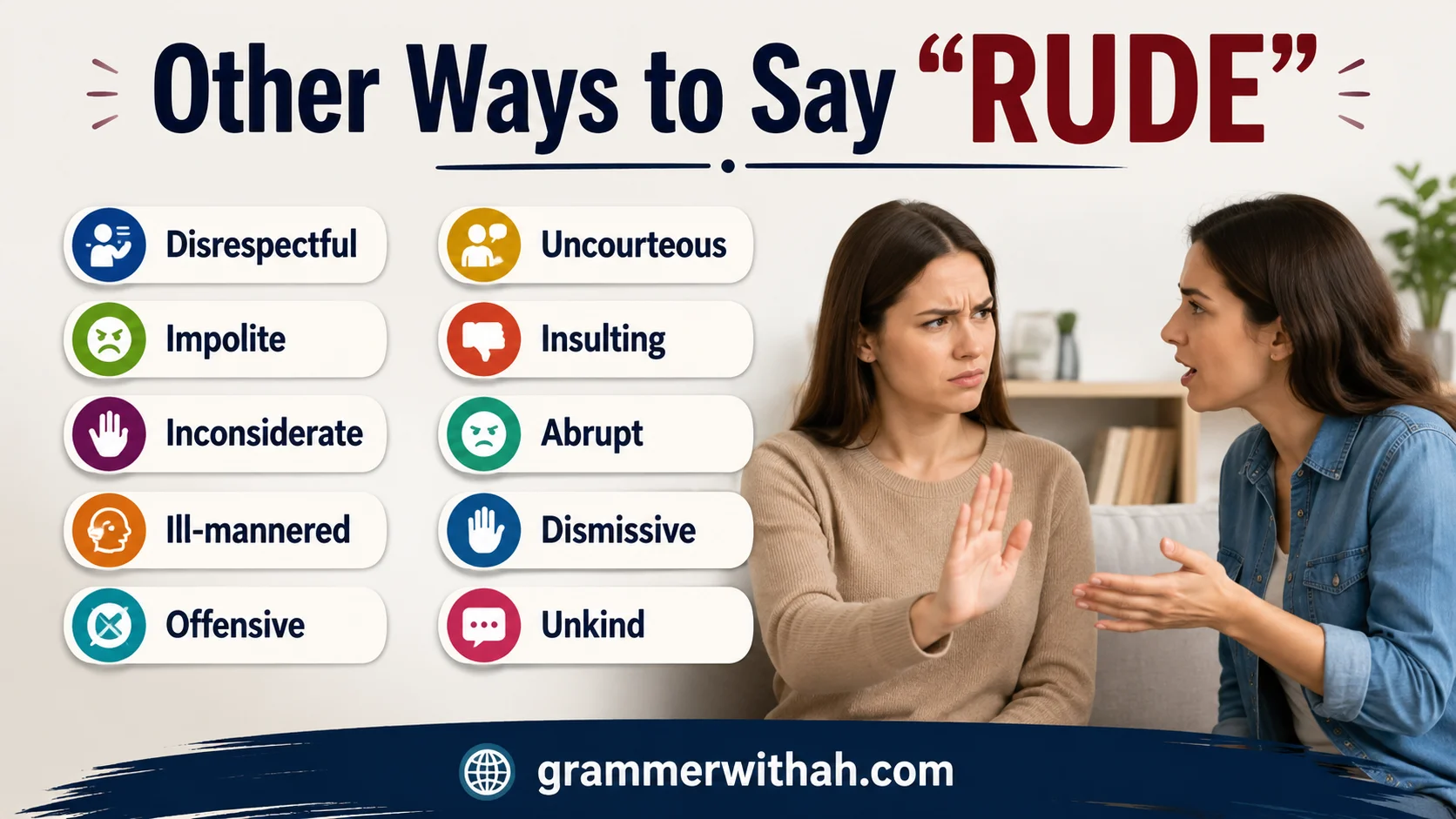
Other Ways to Say “RUDE” (With Examples) can help you describe impolite, disrespectful, insulting, or bad-mannered behavior in a more natural and accurate way. Instead of using the same word repeatedly, learning different expressions allows you to match the tone and situation more effectively. Whether you are writing, speaking, or improving your vocabulary, these alternatives make your communication clearer, friendlier, and more engaging while helping you express ideas with greater confidence.
A rude person may interrupt others, ignore good manners, act cheeky, speak abruptly, or behave in an insolent way that makes people feel uncomfortable. Every synonym has its own meaning and works best in different situations. In this article, you will discover other ways to say “rude”, complete with simple meanings, practical examples, and helpful tips to choose the right word in everyday conversations and writing.
What Does “Rude” Mean?
The word “rude” describes a person, action, or comment that shows poor manners, disrespect, or a lack of consideration toward others. It can refer to behavior that feels impolite, offensive, discourteous, or insensitive, depending on the situation. Although it is a simple word, choosing a more specific alternative often helps explain someone’s behavior more accurately.
Is It Professional or Polite to Say “Rude”?
Yes, “rude” is generally acceptable in both everyday conversations and many professional settings. However, it can sometimes sound direct or judgmental, especially when discussing coworkers, clients, or customers. Using alternatives such as discourteous, impolite, or unprofessional may sound more respectful while still communicating your point clearly.
Pros and Cons of Saying “Rude”
Pros
- Easy for everyone to understand.
- Direct and clearly expresses poor behavior.
- Suitable for both spoken and written communication.
- Works in many personal and professional situations.
Cons
- May sound harsh in sensitive conversations.
- Does not explain the specific type of behavior.
- Can appear judgmental without additional context.
- Sometimes lacks the professional tone needed in formal writing.
“Rude” Synonyms
- Impolite
- Discourteous
- Disrespectful
- Insensitive
- Offensive
- Uncivil
- Unkind
- Abrupt
- Blunt
- Ill-mannered
- Inconsiderate
- Unprofessional
- Tactless
- Thoughtless
- Dismissive
- Crude
- Obnoxious
- Mean
- Arrogant
- Sarcastic
- Cold
- Harsh
- Condescending
- Disdainful
- Ungracious
1. Impolite
Scenario Meaning:
Impolite describes behavior that lacks good manners, respect, or courtesy, making interactions feel uncomfortable or unpleasant for the people involved.
Examples:
- His impolite response surprised everyone because they expected a much kinder and more respectful answer during the meeting.
- Interrupting someone repeatedly during a discussion is often considered impolite by both friends and colleagues.
- She apologized after realizing her comment sounded impolite and unintentionally hurt another person’s feelings.
- Many people believe ignoring a greeting is impolite because it shows little appreciation for others.
- Speaking loudly while someone else is presenting may appear impolite in most professional environments.
Tone:
Polite, professional, and respectful.
Details Explanation:
Impolite is one of the safest alternatives to rude because it focuses on poor manners rather than attacking someone’s personality. It works well in formal writing and everyday conversations.
Best Use:
Use impolite when describing behavior that lacks basic courtesy without sounding overly critical.
2. Discourteous
Scenario Meaning:
Discourteous describes actions that fail to show respect, kindness, or proper consideration, especially during formal or professional interactions.
Examples:
- The employee’s discourteous reply created unnecessary tension during an otherwise productive business meeting.
- Many customers dislike receiving discourteous service because it leaves a lasting negative impression.
- His discourteous attitude disappointed everyone who expected a friendly and respectful conversation.
- Walking away before someone finishes speaking may seem discourteous in many social situations.
- The manager encouraged every team member to avoid discourteous language while communicating with clients.
Tone:
Professional, formal, and respectful.
Details Explanation:
Discourteous is commonly used in workplaces because it sounds measured and objective while still pointing out behavior that lacks courtesy.
Best Use:
Use discourteous in formal conversations, workplace communication, and customer service discussions.
3. Disrespectful
Scenario Meaning:
Disrespectful refers to behavior that fails to show proper respect, appreciation, or regard toward another person’s feelings, opinions, or position.
Examples:
- Many people considered his remarks disrespectful because they ignored everyone else’s valuable opinions during the discussion.
- Speaking over your teacher repeatedly can appear disrespectful even if you do not intend to offend anyone.
- Her disrespectful behavior affected the positive atmosphere that the team had worked hard to build.
- The coach reminded every player that disrespectful comments would never be accepted during practice.
- Laughing while someone shares a serious concern often seems disrespectful and deeply hurtful.
Tone:
Strong, serious, and direct.
Details Explanation:
Disrespectful emphasizes the lack of respect rather than poor manners alone, making it suitable for situations involving authority or personal relationships.
Best Use:
Use disrespectful when highlighting behavior that shows little respect for another person.
4. Insensitive
Scenario Meaning:
Insensitive describes words or actions that show little awareness of another person’s emotions, experiences, or personal circumstances, even without harmful intentions.
Examples:
- His comment sounded insensitive because it ignored the challenges that others were already facing.
- Making jokes about serious situations may appear insensitive to people experiencing difficult times.
- She later realized her question was insensitive and immediately apologized with genuine sincerity.
- An insensitive remark can damage trust even when no harm was originally intended.
- The speaker carefully changed his wording to avoid sounding insensitive during the discussion.
Tone:
Gentle, thoughtful, and empathetic.
Details Explanation:
Insensitive focuses more on a lack of emotional awareness than intentional disrespect, making it useful in compassionate conversations.
Best Use:
Use insensitive when discussing behavior that overlooks another person’s feelings.
5. Offensive
Scenario Meaning:
Offensive describes language or actions that are likely to upset, insult, or deeply offend another person because they cross accepted social boundaries.
Examples:
- Several audience members believed the joke was offensive because it targeted a sensitive subject unnecessarily.
- Using insulting language during a disagreement can quickly become offensive and damage important relationships.
- His offensive remarks required a sincere apology before the conversation could continue positively.
- Many organizations have policies against using offensive language in the workplace.
- The editor removed several offensive expressions to make the article respectful for every reader.
Tone:
Serious and direct.
Details Explanation:
Offensive suggests that someone’s words or actions have caused genuine hurt or insult, making it stronger than simply calling someone rude.
Best Use:
Use offensive when describing behavior that seriously insults or upsets others.
6. Uncivil
Scenario Meaning:
Uncivil describes behavior that lacks basic politeness, respect, and social courtesy, especially during disagreements or formal discussions.
Examples:
- Their uncivil exchange prevented the meeting from reaching a productive conclusion.
- Online discussions often become uncivil when participants stop respecting different opinions.
- The moderator asked everyone to avoid uncivil language throughout the debate.
- His uncivil comments distracted everyone from the real issue being discussed.
- Respectful communication helps prevent conversations from becoming uncivil and unpleasant.
Tone:
Formal and professional.
Details Explanation:
Uncivil is frequently used when describing arguments, debates, and public conversations that become disrespectful.
Best Use:
Use uncivil when discussing unpleasant behavior in formal or public interactions.
7. Unkind
Scenario Meaning:
Unkind refers to words or actions that show little compassion, generosity, or concern, making another person feel hurt or discouraged.
Examples:
- Her unkind remark stayed with him long after the conversation had ended peacefully.
- Children should learn that unkind words can affect someone’s confidence for a very long time.
- His apology helped repair the damage caused by his earlier unkind behavior.
- Even a small unkind comment can change the mood of an entire conversation.
- Choosing kind language instead of unkind criticism often produces better results.
Tone:
Gentle and compassionate.
Details Explanation:
Unkind focuses on a lack of kindness instead of poor manners, making it especially appropriate in emotional conversations.
Best Use:
Use unkind when emphasizing kindness and empathy rather than etiquette.
8. Abrupt
Scenario Meaning:
Abrupt describes communication that is sudden, brief, or unexpectedly sharp, often making the speaker seem unfriendly without intending to be.
Examples:
- His abrupt reply made the conversation feel shorter and less welcoming than expected.
- The email sounded abrupt because it contained no greeting or polite closing sentence.
- She apologized after realizing her response seemed abrupt during the discussion.
- An abrupt ending confused everyone who expected further explanation.
- Stress sometimes causes otherwise friendly people to sound abrupt without realizing it.
Tone:
Neutral and professional.
Details Explanation:
Abrupt usually describes communication style rather than personality, making it less judgmental than calling someone rude.
Best Use:
Use abrupt when describing short or unexpectedly sharp communication.
9. Blunt
Scenario Meaning:
Blunt describes communication that is very direct and honest, often without softening the message, which can sometimes make it seem rude or insensitive to others.
Examples:
- His blunt feedback surprised everyone because it was completely honest without offering any gentle encouragement.
- She gave a blunt answer instead of explaining her opinion with more thoughtful and considerate words.
- The manager’s blunt response solved the problem quickly, although several employees found it difficult to accept.
- Being blunt may save time, but it can also unintentionally hurt another person’s feelings.
- He apologized after realizing his blunt comment sounded much harsher than he originally intended.
Tone:
Direct, honest, and straightforward.
Details Explanation:
Blunt focuses on direct communication instead of intentional disrespect. Some people appreciate blunt honesty, while others may view it as lacking sensitivity depending on the situation.
Best Use:
Use blunt when describing very direct speech that may sound harsh without being intentionally unkind.
10. Ill-mannered
Scenario Meaning:
Ill-mannered describes someone who regularly shows poor manners, little courtesy, and inappropriate social behavior during conversations or everyday interactions.
Examples:
- Many guests believed the visitor appeared ill-mannered because he never thanked the hosts for their kindness.
- Speaking with your phone during dinner may seem ill-mannered in many social settings.
- His ill-mannered behavior created an uncomfortable atmosphere throughout the family gathering.
- Children should be taught that ill-mannered actions often leave a negative impression on others.
- Everyone appreciated his apology after recognizing his earlier ill-mannered conduct.
Tone:
Respectful and descriptive.
Details Explanation:
Ill-mannered highlights a person’s lack of etiquette and social manners rather than focusing on one specific comment or action.
Best Use:
Use ill-mannered when discussing consistent poor manners in social or professional environments.
11. Inconsiderate
Scenario Meaning:
Inconsiderate refers to behavior that shows little thought, care, or concern for another person’s needs, feelings, or convenience.
Examples:
- Parking across two spaces was an inconsiderate action that frustrated many other drivers.
- His inconsiderate remarks ignored how deeply the situation affected everyone else.
- Arriving very late without informing anyone can appear inconsiderate in professional meetings.
- She felt disappointed after receiving such an inconsiderate response to her sincere request.
- Thoughtful communication helps prevent people from appearing inconsiderate during difficult conversations.
Tone:
Professional and thoughtful.
Details Explanation:
Inconsiderate emphasizes a lack of awareness or concern rather than intentional disrespect, making it suitable for constructive discussions.
Best Use:
Use inconsiderate when someone’s actions ignore another person’s feelings or needs.
12. Unprofessional
Scenario Meaning:
Unprofessional describes conduct that does not meet the expected standards of workplace behavior, respect, responsibility, or communication.
Examples:
- Speaking disrespectfully to clients is considered unprofessional in nearly every business environment.
- The supervisor reminded everyone that personal insults were completely unprofessional during team meetings.
- His unprofessional attitude affected the company’s reputation with several important customers.
- Sending angry emails without reviewing them first may appear unprofessional to colleagues.
- Professional communication always avoids language that seems unprofessional or disrespectful.
Tone:
Formal and workplace-focused.
Details Explanation:
Unprofessional is especially useful when discussing behavior that fails to meet workplace expectations instead of simply calling someone rude.
Best Use:
Use unprofessional in business communication, performance reviews, and workplace discussions.
13. Tactless
Scenario Meaning:
Tactless describes words or actions that are honest but poorly expressed, often causing embarrassment or hurt because they lack sensitivity.
Examples:
- His tactless remark embarrassed everyone during what should have been a joyful celebration.
- She immediately apologized after realizing her question sounded tactless instead of caring.
- Even truthful comments can seem tactless when expressed without kindness or understanding.
- The meeting became uncomfortable because of one particularly tactless observation.
- Learning better communication skills helps people avoid sounding tactless in difficult conversations.
Tone:
Respectful and constructive.
Details Explanation:
Tactless focuses on poor delivery rather than bad intentions, making it a useful word for discussing communication mistakes.
Best Use:
Use tactless when describing insensitive wording that lacks diplomacy.
14. Thoughtless
Scenario Meaning:
Thoughtless refers to actions or comments made without careful consideration, often creating disappointment or emotional discomfort for others.
Examples:
- Forgetting to acknowledge everyone’s hard work felt thoughtless even if it was completely unintentional.
- His thoughtless comment ruined what had been a pleasant and encouraging discussion.
- Sending criticism publicly instead of privately may seem thoughtless to many people.
- She regretted making such a thoughtless remark after seeing everyone’s reactions.
- Small thoughtless actions sometimes have greater emotional effects than people expect.
Tone:
Gentle and understanding.
Details Explanation:
Thoughtless suggests carelessness instead of intentional unkindness, making it softer than calling someone rude.
Best Use:
Use thoughtless when describing careless words or actions that unintentionally affect others.
15. Dismissive
Scenario Meaning:
Dismissive describes behavior that rejects, ignores, or minimizes another person’s ideas, concerns, or feelings without giving them proper attention.
Examples:
- His dismissive attitude discouraged everyone from sharing additional suggestions during the meeting.
- She felt hurt because the manager gave a dismissive response to her carefully prepared proposal.
- Ignoring someone’s concerns can appear dismissive even when you disagree with them completely.
- The teacher encouraged respectful discussions instead of dismissive comments toward classmates.
- Listening carefully helps prevent conversations from becoming dismissive and unproductive.
Tone:
Professional and analytical.
Details Explanation:
Dismissive highlights behavior that shows little value or respect for another person’s opinions or emotions.
Best Use:
Use dismissive when describing someone who ignores or undervalues others.
16. Crude
Scenario Meaning:
Crude describes language or behavior that is rough, offensive, or lacking refinement, especially in social or professional settings.
Examples:
- His crude joke made several audience members feel uncomfortable throughout the presentation.
- The meeting remained professional because everyone avoided making crude remarks during the discussion.
- Using crude language rarely creates a positive impression in the workplace.
- She politely asked him to stop making crude comments around younger family members.
- Many organizations discourage crude humor because it can offend different audiences.
Tone:
Strong and descriptive.
Details Explanation:
Crude often refers to offensive language, humor, or behavior rather than general poor manners.
Best Use:
Use crude when discussing offensive jokes, language, or inappropriate expressions.
17. Obnoxious
Scenario Meaning:
Obnoxious describes behavior that is extremely unpleasant, irritating, or offensive, making it difficult for others to enjoy the interaction.
Examples:
- His obnoxious behavior quickly changed the positive atmosphere into an uncomfortable experience for everyone.
- Speaking loudly over every conversation made him appear obnoxious during the entire event.
- Many people avoided interacting with the guest because of his consistently obnoxious attitude.
- Her obnoxious comments distracted everyone from the purpose of the discussion.
- Respectful communication prevents people from being viewed as obnoxious by others.
Tone:
Strong and critical.
Details Explanation:
Obnoxious is a much stronger alternative than rude because it suggests behavior that is consistently unpleasant and difficult to tolerate.
Best Use:
Use obnoxious when describing extremely irritating or offensive behavior that negatively affects those around the person.
18. Mean
Scenario Meaning:
Mean describes words or actions that are intentionally hurtful, unkind, or unfriendly, often causing emotional pain or making another person feel upset and discouraged.
Examples:
- His mean comment hurt her feelings because it criticized her efforts instead of offering helpful encouragement.
- Children should learn that mean words can leave lasting emotional effects even after a sincere apology.
- She felt disappointed after hearing such a mean response to her honest question.
- The teacher encouraged everyone to replace mean remarks with kind and respectful language.
- Being mean to others rarely solves problems and often creates unnecessary conflict between people.
Tone:
Simple, emotional, and direct.
Details Explanation:
Mean is commonly used in everyday conversations to describe unkind behavior. It is easy to understand and works well when explaining actions that intentionally hurt another person’s feelings.
Best Use:
Use mean when describing deliberately unkind words or actions in casual conversations.
19. Arrogant
Scenario Meaning:
Arrogant describes someone who behaves as though they are more important, knowledgeable, or capable than others, often showing little respect for different opinions.
Examples:
- His arrogant attitude made teamwork difficult because he ignored every suggestion from experienced colleagues.
- Speaking as though everyone else is wrong may make a person appear arrogant during discussions.
- Her arrogant response discouraged others from sharing their creative ideas openly.
- Confidence is valuable, but becoming arrogant can damage meaningful relationships with others.
- The manager encouraged humility instead of arrogant behavior during team meetings.
Tone:
Strong and descriptive.
Details Explanation:
Arrogant focuses on excessive pride and superiority rather than simple poor manners. It explains why someone may come across as rude in many situations.
Best Use:
Use arrogant when describing someone who acts superior and dismisses others.
20. Sarcastic
Scenario Meaning:
Sarcastic describes speech that uses mocking humor, irony, or sharp comments, often making another person feel criticized or embarrassed.
Examples:
- His sarcastic reply confused everyone because they could not tell whether he was serious or joking.
- Constantly making sarcastic comments may create tension within a friendly conversation.
- She apologized after realizing her sarcastic joke had hurt someone’s feelings.
- The supervisor requested respectful communication instead of sarcastic responses during meetings.
- A sarcastic tone can easily be misunderstood in written messages and emails.
Tone:
Playful, sharp, or critical depending on the context.
Details Explanation:
Sarcastic does not always mean rude, but it often sounds disrespectful when used at the wrong time or toward sensitive topics.
Best Use:
Use sarcastic when describing ironic or mocking remarks that may offend others.
21. Cold
Scenario Meaning:
Cold describes behavior that feels emotionally distant, unfriendly, or lacking warmth, making interactions seem uncaring or uncomfortable.
Examples:
- Her cold response made everyone feel less comfortable during the important discussion.
- He appeared cold because he showed very little emotion while speaking with his teammates.
- A cold greeting can leave a poor first impression during professional introductions.
- She worried that her email sounded cold, so she added a warmer closing sentence.
- Showing kindness helps prevent communication from feeling cold and impersonal.
Tone:
Gentle and descriptive.
Details Explanation:
Cold emphasizes emotional distance instead of offensive behavior. It is useful when someone seems unfriendly rather than intentionally rude.
Best Use:
Use cold when describing unfriendly or emotionally distant communication.
22. Harsh
Scenario Meaning:
Harsh refers to language or behavior that is very severe, critical, or difficult to hear, often making another person feel discouraged or upset.
Examples:
- His harsh criticism discouraged the new employee instead of helping them improve their performance.
- The review sounded harsh because it focused only on mistakes without recognizing any successes.
- She softened her harsh wording before sending the final email to the client.
- A harsh tone may create unnecessary conflict during important conversations.
- Constructive feedback is usually more effective than harsh criticism.
Tone:
Serious and professional.
Details Explanation:
Harsh focuses on the strength and severity of someone’s words rather than their intentions, making it suitable for both personal and professional situations.
Best Use:
Use harsh when describing strong criticism or severe language.
23. Condescending
Scenario Meaning:
Condescending describes speaking or acting in a way that shows a belief that others are less intelligent, capable, or important, making them feel belittled.
Examples:
- His condescending tone made the discussion uncomfortable because it suggested everyone else lacked knowledge.
- She avoided using condescending language while explaining the new process to beginners.
- Nobody enjoys receiving advice delivered in a condescending manner.
- The presentation became more engaging after the speaker removed several condescending remarks.
- Respectful communication encourages learning without sounding condescending.
Tone:
Formal and critical.
Details Explanation:
Condescending describes behavior that talks down to others, often making people feel disrespected even when the speaker intends to help.
Best Use:
Use condescending when describing patronizing or superior communication.
24. Disdainful
Scenario Meaning:
Disdainful refers to words, expressions, or actions that show strong dislike, contempt, or a feeling that another person is unworthy of respect.
Examples:
- His disdainful expression immediately made everyone feel unwelcome during the meeting.
- Speaking with a disdainful attitude often damages trust between coworkers and friends.
- The audience noticed her disdainful reaction when another speaker shared a different opinion.
- A disdainful response rarely encourages healthy and productive communication.
- Respecting different viewpoints helps people avoid sounding disdainful.
Tone:
Formal and serious.
Details Explanation:
Disdainful is a stronger alternative that highlights contempt and disrespect, making it appropriate for situations involving obvious negative attitudes.
Best Use:
Use disdainful when describing behavior that openly shows contempt or disrespect.
25. Ungracious
Scenario Meaning:
Ungracious describes behavior that lacks appreciation, kindness, politeness, or gratitude, especially when someone should respond with courtesy.
Examples:
- His ungracious reaction disappointed everyone because many people had worked hard to help him succeed.
- Refusing to thank someone after receiving assistance may appear ungracious in many situations.
- She apologized for her ungracious response and expressed sincere appreciation afterward.
- The host remained polite despite receiving several ungracious comments from one guest.
- Showing gratitude prevents people from appearing ungracious during everyday interactions.
Tone:
Polite and thoughtful.
Details Explanation:
Ungracious emphasizes a lack of gratitude and courtesy rather than general impoliteness, making it a refined alternative to rude.
Best Use:
Use ungracious when describing someone who responds without appreciation or courtesy.
FAQs :
1. What does “rude” mean?
Rude means impolite, disrespectful, or bad-mannered behavior that can hurt or upset other people.
2. What are some other ways to say “rude”?
Some common alternatives are impolite, insulting, cheeky, abrupt, discourteous, and insolent.
3. Is “rude” always used for people?
No, rude can describe people, words, actions, or even a sudden shock, like a rude awakening.
4. Which word is stronger than “rude”?
Words like insolent, offensive, and disrespectful can sound stronger than rude, depending on the situation.
5. How can I choose the right synonym for “rude”?
Choose the word that best matches the meaning, tone, and situation. For example, impolite is softer, while insolent sounds more serious.
Conclusion
Knowing other ways to say “rude” helps you speak and write more clearly. It also lets you describe bad manners, disrespectful behavior, or insulting words in a more exact way. By using the right synonym, you can make your communication more natural, thoughtful, and effective.