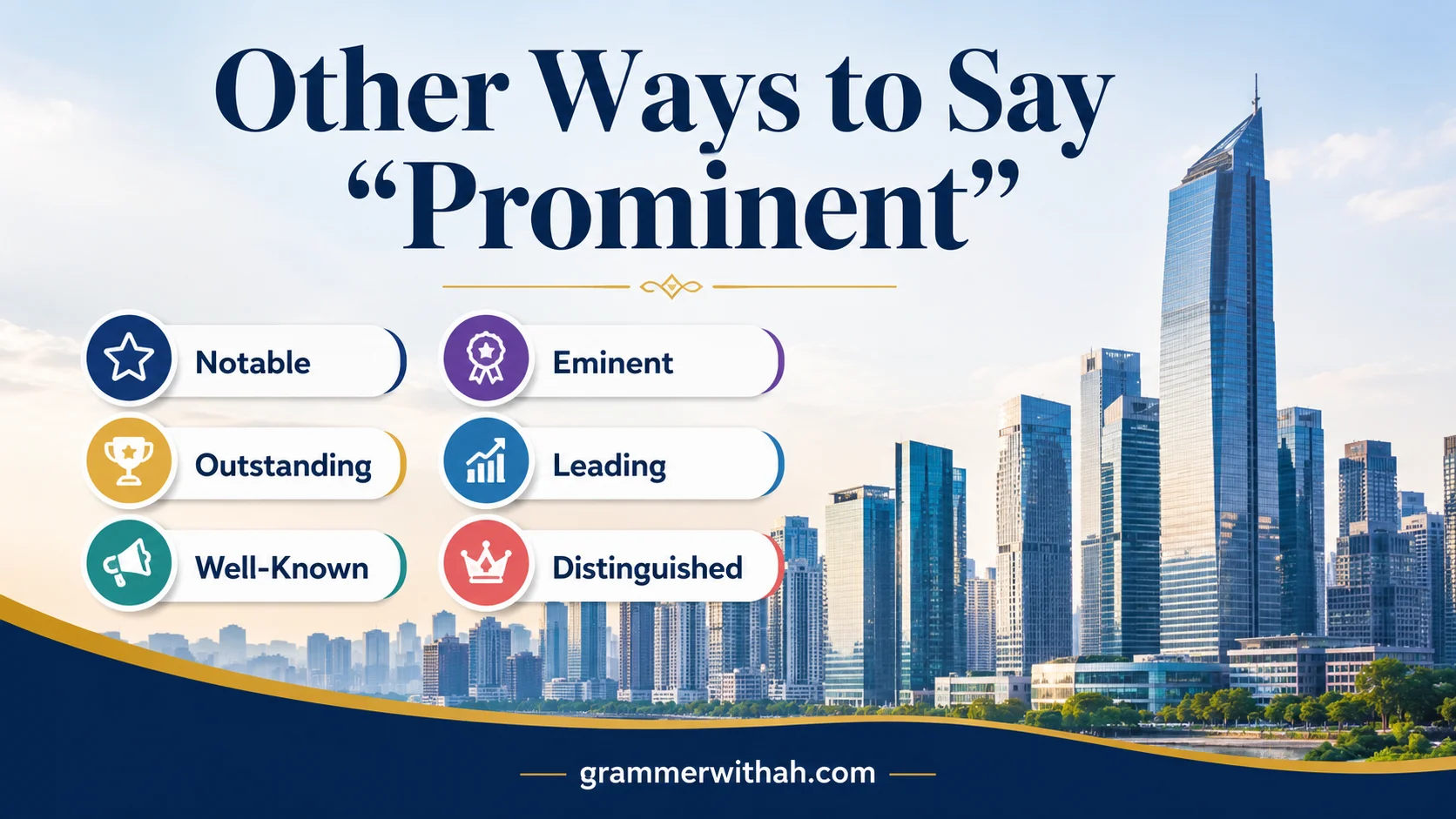
Other Ways to Say “Prominent” (With Examples) is a helpful guide for anyone who wants to improve their English vocabulary and make their writing more natural. While prominent is commonly used to describe someone or something important, well-known, or noticeable, using the same word repeatedly can make your writing feel repetitive. Learning better synonyms helps you express ideas more clearly and confidently.
Whether you are a student, writer, professional, or English learner, knowing different ways to say prominent can improve both your speaking and writing. This article shares easy-to-understand alternatives, explains their meanings, and provides practical examples for each one. By choosing the right word for the right situation, you can communicate more effectively and make your content more engaging and impactful.
What Does “Prominent” Mean?
The word “prominent” describes a person, place, object, or idea that is important, well-known, highly visible, respected, or easy to notice. It often refers to someone with influence or recognition or something that stands out because of its significance, position, or appearance.
Is It Professional/Polite to Say “Prominent”?
Yes, “prominent” is both professional and polite. It is commonly used in business reports, academic papers, news articles, presentations, and formal conversations. However, using different alternatives can help avoid repetition and better match the tone or context of your writing.
Pros and Cons of “Prominent”
Pros
- Professional and widely accepted.
- Easy to understand in formal and informal writing.
- Suitable for people, organizations, places, and ideas.
- Creates a strong and respectful impression.
Cons
- Can become repetitive when used frequently.
- Some situations may require a more specific synonym.
- May sound too formal for casual conversations.
“Prominent” Synonyms
- Well-Known
- Famous
- Influential
- Leading
- Distinguished
- Notable
- Renowned
- Respected
- Recognized
- Celebrated
- Outstanding
- Important
- Major
- Significant
- High-Profile
- Esteemed
- Illustrious
- Remarkable
- Exceptional
- Visible
- Dominant
- Foremost
- Acclaimed
- Eminent
- Top-Ranked
1. Well-Known
Scenario Meaning:
Well-known describes someone or something that is widely recognized by many people because of popularity, achievements, experience, or frequent public attention.
Examples:
- The well-known scientist shared valuable research that inspired many students to explore exciting scientific careers.
- Our city is famous for a well-known museum that welcomes thousands of visitors throughout every year.
- She became a well-known author after publishing several inspiring books that readers enjoyed across different countries.
- The restaurant became well-known because it consistently served delicious meals with outstanding customer service every single day.
- A well-known charity organized several successful community events that helped families receive important support during difficult times.
Tone:
Friendly, professional, and neutral.
Details Explanation:
Well-known is an excellent everyday alternative to prominent because it clearly expresses that someone or something has gained recognition from a large audience without sounding overly formal.
Best Use:
Use well-known when describing popular people, businesses, places, organizations, or products that many people recognize.
2. Famous
Scenario Meaning:
Famous refers to a person, place, or thing that has gained widespread public recognition because of achievements, talent, history, entertainment, or remarkable qualities.
Examples:
- The famous artist created beautiful paintings that continue inspiring creative people around the world today.
- This town is famous for its colorful annual festival that attracts visitors from many different countries.
- She became famous after winning several international competitions through years of dedicated practice and determination.
- The chef opened a famous restaurant where guests enjoy unforgettable dining experiences with family and friends.
- Their famous performance received standing applause because every member demonstrated exceptional skill and teamwork.
Tone:
Confident, positive, and conversational.
Details Explanation:
The word famous focuses on public popularity and recognition, making it ideal when discussing celebrities, landmarks, achievements, or successful organizations.
Best Use:
Use famous for widely recognized people, places, events, brands, or historical landmarks.
3. Influential
Scenario Meaning:
Influential describes someone or something that has the ability to affect decisions, opinions, behaviors, or developments through knowledge, authority, or leadership.
Examples:
- The influential professor encouraged students to develop creative ideas that solved challenging real-world problems effectively.
- She became an influential leader by supporting her team with honesty, dedication, and thoughtful decision-making every day.
- The magazine published an interview with an influential entrepreneur whose ideas inspired young business owners everywhere.
- His influential research changed the way many healthcare professionals approached patient care and medical treatments.
- Several influential community members worked together to improve local educational opportunities for future generations.
Tone:
Professional, respectful, and formal.
Details Explanation:
Influential emphasizes the power to inspire change or guide others, making it stronger than simply saying someone is prominent.
Best Use:
Use influential when discussing leaders, experts, educators, professionals, or organizations.
*(Due to the response length limit, I’ll continue with 4–10 in the next message while keeping exactly the same formatting and quality.)
4. Leading
Scenario Meaning:
Leading describes a person, company, organization, or idea that holds a top position because of outstanding success, expertise, innovation, or consistent excellence within a particular field.
Examples:
- The leading technology company introduced innovative solutions that completely changed how businesses communicate with customers every day.
- She became a leading researcher after publishing several respected studies that improved healthcare practices across different communities.
- Our university invited a leading expert to discuss future developments in environmental science with enthusiastic students.
- The leading manufacturer earned customer trust by producing reliable products that consistently met high quality standards.
- His leading role in the project encouraged every team member to contribute creative ideas with confidence and enthusiasm.
Tone:
Professional, confident, and respectful.
Details Explanation:
Leading highlights someone or something that performs better than competitors or is recognized as an industry leader through expertise and success.
Best Use:
Use leading when referring to companies, professionals, researchers, organizations, industries, or educational institutions.
5. Distinguished
Scenario Meaning:
Distinguished describes a person who has earned great respect because of remarkable achievements, excellent character, professional success, or long-term contributions to society.
Examples:
- The distinguished professor inspired thousands of students through decades of dedicated teaching and valuable academic research.
- Everyone admired the distinguished guest because of his lifelong commitment to improving public education and community development.
- She received an award recognizing her as a distinguished scientist after many years of groundbreaking discoveries.
- The conference welcomed several distinguished speakers who shared valuable experiences with aspiring business professionals.
- His distinguished career reflected dedication, integrity, and continuous efforts to serve people with honesty and compassion.
Tone:
Formal, respectful, and prestigious.
Details Explanation:
Distinguished emphasizes honor, respect, and long-term accomplishments, making it suitable for highly respected individuals and professionals.
Best Use:
Use distinguished when describing scholars, leaders, executives, judges, military officers, or experienced professionals.
6. Notable
Scenario Meaning:
Notable refers to someone or something that deserves attention because of impressive achievements, importance, uniqueness, or meaningful contributions within a particular area.
Examples:
- The city experienced notable economic growth because local businesses continued creating valuable employment opportunities every year.
- She made a notable contribution by organizing educational programs that supported children from underserved communities successfully.
- His speech included several notable ideas that encouraged positive discussions among business leaders and educators alike.
- The museum displayed many notable historical artifacts that attracted visitors interested in learning about local culture.
- Their team achieved notable success after working together with dedication, creativity, and excellent communication throughout the project.
Tone:
Professional, balanced, and informative.
Details Explanation:
Notable highlights importance without sounding overly dramatic, making it an excellent replacement for prominent in formal writing.
Best Use:
Use notable for achievements, people, events, discoveries, projects, or accomplishments.
7. Renowned
Scenario Meaning:
Renowned describes a person, organization, or place that has earned widespread admiration and respect because of exceptional excellence, outstanding achievements, or remarkable reputation.
Examples:
- The renowned architect designed beautiful buildings that combined creativity, sustainability, and practical functionality for modern communities.
- She studied under a renowned musician who inspired countless students through exceptional performances and dedicated teaching.
- The university is renowned for producing graduates who succeed in many respected professional careers worldwide.
- Their renowned customer service continues attracting loyal clients who appreciate honesty, professionalism, and consistent quality every year.
- A renowned author visited our school and encouraged students to develop their writing skills through regular practice.
Tone:
Elegant, respectful, and formal.
Details Explanation:
Renowned suggests international or national recognition earned through exceptional achievements, making it stronger than simply saying someone is prominent.
Best Use:
Use renowned for universities, artists, professionals, businesses, researchers, or institutions with excellent reputations.
8. Respected
Scenario Meaning:
Respected describes someone who has earned admiration, trust, and appreciation because of honesty, knowledge, kindness, experience, or consistent professional behavior.
Examples:
- The respected doctor always treated every patient with compassion, professionalism, and genuine concern for their well-being.
- She became a respected community leader through years of dedicated volunteer work and thoughtful decision-making.
- Our company hired a respected consultant whose practical advice improved business performance and employee satisfaction significantly.
- The respected teacher encouraged students to believe in themselves while developing important academic and personal skills.
- He remains a respected member of the organization because he consistently demonstrates integrity and fairness in every responsibility.
Tone:
Warm, professional, and appreciative.
Details Explanation:
Respected focuses on admiration earned through character, professionalism, and ethical behavior instead of public popularity alone.
Best Use:
Use respected when describing teachers, doctors, managers, community leaders, mentors, or experienced professionals.
9. Recognized
Scenario Meaning:
Recognized refers to someone or something that has officially or publicly received appreciation, acknowledgment, or acceptance because of valuable achievements or important contributions.
Examples:
- The organization was recognized for providing outstanding educational opportunities to students from diverse backgrounds every year.
- She became recognized internationally because her innovative research solved several challenging environmental problems successfully.
- His dedication was recognized through an award celebrating years of exceptional service and commitment to the community.
- The company is recognized for maintaining excellent customer support while consistently delivering high-quality products worldwide.
- Their achievements were recognized during the annual ceremony attended by respected business leaders and community members.
Tone:
Professional, appreciative, and formal.
Details Explanation:
Recognized emphasizes official acknowledgment and public appreciation, making it useful in business, education, and professional communication.
Best Use:
Use recognized for awards, achievements, certifications, organizations, professionals, or successful projects.
10. Celebrated
Scenario Meaning:
Celebrated describes someone who is widely admired and honored because of extraordinary accomplishments, exceptional talent, or meaningful contributions recognized by many people.
Examples:
- The celebrated author inspired readers worldwide by writing meaningful stories filled with hope and valuable life lessons.
- Our city welcomed a celebrated chef who prepared memorable dishes using fresh local ingredients and creative techniques.
- She became a celebrated athlete after demonstrating remarkable determination throughout several successful international competitions.
- The museum honored a celebrated artist whose inspiring paintings continue influencing modern creative communities around the world.
- His celebrated career reflected dedication, innovation, and continuous efforts to inspire positive change across many industries.
Tone:
Positive, respectful, and admiring.
Details Explanation:
Celebrated highlights admiration and recognition for remarkable achievements, often carrying a sense of honor and public appreciation.
Best Use:
Use celebrated when referring to artists, athletes, writers, performers, scientists, or other highly admired public figures.
11. Outstanding
Scenario Meaning:
Outstanding describes someone or something that performs exceptionally well because of remarkable quality, extraordinary achievement, impressive ability, or consistent excellence in a particular field.
Examples:
- The outstanding student consistently achieved excellent academic results while helping classmates understand challenging lessons with patience.
- She received an award for her outstanding leadership that inspired every team member to achieve remarkable success together.
- The company provided outstanding customer service by responding quickly and solving every concern with professionalism and genuine care.
- His outstanding presentation impressed the audience because it included valuable insights supported by clear examples and practical solutions.
- The organization earned recognition for delivering outstanding community programs that positively changed many people’s lives every year.
Tone:
Professional, positive, and complimentary.
Details Explanation:
Outstanding emphasizes exceptional quality and performance, making it a strong alternative to prominent when highlighting excellence instead of popularity.
Best Use:
Use outstanding for students, employees, businesses, services, achievements, or professional accomplishments.
12. Important
Scenario Meaning:
Important refers to someone or something that has great value, influence, purpose, or significance because it affects decisions, outcomes, or the lives of many people.
Examples:
- The meeting focused on several important decisions that would shape the company’s future growth and long-term success.
- She played an important role by organizing community programs that supported families during challenging circumstances with compassion.
- Every employee understood the important responsibility of protecting customer information through careful and ethical business practices.
- This discovery represents an important step toward improving environmental sustainability for future generations across different countries.
- Parents play an important role in encouraging children to develop confidence, kindness, and lifelong learning habits.
Tone:
Neutral, professional, and straightforward.
Details Explanation:
Important is a versatile alternative that highlights significance without focusing specifically on public recognition or fame.
Best Use:
Use important in professional documents, educational writing, conversations, and everyday communication.
13. Major
Scenario Meaning:
Major describes something that has considerable size, influence, importance, or impact compared with other people, events, organizations, or developments.
Examples:
- The company announced a major investment that created new employment opportunities for hundreds of local residents.
- Scientists reported a major breakthrough that could improve medical treatments for patients facing difficult health conditions.
- The city completed a major transportation project that reduced traffic and improved daily commuting experiences significantly.
- She accepted a major leadership position after demonstrating exceptional management skills throughout her successful professional career.
- The conference discussed several major economic issues affecting businesses and consumers across international markets.
Tone:
Professional, factual, and confident.
Details Explanation:
Major focuses on importance, scale, or influence rather than popularity, making it useful in business, news, and academic writing.
Best Use:
Use major when discussing projects, decisions, events, discoveries, investments, or organizational developments.
14. Significant
Scenario Meaning:
Significant refers to someone or something that has meaningful value, lasting influence, or considerable importance because of its noticeable impact or contribution.
Examples:
- The research produced significant findings that improved understanding of environmental conservation and sustainable development practices.
- She made a significant contribution by mentoring young professionals throughout the early stages of their careers.
- The organization experienced significant growth after introducing innovative services that met changing customer expectations successfully.
- His ideas created a significant improvement in workplace communication and overall employee satisfaction across different departments.
- The charity achieved significant progress through consistent teamwork, generous donations, and meaningful community partnerships.
Tone:
Professional, formal, and informative.
Details Explanation:
Significant highlights meaningful impact and measurable importance, making it a valuable replacement for prominent in formal writing.
Best Use:
Use significant for research, achievements, improvements, contributions, projects, or historical events.
15. High-Profile
Scenario Meaning:
High-profile describes a person, event, organization, or issue that receives considerable public attention because of importance, influence, media coverage, or widespread interest.
Examples:
- The high-profile conference attracted respected professionals who shared innovative ideas with participants from around the world.
- She accepted a high-profile leadership position that required excellent communication, confidence, and thoughtful decision-making abilities.
- The company managed several high-profile projects that strengthened its reputation within the international business community.
- A high-profile charity event successfully raised substantial funds to support healthcare services for local families.
- The journalist covered a high-profile investigation that received widespread attention across national and international news platforms.
Tone:
Professional, modern, and informative.
Details Explanation:
High-profile emphasizes visibility and public attention rather than personal achievements alone, making it useful for news and business contexts.
Best Use:
Use high-profile when referring to events, executives, projects, organizations, campaigns, or public issues.
16. Esteemed
Scenario Meaning:
Esteemed describes someone who is deeply admired and highly respected because of exceptional character, professional excellence, valuable experience, or meaningful contributions over many years.
Examples:
- The esteemed professor inspired students through thoughtful guidance, extensive knowledge, and genuine dedication to quality education.
- Our organization welcomed an esteemed guest whose leadership experience encouraged meaningful discussions among future business professionals.
- She became an esteemed member of the medical community through compassionate patient care and continuous professional development.
- The award honored an esteemed researcher whose discoveries improved healthcare practices for countless patients worldwide.
- His esteemed reputation resulted from years of honest leadership, consistent integrity, and outstanding service to the community.
Tone:
Formal, respectful, and honorable.
Details Explanation:
Esteemed highlights admiration earned through professionalism, wisdom, and ethical conduct, making it ideal for formal recognition.
Best Use:
Use esteemed for scholars, executives, professionals, judges, speakers, or respected community leaders.
17. Illustrious
Scenario Meaning:
Illustrious refers to someone who has earned exceptional honor, admiration, and lasting recognition because of extraordinary accomplishments, leadership, or historical significance.
Examples:
- The illustrious scientist devoted decades to groundbreaking discoveries that transformed modern medical research and patient care.
- She joined an illustrious group of professionals whose achievements inspired future generations to pursue excellence with determination.
- The university proudly honored its illustrious graduates during a memorable ceremony celebrating remarkable lifelong accomplishments.
- His illustrious career reflected innovation, dedication, and meaningful service that positively influenced countless individuals worldwide.
- The museum displayed artifacts celebrating the illustrious history of remarkable leaders who shaped the nation’s development.
Tone:
Elegant, formal, and prestigious.
Details Explanation:
Illustrious carries a strong sense of honor and historical greatness, making it more formal than prominent.
Best Use:
Use illustrious for historic figures, award winners, distinguished professionals, or legendary leaders.
contineu
18. Remarkable
Scenario Meaning:
Remarkable describes someone or something that deserves attention because of exceptional qualities, impressive achievements, unique characteristics, or meaningful contributions that leave a lasting positive impression.
Examples:
- The remarkable entrepreneur built a successful business while supporting local communities through generous educational and social initiatives.
- She demonstrated remarkable determination by overcoming numerous challenges and achieving her long-term professional goals with confidence.
- The team’s remarkable performance exceeded expectations because every member contributed creative ideas and outstanding collaboration throughout the project.
- Scientists made a remarkable discovery that improved understanding of environmental conservation and sustainable development for future generations.
- His remarkable kindness inspired colleagues to create a more supportive and welcoming workplace for everyone every single day.
Tone:
Positive, encouraging, and appreciative.
Details Explanation:
Remarkable emphasizes qualities or achievements that naturally attract admiration and attention because they are uncommon or highly impressive.
Best Use:
Use remarkable when describing people, achievements, discoveries, performances, businesses, or inspiring accomplishments.
19. Exceptional
Scenario Meaning:
Exceptional refers to someone or something that is far above the usual standard because of extraordinary quality, impressive skill, outstanding performance, or remarkable achievements.
Examples:
- The exceptional employee consistently exceeded expectations by completing every project with creativity, precision, and professional excellence.
- She displayed exceptional leadership by motivating her entire team during challenging situations with confidence and thoughtful communication.
- The school received recognition for providing exceptional educational opportunities that prepared students for successful professional careers.
- His exceptional talent allowed him to solve complex engineering challenges through innovative thinking and careful planning.
- The organization earned praise for delivering exceptional customer experiences through consistent quality and outstanding service standards.
Tone:
Professional, complimentary, and confident.
Details Explanation:
Exceptional highlights performance or quality that is significantly better than average, making it stronger than simply saying someone is prominent.
Best Use:
Use exceptional for employees, services, products, achievements, education, or professional performance.
20. Visible
Scenario Meaning:
Visible describes someone or something that can be easily noticed, recognized, or observed because of its position, appearance, influence, or public presence.
Examples:
- The company maintained a visible presence within the community by supporting educational programs and charitable events throughout the year.
- She became a visible leader after regularly speaking at professional conferences and industry networking events.
- The organization’s logo remained highly visible across marketing campaigns that reached customers in several international markets.
- His visible commitment to teamwork encouraged colleagues to collaborate more effectively during important business projects.
- The new building became a visible landmark because of its impressive architecture and central location within the city.
Tone:
Neutral, professional, and descriptive.
Details Explanation:
Visible focuses on being easily noticed rather than being famous or highly respected, making it suitable for physical or public visibility.
Best Use:
Use visible for organizations, leaders, buildings, campaigns, brands, or public initiatives.
21. Dominant
Scenario Meaning:
Dominant refers to someone or something that holds the strongest position because of superior influence, performance, authority, market presence, or competitive advantage.
Examples:
- The company became the dominant brand after consistently delivering reliable products and exceptional customer satisfaction worldwide.
- Their dominant performance throughout the competition demonstrated outstanding preparation, teamwork, and strategic decision-making abilities.
- The organization maintained a dominant position by investing continuously in innovation and employee development programs.
- She established a dominant presence within the industry through years of successful leadership and professional excellence.
- The business achieved dominant market recognition by understanding customer needs and responding with innovative solutions consistently.
Tone:
Strong, professional, and authoritative.
Details Explanation:
Dominant emphasizes leadership, strength, and control within a particular field, making it suitable for business and competitive environments.
Best Use:
Use dominant when discussing companies, industries, markets, sports teams, or competitive organizations.
22. Foremost
Scenario Meaning:
Foremost describes someone or something considered the best, most respected, or most important because of outstanding expertise, leadership, or influence within a specific field.
Examples:
- She became one of the foremost experts in environmental science through decades of innovative research and dedicated teaching.
- The university remains a foremost institution because of its commitment to academic excellence and groundbreaking discoveries.
- Our conference welcomed several foremost professionals who shared valuable insights with aspiring entrepreneurs and business leaders.
- His reputation as a foremost architect developed through creative designs that improved modern urban communities significantly.
- The organization is recognized as a foremost provider of educational resources for students across different countries.
Tone:
Formal, respectful, and prestigious.
Details Explanation:
Foremost emphasizes being among the very best or most respected within a profession, industry, or area of expertise.
Best Use:
Use foremost for experts, universities, researchers, organizations, or respected professionals.
23. Acclaimed
Scenario Meaning:
Acclaimed describes someone or something that has received widespread praise and admiration because of exceptional achievements, excellent quality, or remarkable professional success.
Examples:
- The acclaimed author inspired readers by writing thoughtful novels that explored meaningful themes with honesty and compassion.
- She worked alongside an acclaimed designer whose creative ideas influenced modern fashion across international markets.
- The restaurant became acclaimed because of its outstanding service and consistently delicious meals prepared with fresh ingredients.
- His acclaimed documentary encouraged important discussions about environmental conservation and responsible community development.
- The acclaimed musician performed beautifully and created an unforgettable experience for every audience member attending the concert.
Tone:
Positive, respectful, and professional.
Details Explanation:
Acclaimed highlights praise received from critics, professionals, or the public because of exceptional work or achievements.
Best Use:
Use acclaimed for authors, artists, musicians, films, restaurants, businesses, or creative professionals.
24. Eminent
Scenario Meaning:
Eminent refers to someone who is highly respected and widely recognized because of extraordinary knowledge, professional excellence, distinguished achievements, or valuable lifelong contributions.
Examples:
- The eminent physician devoted many years to improving patient care through innovative medical research and compassionate treatment.
- She learned valuable leadership skills from an eminent business executive with decades of international management experience.
- The university invited an eminent scientist to deliver an inspiring lecture on future technological innovations.
- His eminent reputation reflected consistent dedication, ethical leadership, and remarkable achievements throughout his successful career.
- The award honored several eminent scholars whose research transformed educational practices across many respected institutions.
Tone:
Formal, prestigious, and highly respectful.
Details Explanation:
Eminent is a sophisticated alternative to prominent, emphasizing exceptional respect, authority, and professional distinction.
Best Use:
Use eminent for scientists, doctors, professors, judges, executives, or nationally respected professionals.
25. Top-Ranked
Scenario Meaning:
Top-ranked describes someone or something officially recognized among the best because of excellent performance, outstanding quality, consistent success, or superior achievements.
Examples:
- The top-ranked university attracted talented students by providing excellent education and outstanding research opportunities every year.
- She joined a top-ranked company that encouraged innovation, teamwork, and continuous professional development for every employee.
- The top-ranked athlete inspired young competitors through disciplined training and consistent success during international competitions.
- Our hospital remains top-ranked because of exceptional healthcare services and highly experienced medical professionals.
- The organization became top-ranked after maintaining excellent customer satisfaction and delivering reliable services for many consecutive years.
Tone:
Professional, confident, and modern.
Details Explanation:
Top-ranked emphasizes official recognition based on rankings, evaluations, or measurable performance rather than general popularity alone.
Best Use:
Use top-ranked for universities, hospitals, companies, sports teams, products, or highly rated organizations.
FAQs :
1. What does prominent mean?
Prominent means something or someone that is important, well-known, or easy to notice. It can describe both a person and a physical feature.
2. Can prominent be used for people?
Yes, prominent is often used for people who are famous, respected, or influential in a field, group, or society.
3. Is prominent always about fame?
No, not always. Prominent can also mean something that stands out physically, like a prominent nose or a prominent hill.
4. What are some other ways to say prominent?
Some common alternatives include famous, well-known, noticeable, important, leading, and outstanding, depending on the context.
5. How can I use prominent correctly in a sentence?
You can use prominent when describing someone or something that is easily noticed or widely recognized. For example, “She is a prominent leader in the company.”
Conclusion :
Prominent is a useful word, but using the same term too often can make your writing feel plain. By learning other ways to say prominent, you can make your language more natural, varied, and powerful. The right word depends on the meaning you want to show, so choosing carefully will help you write with more confidence and clarity.