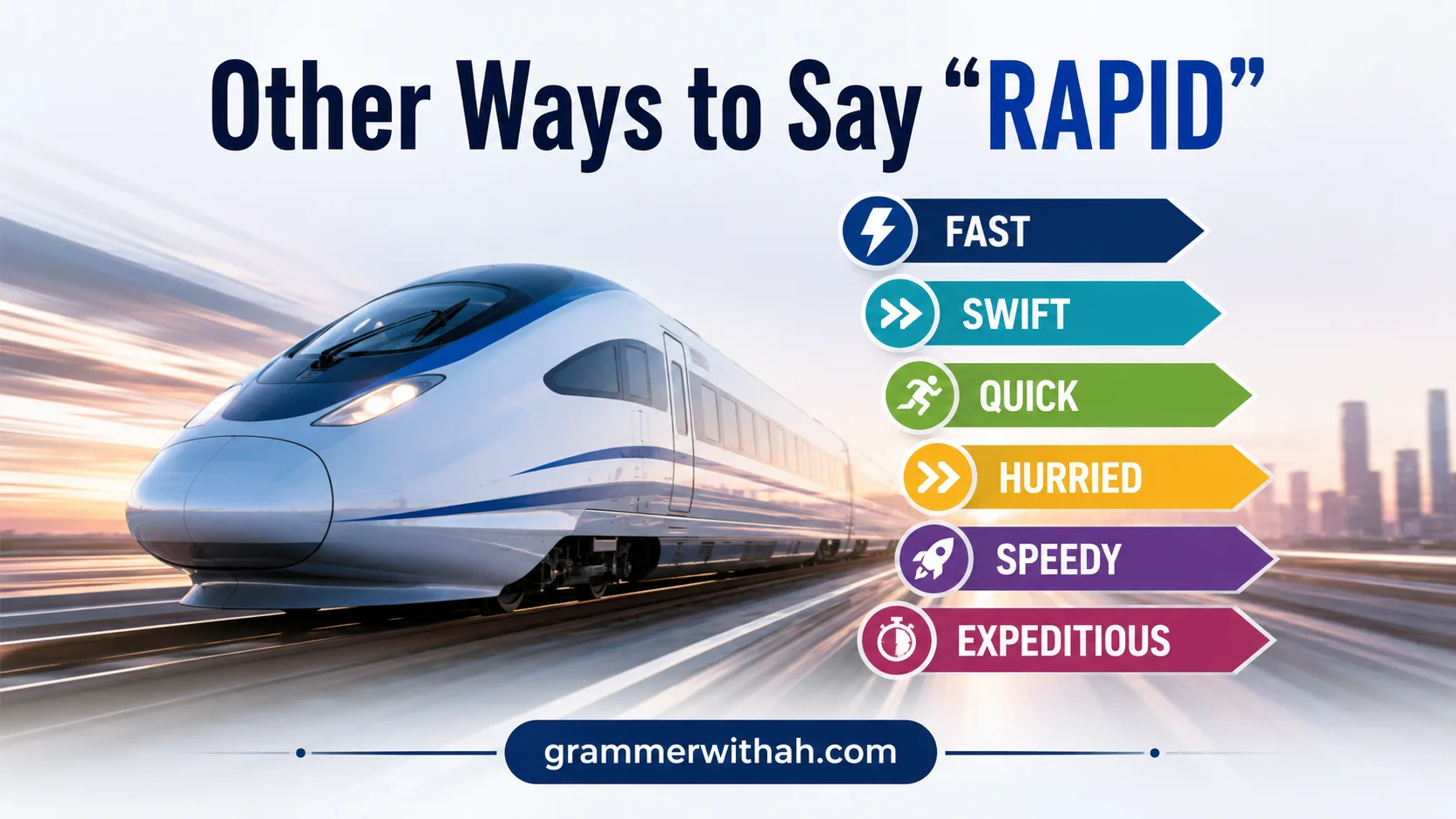
Other Ways to Say “RAPID” (With Examples) is a helpful guide for anyone who wants to improve their vocabulary and make their writing more natural. Instead of using rapid again and again, you can choose words like fast, swift, quick, speedy, or brisk to fit different situations. Learning these synonyms will help you write with more confidence, clarity, and variety.
The word rapid means something happens with great speed or in a very short time. However, the best alternative depends on the context and tone of your sentence. Whether you are writing an academic paper, business report, professional email, or creative story, choosing the right word improves readability, avoids repetition, and makes your message more engaging, accurate, and effective.
What Does “RAPID” Mean?
Rapid means very fast, quick, or happening in a short amount of time. People often use it to describe movement, changes, growth, response, progress, or action. It is a useful word because it sounds clear, strong, and professional in many situations.
Is It Professional or Polite to Say “Rapid”?
Yes, rapid is usually professional, polite, and neutral. It works well in business writing, school work, reports, and formal communication. Still, in some messages, it can sound a little stiff, so a softer word may feel warmer and more natural.
Pros and Cons of Using “Rapid”
The pros of using rapid are simple: it is clear, formal, and easy to understand. It works well when you want to show speed without sounding casual.
The cons are also important: sometimes rapid feels a little serious, technical, or less friendly. In warm conversation, another word may sound more natural and thoughtful.
Rapid Synonyms
- What Does “RAPID” Mean?
- Is It Professional or Polite to Say “Rapid”?
- Pros and Cons of Using “Rapid”
- Fast
- Quick
- Speedy
- Swift
- Prompt
- Immediate
- Instant
- Brisk
- Rapid-fire
- Accelerated
- Expeditious
- Fleet
- Lightning-fast
- Fast-moving
- Fast-paced
- Hasty
- Urgent
- Nimble
- High-speed
- Racing
- Snappy
- Slick
- Efficient
- Instantaneous
- Meteoric
1. Fast
Scenario Meaning Fast is the simplest and most common alternative for rapid. It describes something that happens or moves with a high level of speed, and it sounds natural in almost every situation.
Examples
- She gave a fast answer because she already knew the solution.
- The train was fast and reached the station earlier than expected.
- He made a fast decision during the meeting.
- Their company showed fast growth this year.
- We need a fast response to keep the project moving.
Tone Fast feels natural, simple, and widely used.
Details Explanation This word works in both casual and professional communication, which makes it very flexible. It is easy to understand, and it fits many different kinds of writing without sounding too formal.
Best Use Use fast when you want a clear, everyday word that people understand immediately.
2. Quick
Scenario Meaning Quick means something happens in a short time and does not take long. It is friendly, simple, and very common in everyday English.
Examples
- She gave a quick reply to the message.
- We had a quick meeting before lunch.
- He took a quick look at the report.
- They made a quick update to the website.
- I only need a quick answer right now.
Tone Quick feels friendly, easy, and natural.
Details Explanation This word is useful when you want your sentence to sound light and easy to read. It often feels softer than rapid, which makes it a good choice in casual or semi-formal communication.
Best Use Use quick when you want a simple and human-sounding alternative.
3. Speedy
Scenario Meaning Speedy means moving or happening very fast, often with a feeling of ease or efficiency. It can describe people, actions, services, or results.
Examples
- The team gave a speedy response to the customer.
- We received a speedy delivery yesterday.
- Her speedy progress impressed everyone.
- They made a speedy recovery after the problem.
- A speedy review helped us fix the issue quickly.
Tone Speedy feels positive, active, and slightly friendly.
Details Explanation This word is often used when you want to highlight quick action in a pleasant way. It is less formal than rapid, but still strong enough for many work and service situations.
Best Use Use speedy when you want to sound helpful, upbeat, and clear.
4. Swift
Scenario Meaning Swift means fast in a smooth, controlled, and often elegant way. It is a slightly more refined word that sounds calm and confident.
Examples
- The manager gave a swift reply to the complaint.
- She made a swift choice under pressure.
- The police took swift action after the report.
- Their swift progress surprised the whole team.
- We need a swift solution before the deadline.
Tone Swift feels polished, strong, and professional.
Details Explanation This word is excellent when you want speed without sounding rushed or casual. It often appears in business, news, and formal writing because it sounds balanced and efficient.
Best Use Use swift when you want a smart and professional alternative.
5. Prompt
Scenario Meaning Prompt means happening quickly and without unnecessary delay. It is often used when timing matters and a fast response is important.
Examples
- Thank you for your prompt reply.
- The company gave prompt support after the complaint.
- We need prompt action to solve this issue.
- Her prompt response saved valuable time.
- The staff handled the situation in a prompt way.
Tone Prompt feels polite, professional, and efficient.
Details Explanation This word is especially useful in business email, customer service, and formal writing. It shows respect while also making speed sound organized and responsible.
Best Use Use prompt when you want to sound respectful and timely.
6. Immediate
Scenario Meaning Immediate means happening right away, with no delay at all. It is stronger than many other speed-related words and often suggests urgency.
Examples
- We need immediate help with this problem.
- The team gave an immediate response.
- There was an immediate change in the schedule.
- The doctor requested immediate action.
- They made an immediate correction after noticing the mistake.
Tone Immediate feels serious, clear, and urgent.
Details Explanation This word is useful when time is very important and you want to show there is no room for delay. It sounds formal and strong, so it works well in professional settings.
Best Use Use immediate when the situation needs instant attention.
7. Instant
Scenario Meaning Instant means happening at once, with almost no waiting time. It often feels modern, direct, and very easy to understand.
Examples
- The app gave an instant notification.
- She felt an instant connection with the team.
- We got an instant answer from support.
- The change created instant results.
- He made an instant decision and moved forward.
Tone Instant feels modern, strong, and clear.
Details Explanation This word is useful in both casual and professional writing, especially when you want to show something happens immediately. It can also create a sense of speed that feels active and direct.
Best Use Use instant when you want to highlight something happening right away.
8. Brisk
Scenario Meaning Brisk means quick, lively, and full of active movement or energy. It can describe pace, business activity, or someone’s lively way of speaking or moving.
Examples
- We had a brisk walk through the park.
- The store had a brisk flow of customers.
- She gave a brisk reply to the question.
- The meeting moved at a brisk pace.
- Their brisk progress helped the project stay on track.
Tone Brisk feels lively, active, and efficient.
Details Explanation This word can sound energetic without being too harsh. It works nicely when you want to describe movement, pace, or activity that feels fast but still organized.
Best Use Use brisk when you want a smart word for lively speed.
9. Rapid-fire
Scenario Meaning Rapid-fire means happening in very quick succession, one after another, with little pause. It is often used for speech, questions, answers, or action.
Examples
- She asked rapid-fire questions during the interview.
- The speaker gave rapid-fire answers to the audience.
- They exchanged rapid-fire ideas in the meeting.
- His rapid-fire comments kept the discussion moving.
- The trainer used rapid-fire drills to build confidence.
Tone Rapid-fire feels energetic, busy, and dynamic.
Details Explanation This phrase is useful when several fast actions happen in a row. It sounds lively and modern, but it is not the best choice for very formal writing unless the context is creative or descriptive.
Best Use Use rapid-fire when you want to describe a series of quick actions.
10. Accelerated
Scenario Meaning Accelerated means becoming faster than before or moving at a quicker pace. It often suggests growth, progress, or development that is increasing speed.
Examples
- The company saw accelerated growth this year.
- We noticed an accelerated improvement in performance.
- The plan created accelerated learning for students.
- Their work led to accelerated delivery.
- Technology brought accelerated change to the industry.
Tone Accelerated feels formal, modern, and business-like.
Details Explanation This word is useful in reports, business writing, and academic language. It sounds more analytical than rapid, which makes it perfect when you want to describe speed in a thoughtful way.
Best Use Use accelerated when you want a formal word for faster progress.
11. Expeditious
Scenario Meaning Expeditious means done quickly and efficiently, often with skill and organization. It is a formal word that suggests smooth and timely action.
Examples
- The team gave an expeditious response to the request.
- We need an expeditious solution to this matter.
- The process became more expeditious after the update.
- Her expeditious handling saved time and effort.
- They completed the task in an expeditious manner.
Tone Expeditious feels formal, careful, and professional.
Details Explanation This word is best for formal reports, business communication, and polished writing. It may not be common in everyday speech, but it sounds intelligent and precise when used correctly.
Best Use Use expeditious when you want a formal and efficient-sounding choice.
12. Fleet
Scenario Meaning Fleet means moving very quickly, usually with lightness and speed. It is a somewhat literary or elegant word, so it can sound more expressive than rapid.
Examples
- She gave a fleet glance at the screen.
- The bird made a fleet movement across the sky.
- He had a fleet reaction to the sudden sound.
- Their fleet progress helped them finish early.
- The idea moved through the team with fleet energy.
Tone Fleet feels elegant, slightly literary, and light.
Details Explanation This word is not as common in everyday conversation, but it can make your writing feel more graceful. It works well when you want to describe quickness in a more stylish way.
Best Use Use fleet when you want a refined and poetic sense of speed.
13. Lightning-fast
Scenario Meaning Lightning-fast means extremely quick, almost shocking in speed. It creates a strong visual image and feels more dramatic than simple words like fast or quick.
Examples
- The service was lightning-fast and impressive.
- She gave a lightning-fast response to the email.
- The update happened in lightning-fast time.
- His lightning-fast thinking saved the situation.
- They completed the task with lightning-fast efficiency.
Tone Lightning-fast feels dramatic, strong, and energetic.
Details Explanation This phrase is excellent when you want to emphasize very high speed in a colorful way. It works well in marketing, casual writing, and strong descriptions.
Best Use Use lightning-fast when you want to make speed sound powerful.
Read More: 25 Other Ways to Say “PUNCTUALITY” (With Examples)
14. Fast-moving
Scenario Meaning Fast-moving means changing, developing, or happening quickly. It is often used for industries, situations, markets, or events that do not stay still for long.
Examples
- They work in a fast-moving industry.
- The team adjusted well to the fast-moving project.
- It was a fast-moving situation with many changes.
- The company stayed flexible in a fast-moving market.
- Her role requires attention in a fast-moving environment.
Tone Fast-moving feels practical, modern, and business-friendly.
Details Explanation This phrase is useful when you want to describe speed in a broader sense, especially in changing situations. It is clear, useful, and often sounds more specific than rapid.
Best Use Use fast-moving when you are describing quick change or active environments.
15. Fast-paced
Scenario Meaning Fast-paced means moving or happening at a quick, active rate. It often describes work, life, environments, or stories that feel busy and energetic.
Examples
- She enjoys a fast-paced work environment.
- The city has a fast-paced lifestyle.
- The class was fast-paced but easy to follow.
- Their fast-paced progress impressed the client.
- The movie had a fast-paced story from beginning to end.
Tone Fast-paced feels busy, energetic, and modern.
Details Explanation This word is very common in both speaking and writing. It helps describe not just speed, but also the feeling of constant movement or activity.
Best Use Use fast-paced when you want to describe an active and lively environment.
16. Hasty
Scenario Meaning Hasty means done too quickly, sometimes without enough care or thought. It can describe speed, but it often carries a warning or negative feeling.
Examples
- He made a hasty decision and later regretted it.
- The report seemed hasty and unfinished.
- She gave a hasty reply without checking the facts.
- Their hasty action caused more confusion.
- We should avoid a hasty conclusion in this case.
Tone Hasty feels careful, critical, and sometimes negative.
Details Explanation This word is important because it does not always mean “good speed.” It often suggests rushing, so use it only when you want to show that something happened too quickly.
Best Use Use hasty when speed happened without enough thought or care.
17. Urgent
Scenario Meaning Urgent means needing attention right away because something is important or time-sensitive. It focuses more on necessity than on speed alone.
Examples
- This is an urgent matter that needs your attention.
- We received an urgent call from the client.
- The situation required urgent action.
- She sent an urgent message late at night.
- The team handled the urgent request quickly.
Tone Urgent feels serious, direct, and important.
Details Explanation This word is useful when you want to show that something cannot wait. It is powerful in business, health, safety, and communication where timing matters a lot.
Best Use Use urgent when the situation needs fast attention because it matters now.
18. Nimble
Scenario Meaning Nimble means quick, light, and able to move or think fast. It can describe a person, a mind, a team, or a response that adapts quickly.
Examples
- She gave a nimble answer during the discussion.
- The company stayed nimble during the market change.
- His nimble thinking solved the problem.
- We need a nimble team for this project.
- The athlete showed nimble movement on the field.
Tone Nimble feels smart, light, and flexible.
Details Explanation This word is especially useful when speed and adaptability work together. It sounds positive and intelligent, which makes it a great choice for modern writing.
Best Use Use nimble when you want to emphasize quickness with flexibility.
19. High-speed
Scenario Meaning High-speed means moving or working at a very fast rate. It often describes technology, travel, internet, or machines.
Examples
- They installed high-speed internet in the office.
- The train offers high-speed travel across the country.
- The machine runs at high-speed performance.
- We need high-speed processing for the data.
- The project depends on high-speed communication.
Tone High-speed feels technical, strong, and clear.
Details Explanation This phrase works best in technical, business, and modern contexts. It sounds exact and practical, which helps when you need a word that feels specific and professional.
Best Use Use high-speed when you are talking about technology, travel, or performance.
20. Racing
Scenario Meaning Racing means moving or happening very quickly, almost as if it is in a race. It can describe action, thoughts, progress, or even emotions.
Examples
- Her racing thoughts made it hard to sleep.
- The car was racing down the road.
- The team made racing progress on the task.
- He had a racing heart before the presentation.
- The news spread with racing speed.
Tone Racing feels intense, fast, and energetic.
Details Explanation This word adds a sense of motion and excitement. It is more expressive than rapid, so it works well in creative writing or emotionally active scenes.
Best Use Use racing when you want to create a vivid feeling of speed or intensity.
21. Snappy
Scenario Meaning Snappy means quick, sharp, and lively. It can describe answers, style, movement, or a communication style that is short and fast.
Examples
- She gave a snappy reply to the question.
- The editor wanted a snappy headline.
- We kept the presentation snappy and focused.
- His snappy timing made the joke work well.
- They preferred a snappy pace for the video.
Tone Snappy feels casual, sharp, and modern.
Details Explanation This word is friendly and a little playful. It works well in informal writing, creative content, and short communication where you want energy without sounding stiff.
Best Use Use snappy when you want a quick, lively, and catchy style.
22. Slick
Scenario Meaning Slick means smooth, fast, and skillfully done. It often suggests something is handled quickly and efficiently with style.
Examples
- They gave a slick presentation to the client.
- The app has a slick and fast interface.
- Her slick response impressed the audience.
- We completed the task in a slick way.
- The team created a slick workflow for the project.
Tone Slick feels modern, smooth, and confident.
Details Explanation This word is useful when you want to show both speed and skill. It can sound stylish, so it is a strong option for tech, business, and creative writing.
Best Use Use slick when speed is smooth, polished, and well-managed.
23. Efficient
Scenario Meaning Efficient means done quickly with good use of time, energy, or resources. It focuses on smart speed, not just fast movement.
Examples
- The new system is efficient and easy to use.
- She gave an efficient response to the issue.
- The team works in an efficient manner every day.
- We need a more efficient process for approval.
- His efficient planning saved a lot of time.
Tone Efficient feels professional, practical, and smart.
Details Explanation This word is ideal when you want to show that something is fast and well-organized. It is often better than rapid when the main focus is quality and smart performance.
Best Use Use efficient when you want to praise speed with good results.
24. Instantaneous
Scenario Meaning Instantaneous means happening immediately, almost at the exact same moment. It is a more formal and technical word than instant.
Examples
- The system gave instantaneous feedback.
- Their reaction felt instantaneous.
- The change was almost instantaneous.
- The software produced instantaneous results.
- We noticed an instantaneous improvement in speed.
Tone Instantaneous feels formal, precise, and technical.
Details Explanation This word is useful when you want to sound exact and polished. It often appears in science, technology, and formal writing where precision matters more than casual warmth.
Best Use Use instantaneous when you want a formal word for immediate action.
25. Meteoric
Scenario Meaning Meteoric means extremely fast, often used to describe rapid success, rise, or change. It creates a strong image of sudden and impressive movement.
Examples
- Her meteoric rise surprised the entire company.
- The brand saw meteoric growth this year.
- He made a meteoric jump in popularity.
- Their meteoric success came after years of effort.
- The team experienced meteoric progress after the launch.
Tone Meteoric feels dramatic, impressive, and powerful.
Details Explanation This word is best when you want to describe speed with a sense of greatness or surprise. It is especially useful for success stories, growth, and major achievements.
Best Use Use meteoric when fast movement or success feels sudden and remarkable.
FAQs :
1. What does the word “rapid” mean?
Rapid means happening very quickly or at a high speed. It is commonly used to describe fast actions, changes, or events.
2. What are some common synonyms for “rapid”?
Some popular synonyms for rapid include fast, quick, swift, speedy, brisk, accelerated, prompt, and lightning-fast. The best choice depends on the context.
3. When should I use a synonym instead of “rapid”?
Use a synonym when you want to avoid repetition or match a specific tone. Different words work better in business writing, academic papers, creative stories, or everyday conversations.
4. Is “rapid” suitable for formal writing?
Yes, rapid is appropriate for both formal and informal writing. However, words like accelerated, prompt, or expeditious may sound more natural in certain professional contexts.
5. How can learning other ways to say “rapid” improve my writing?
Using different synonyms expands your vocabulary, improves readability, reduces repetition, and helps you communicate your ideas more clearly and effectively.
Conclusion :
Knowing other ways to say “rapid” gives you more flexibility in your writing and communication. By choosing the right synonym for the right context, you can make your sentences more natural, engaging, and precise. Whether you’re writing for school, work, or everyday use, expanding your vocabulary will help you express ideas with greater confidence and clarity.