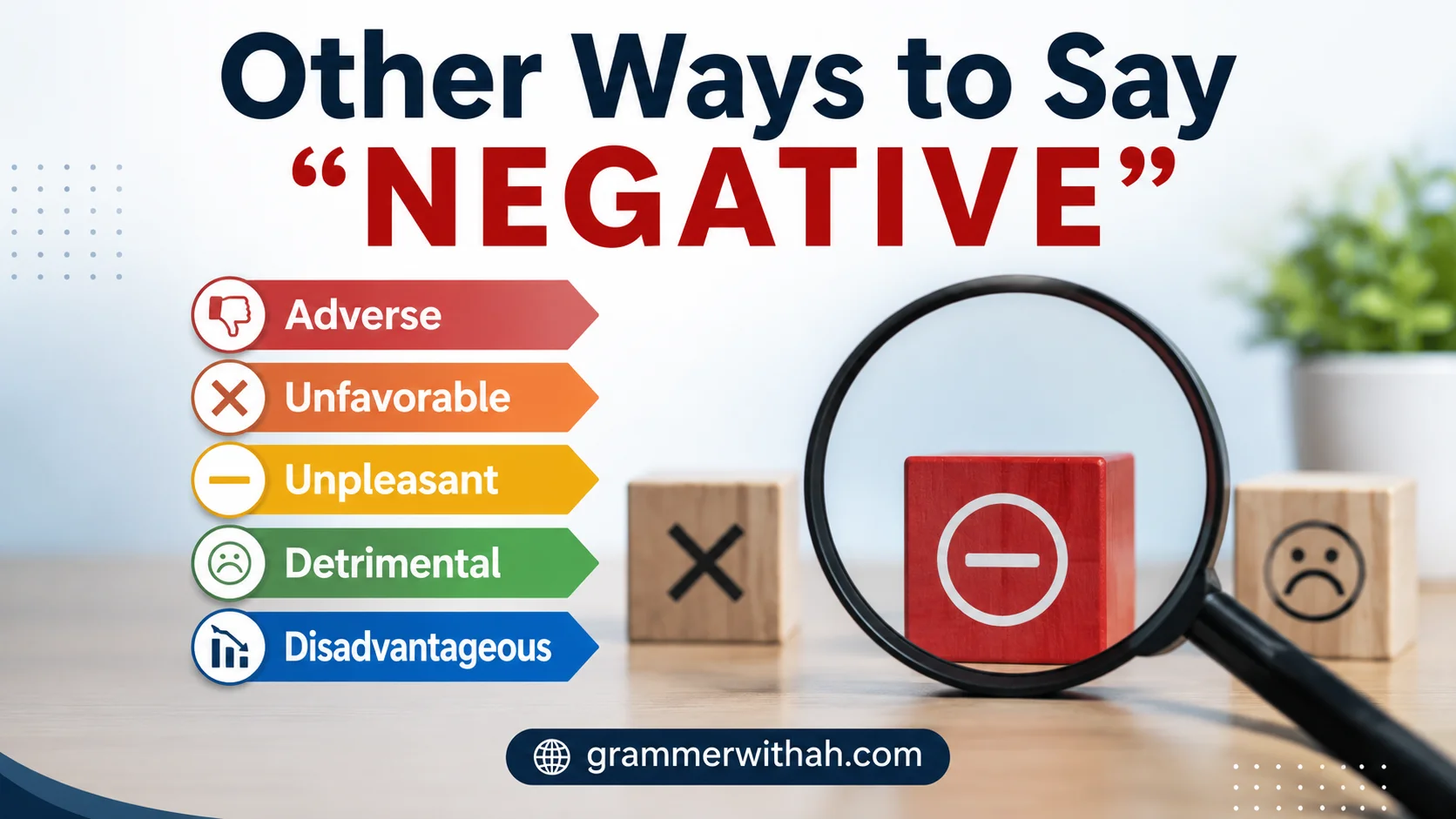
Other Ways to Say “Negative” (With Examples) can help you improve your English vocabulary and express your ideas in a more clear, polite, and natural way. The word negative has different meanings depending on the situation, so knowing the right synonyms makes your writing and conversations more effective. This guide shares simple alternatives that fit both formal and casual communication.
Whether you are talking about a negative attitude, feedback, results, opinions, or even math, science, and medicine, using the right word makes your message more accurate. These examples will help you understand when each synonym works best, making it easier to communicate with confidence, avoid repetition, and build stronger writing and speaking skills.
What Does “Negative” Mean?
The word negative usually describes something that is bad, unfavorable, unhelpful, doubtful, or lacking positive value. It can also describe a person, mood, situation, or result that does not support growth, success, or comfort. In everyday English, people use negative to talk about feedback, emotions, results, attitudes, or outcomes that feel less helpful or less encouraging.
Is It Professional or Polite to Say “Negative”?
Yes, negative can be professional and polite, especially in formal writing, reports, feedback, and business communication. However, the word can sometimes sound too direct, too harsh, or too cold if the situation needs a softer tone. That is why using an alternative can often make your message feel more respectful, more careful, and more supportive.
Pros and Cons of Using “Negative”
Pros: The word is clear, simple, and widely understood in both casual and professional English. It works well when you need direct communication, especially in reports, evaluations, or structured discussion.
Cons: The word can sometimes feel strong, blunt, or emotionally heavy, depending on the context. In sensitive conversations, it may sound less kind than softer alternatives that protect trust and connection.
“Negative” Synonyms
1. Unfavorable
2. Bad
3. Poor
4. Unhelpful
5. Harmful
6. Difficult
7. Unpleasant
8. Unfortunate
9. Adverse
10. Critical
11. Gloomy
12. Pessimistic
13. Discouraging
14. Tough
15. Problematic
16. Weak
17. Regrettable
18. Sad
19. Bad-Tempered
20. Hostile
21. Setback
22. Counterproductive
23. Deficient
24. Troublesome
25. Disappointing
1. Unfavorable
Scenario Meaning: Unfavorable means something is not good, not helpful, or not working in your favor in a given situation.
Examples:
- The weather created an unfavorable setting for the outdoor meeting.
- The review gave the project an unfavorable impression overall.
- Her unfavorable response made the team think carefully again.
- The market conditions remained unfavorable for new investors.
- His unfavorable attitude affected the whole discussion negatively.
Tone: Formal, careful, and professional.
Details Explanation: This word works well when you want to describe a situation, result, or condition that is clearly not supporting success. It feels a little softer than negative, while still staying serious and precise.
Best Use: Use unfavorable in reports, business writing, school work, and thoughtful professional communication.
2. Bad
Scenario Meaning: Bad means something is poor, harmful, disappointing, or not good enough in quality or result.
Examples:
- The team received bad feedback after the presentation ended.
- A bad result changed their plans for the next week.
- He gave a bad impression during the interview.
- The report showed bad progress in several areas.
- The meeting ended with a bad feeling for everyone involved.
Tone: Simple, direct, and casual.
Details Explanation: This is one of the easiest words to understand, but it can sound very plain or blunt. It is useful in everyday speech, but it may feel too simple for careful or professional writing.
Best Use: Use bad in casual conversation, quick explanations, or simple everyday communication.
3. Poor
Scenario Meaning: Poor means something is weak, low in quality, or not performing well enough.
Examples:
- The team showed poor communication during the project.
- Her poor timing made the situation feel more difficult.
- The company received poor results this quarter.
- He made a poor choice during the final round.
- Their poor planning caused avoidable stress later.
Tone: Neutral, professional, and clear.
Details Explanation: Poor is often used when you want to describe quality, performance, or behavior without sounding overly emotional. It gives a more measured tone than negative, especially in formal settings.
Best Use: Use poor in school writing, workplace feedback, evaluations, and quality discussions.
4. Unhelpful
Scenario Meaning: Unhelpful means something does not support progress, understanding, or a good outcome.
Examples:
- His unhelpful comment slowed the conversation down.
- The email gave an unhelpful response to the problem.
- Their unhelpful behavior made teamwork harder.
- The advice felt unhelpful in that stressful moment.
- Her unhelpful tone created more confusion than clarity.
Tone: Soft, respectful, and constructive.
Details Explanation: This word is excellent when you want to criticize behavior or communication without sounding too harsh. It focuses on usefulness, which makes the message feel more thoughtful and less personal.
Best Use: Use unhelpful in feedback, customer support, teamwork discussions, and polite correction.
5. Harmful
Scenario Meaning: Harmful means something can cause damage, pain, trouble, or a bad result.
Examples:
- The rumor had a harmful effect on their reputation.
- That harmful habit slowed his progress over time.
- The decision created harmful results for the group.
- Her words felt harmful to the person listening.
- The policy had a harmful impact on small businesses.
Tone: Serious, careful, and strong.
Details Explanation: Harmful is a strong word, so it should be used when there is real damage or danger. It is more serious than negative because it points toward actual harm, not just a weak result.
Best Use: Use harmful in health, safety, ethics, policy, and serious problem discussions.
6. Difficult
Scenario Meaning: Difficult means something is hard to manage, understand, accept, or complete.
Examples:
- It was a difficult decision for the entire family.
- The project became difficult after several changes.
- She had a difficult time accepting the news.
- The conversation turned difficult very quickly.
- He handled a difficult situation with patience.
Tone: Gentle, human, and understanding.
Details Explanation: This is a useful alternative when you want to describe a negative situation without sounding harsh. It feels more compassionate because it focuses on the challenge rather than the blame.
Best Use: Use difficult in personal writing, emotional conversations, and thoughtful professional updates.
7. Unpleasant
Scenario Meaning: Unpleasant means something is uncomfortable, upsetting, or not enjoyable.
Examples:
- The meeting became unpleasant after the disagreement started.
- She remembered an unpleasant experience from last year.
- The tone of the message felt unpleasant to read.
- He had an unpleasant reaction to the criticism.
- The whole situation turned unpleasant very quickly.
Tone: Gentle, clear, and socially careful.
Details Explanation: Unpleasant is a polite way to describe something negative without being too severe. It works well when you want to protect the listener’s feelings while still being honest.
Best Use: Use unpleasant in polite conversation, customer service, and calm written feedback.
8. Unfortunate
Scenario Meaning: Unfortunate means something sad, disappointing, or not ideal in the situation.
Examples:
- It was an unfortunate mistake, but they learned from it.
- The delay created an unfortunate situation for everyone.
- That was an unfortunate outcome after so much effort.
- Her unfortunate choice affected the final result.
- The team faced an unfortunate setback before the deadline.
Tone: Polite, soft, and considerate.
Details Explanation: This word is often used when you want to sound respectful and careful. It softens the message, which makes it very useful in formal and sensitive communication.
Best Use: Use unfortunate in professional writing, apologies, and messages that need tact.
9. Adverse
Scenario Meaning: Adverse means something has a harmful, unfavorable, or opposing effect.
Examples:
- The policy had adverse effects on local workers.
- His choice created adverse results for the team.
- The company faced adverse market conditions this year.
- The medicine caused adverse reactions in some patients.
- Bad planning led to adverse consequences later.
Tone: Formal, technical, and serious.
Details Explanation: Adverse is stronger and more formal than negative, and it often appears in reports, science, law, and business language. It is a good choice when accuracy matters.
Best Use: Use adverse in academic writing, reports, legal language, and professional analysis.
10. Critical
Scenario Meaning: Critical means something is very serious, important, or strongly needing attention.
Examples:
- The team faced a critical problem before launch.
- Her critical response changed the direction of the meeting.
- The doctor gave a critical update about the patient.
- They reached a critical point in the negotiation.
- The error created a critical issue for the system.
Tone: Serious, urgent, and formal.
Details Explanation: Critical can describe a negative situation, but it also suggests importance and urgency. It is stronger than negative and works best when immediate attention is needed.
Best Use: Use critical in business, healthcare, research, and emergency communication.
11. Gloomy
Scenario Meaning: Gloomy means dark, sad, discouraging, or lacking hope and energy.
Examples:
- The report gave a gloomy view of the future.
- His gloomy mood affected the whole room.
- The news created a gloomy atmosphere that day.
- She felt gloomy after hearing the results.
- The forecast looked gloomy before the storm.
Tone: Emotional, soft, and slightly sad.
Details Explanation: This word is best when describing mood, atmosphere, or outlook. It is more expressive than negative, and it adds a stronger emotional feeling to the sentence.
Best Use: Use gloomy in creative writing, emotional reflection, and descriptive language.
12. Pessimistic
Scenario Meaning: Pessimistic means expecting the worst or having a negative view of the future.
Examples:
- Her pessimistic thinking made the plan feel smaller.
- He gave a pessimistic answer about the outcome.
- The group became pessimistic after several delays.
- A pessimistic attitude can block creative thinking.
- His pessimistic view was clear during the discussion.
Tone: Analytical, careful, and sometimes critical.
Details Explanation: This word describes a mindset rather than just a single bad result. It is useful when you want to discuss attitude, outlook, or repeated thinking patterns.
Best Use: Use pessimistic in psychology discussions, self-improvement writing, and thoughtful analysis.
13. Discouraging
Scenario Meaning: Discouraging means something reduces confidence, hope, or motivation.
Examples:
- The first rejection felt discouraging to the team.
- That discouraging result made them pause and reflect.
- Her discouraging words hurt his confidence.
- The slow progress became discouraging after a while.
- A discouraging response can affect motivation deeply.
Tone: Gentle, emotional, and human.
Details Explanation: This word is useful when you want to show the emotional effect of a situation. It feels more caring than negative, because it focuses on how something affects a person.
Best Use: Use discouraging in supportive writing, coaching, and emotional conversations.
Read More: 25 Other Ways to Say “RAPID” (With Examples)
14. Tough
Scenario Meaning: Tough means something is hard, stressful, or not easy to manage.
Examples:
- It was a tough decision for everyone involved.
- She faced a tough week at work.
- The team had a tough conversation after the loss.
- He went through a tough period with patience.
- That was a tough situation for the whole family.
Tone: Friendly, natural, and human.
Details Explanation: Tough is one of the most natural-sounding alternatives in everyday English. It feels honest without sounding too formal, and it often sounds kinder than negative.
Best Use: Use tough in casual speech, supportive messages, and honest conversation.
15. Problematic
Scenario Meaning: Problematic means something causes problems, concern, or possible trouble.
Examples:
- The plan became problematic after the budget changed.
- His behavior was problematic in the meeting.
- The statement felt problematic to many readers.
- Their approach was problematic from the start.
- That rule became problematic in real life.
Tone: Formal, careful, and slightly critical.
Details Explanation: This word is useful when something is not just bad, but also likely to create further issues. It sounds more thoughtful and specific than the broad word negative.
Best Use: Use problematic in analysis, reviews, workplace discussions, and academic writing.
16. Weak
Scenario Meaning: Weak means something lacks strength, power, quality, or convincing support.
Examples:
- The argument was weak and easy to question.
- His weak explanation did not satisfy the group.
- The report showed weak evidence overall.
- They gave a weak response to the concern.
- A weak signal caused more delay than expected.
Tone: Direct, critical, and clear.
Details Explanation: This word is useful when something lacks support or strength, but it can sound sharp. It is more forceful than negative, so it should be used carefully.
Best Use: Use weak in debates, analysis, feedback, and evidence-based discussion.
17. Regrettable
Scenario Meaning: Regrettable means something is disappointing, unfortunate, or worthy of regret.
Examples:
- The delay was a regrettable mistake for the team.
- It was a regrettable turn of events for everyone.
- His comment made the situation more regrettable.
- The loss was regrettable, but they kept moving forward.
- That was a regrettable misunderstanding between friends.
Tone: Polite, formal, and thoughtful.
Details Explanation: This is a refined word that softens negative news and keeps the tone respectful. It works especially well when you want to sound careful, mature, and diplomatic.
Best Use: Use regrettable in formal apologies, business communication, and respectful writing.
18. Sad
Scenario Meaning: Sad means something causes emotional pain, disappointment, or sorrow.
Examples:
- It was a sad ending to a long and hopeful project.
- She felt sad after reading the message.
- That was a sad moment for the whole group.
- His sad reaction showed how deeply he cared.
- The news left everyone feeling sad and quiet.
Tone: Emotional, soft, and personal.
Details Explanation: Sad is simple, human, and easy to understand. It works best when the feeling itself matters more than the formal description of the problem.
Best Use: Use sad in personal writing, emotional support, and caring conversation.
19. Bad-tempered
Scenario Meaning: Bad-tempered means someone becomes easily angry, annoyed, or difficult to deal with.
Examples:
- He sounded bad-tempered after the long delay.
- Her bad-tempered reply surprised the team.
- The manager was bad-tempered during the busy morning.
- A bad-tempered mood can affect every conversation.
- He became bad-tempered when plans changed suddenly.
Tone: Critical, descriptive, and careful.
Details Explanation: This phrase is useful when describing a person’s mood or behavior in a clear way. It is more specific than negative and helps explain emotional reactions more accurately.
Best Use: Use bad-tempered in character description, storytelling, and behavioral explanation.
20. Hostile
Scenario Meaning: Hostile means unfriendly, aggressive, or openly opposed to someone or something.
Examples:
- The room felt hostile after the argument started.
- His hostile tone made the situation worse.
- They faced a hostile response from the crowd.
- The meeting became hostile very quickly.
- Her hostile attitude blocked any real progress.
Tone: Strong, serious, and formal.
Details Explanation: Hostile is a powerful word and should be used only when there is real conflict or clear aggression. It is much stronger than negative, so it should be chosen carefully.
Best Use: Use hostile in conflict reporting, serious analysis, and security-related discussion.
21. Setback
Scenario Meaning: A setback means a problem, delay, or obstacle that slows progress.
Examples:
- The injury was a serious setback for the player.
- A funding issue created a setback for the project.
- They faced one setback after another that week.
- The news was a small but painful setback.
- Every setback helped them learn and improve.
Tone: Neutral, practical, and understanding.
Details Explanation: This word works well when you want to focus on progress being interrupted rather than simply being bad. It sounds less emotional than negative and more solution-focused.
Best Use: Use setback in business, personal growth, sports, and project updates.
22. Counterproductive
Scenario Meaning: Counterproductive means something creates the opposite of the result you want.
Examples:
- His reaction was counterproductive during the meeting.
- The strict rule became counterproductive very quickly.
- Their approach was counterproductive and slowed progress.
- Arguing loudly was counterproductive in that moment.
- The policy felt counterproductive to real teamwork.
Tone: Professional, logical, and careful.
Details Explanation: This word is excellent when you want to explain that an action does more harm than good. It is more specific than negative because it shows the problem clearly.
Best Use: Use counterproductive in workplace feedback, strategy, planning, and formal analysis.
23. Deficient
Scenario Meaning: Deficient means something is lacking enough quality, amount, or strength to be sufficient.
Examples:
- The report was deficient in useful details.
- His explanation felt deficient and incomplete.
- The system was deficient in security features.
- Their plan was deficient in clear steps.
- The evidence seemed deficient to support the claim.
Tone: Formal, precise, and academic.
Details Explanation: Deficient is a strong, formal word used when something is not enough for a proper standard. It is useful in technical or academic writing where accuracy matters.
Best Use: Use deficient in reports, research, evaluation, and formal critique.
24. Troublesome
Scenario Meaning: Troublesome means something causes trouble, stress, worry, or repeated difficulty.
Examples:
- The issue became troublesome for the support team.
- That was a troublesome situation for everyone involved.
- His troublesome behavior created more work later.
- The software bug proved troublesome all week.
- A troublesome problem often needs careful attention.
Tone: Practical, clear, and slightly negative.
Details Explanation: This word describes something that keeps causing problems, rather than just once. It sounds more detailed than negative, and it works well in both formal and casual settings.
Best Use: Use troublesome in problem-solving, reporting, and everyday explanation.
25. Disappointing
Scenario Meaning: Disappointing means something fails to meet hope, expectation, or a desired result.
Examples:
- The final result was disappointing for the whole team.
- Her disappointing answer lowered everyone’s expectations.
- The meeting ended with a disappointing outcome.
- That was a disappointing moment after all the effort.
- The product gave a disappointing experience overall.
Tone: Emotional, gentle, and realistic.
Details Explanation: This word focuses on the feeling of letdown, which makes it more human than simply saying negative. It is ideal when you want to show that something did not live up to expectations.
Best Use: Use disappointing in reviews, personal reflection, feedback, and honest emotional writing.
FAQs :
1. What does the word “negative” mean?
The word negative usually describes something unfavorable, harmful, or pessimistic. It can also have different meanings in math, science, medicine, and everyday conversations.
2. Why should I use other ways to say “negative”?
Using synonyms for negative makes your writing and speaking more interesting. It also helps you choose the most accurate word for different situations.
3. What are some common synonyms for “negative”?
Some common alternatives include unfavorable, adverse, pessimistic, critical, hostile, gloomy, disapproving, and discouraging.
4. Can I use every synonym in the same situation?
No. Each synonym has its own meaning and tone. It is important to choose the word that best matches the context of your sentence.
5. How can I improve my vocabulary for words like “negative”?
Read regularly, practice using synonyms in sentences, and learn from real-life examples. This will help you speak and write with greater confidence.
Conclusion :
Learning other ways to say “negative” helps you communicate with more clarity, confidence, and precision. By understanding the meaning, tone, and best use of each synonym, you can avoid repeating the same word and make your writing and conversations more natural and engaging. Keep practicing these alternatives to build a stronger and more versatile English vocabulary.