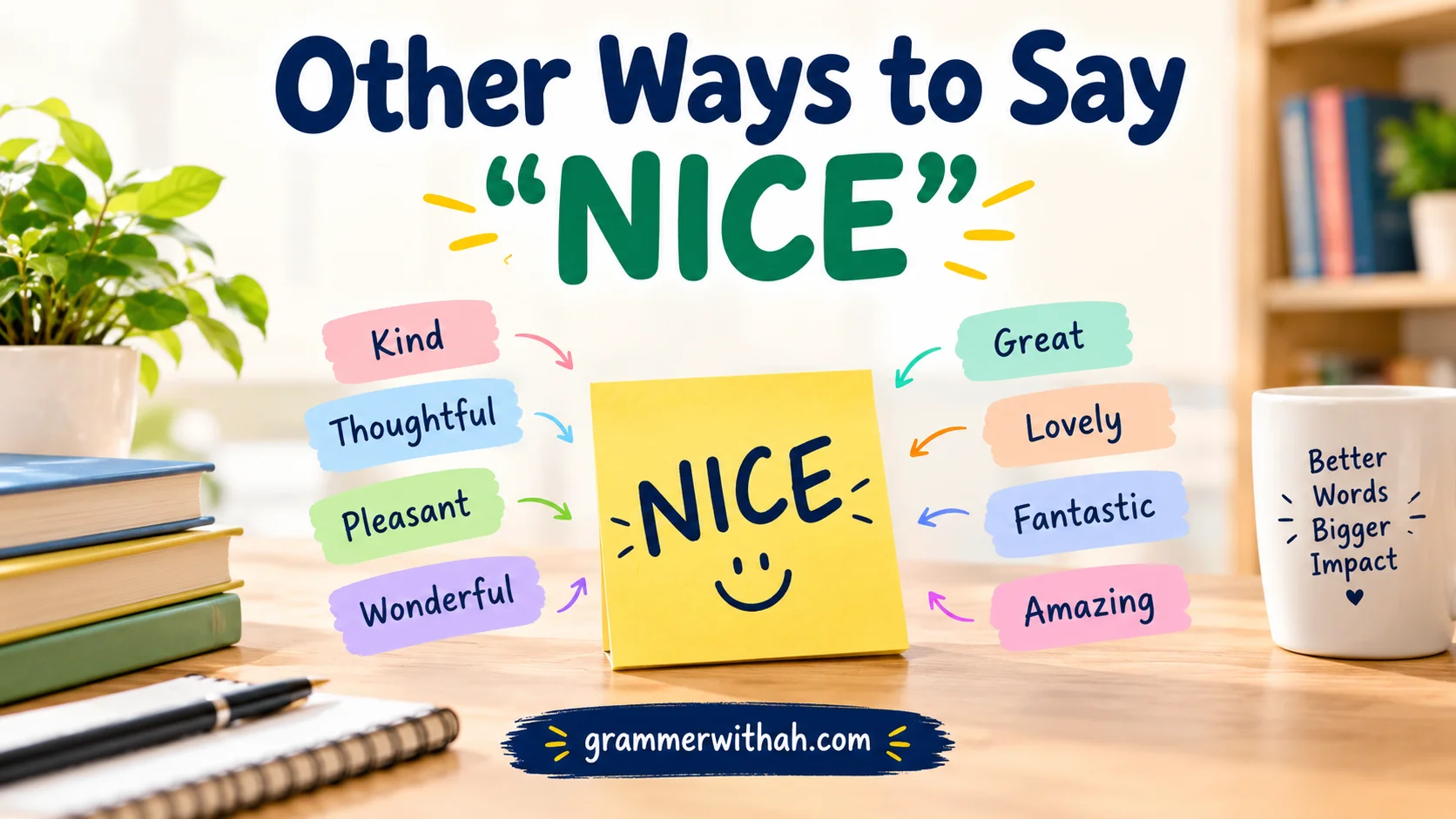
Finding the right words can make your English sound more natural, warm, and expressive. Other Ways to Say “NICE” (With Examples) gives you useful alternatives when you want to describe someone or something positively. While “nice” is simple and common, using different synonyms can help you communicate kindness, warmth, goodwill, and positivity more clearly. These alternatives can also make your conversations and writing feel more interesting without using difficult language.
Using a wider range of words and phrases can make your communication more colorful and engaging. Whether you are describing a friendly person, a pleasant experience, or a thoughtful action, the right expression can add more meaning to your message. In this guide, you will discover practical alternatives to “nice” along with clear examples, making it easier to understand their meaning and use them naturally in everyday English.
What Does “Nice” Mean?
Nice generally means pleasant, kind, enjoyable, friendly, attractive, or satisfactory, depending on the situation where the word appears. It is a broad and positive adjective that can describe people, experiences, things, actions, places, ideas, or feelings.
For example, calling someone nice may mean that person is friendly and considerate, while calling a place nice may mean that it feels attractive, comfortable, or enjoyable. Because nice has several meanings, using a more specific alternative can sometimes make your communication clearer and more expressive.
Is It Professional or Polite to Say “Nice”?
Yes, nice is polite and professional in many everyday situations, particularly when you want to express simple approval or appreciation. However, it can sometimes sound too general or casual in formal writing, workplace communication, academic writing, or important professional conversations.
For example, saying “That was a nice presentation” is polite, but “That was an impressive presentation with several thoughtful insights” communicates stronger and more specific appreciation.
Therefore, choosing an alternative depends on your relationship with the person, communication setting, and exact meaning you want to express.
Pros and Cons of “Nice”
Pros of Saying “Nice”
1. Simple: Nice is easy to understand and works naturally in everyday conversations.
2. Friendly: The word usually creates a warm and positive feeling without sounding overly formal.
3. Flexible: Nice can describe many different things, including people, experiences, places, ideas, and actions.
4. Polite: It provides a safe way to express approval without making the conversation unnecessarily complicated.
Cons of Saying “Nice”
1. General: Nice can sometimes feel too vague because it does not explain exactly what you appreciate.
2. Repetitive: Using nice too frequently can make your writing sound predictable or less expressive.
3. Less Emotional: When you want to communicate genuine admiration, stronger alternatives can express your feelings more clearly.
4. Sometimes Too Casual: In formal professional situations, a more precise word may communicate greater confidence and professionalism.
Synonyms “Nice”
- Pleasant
- Kind
- Lovely
- Wonderful
- Friendly
- Charming
- Thoughtful
- Considerate
- Enjoyable
- Delightful
- Wonderful
- Excellent
- Beautiful
- Attractive
- Generous
- Polite
- Warm
- Gracious
- Amazing
- Fantastic
- Impressive
- Appealing
- Sweet
- Favorable
- Admirable
1. Pleasant
Scenario Meaning: Pleasant describes something enjoyable, comfortable, agreeable, or satisfying that creates a positive feeling without necessarily being extremely exciting or remarkable.
Examples:
- We had a pleasant conversation that helped everyone feel comfortable and understood during the meeting.
- The hotel provided a pleasant atmosphere where guests could relax after traveling for several hours.
- She gave me a pleasant surprise that made an ordinary afternoon feel much more memorable.
- It was a pleasant experience because everyone treated each other with patience, kindness, and respect.
- Your message created a pleasant feeling that stayed with me throughout the rest of my day.
Tone: Friendly, calm, positive, and polite.
Details Explanation: Pleasant is especially useful when nice feels too basic, while wonderful or amazing would sound unnecessarily strong.
Best Use: Use pleasant when describing comfortable experiences, conversations, environments, interactions, weather, or situations that feel positive and enjoyable.
2. Kind
Scenario Meaning: Kind describes someone or something showing care, generosity, compassion, understanding, or genuine concern toward another person.
Examples:
- It was very kind of you to take time from your busy schedule to help me with this problem.
- She is a kind person who always tries to make others feel respected and included.
- Your kind words helped me feel more confident during a difficult and uncertain moment.
- He offered a kind response instead of becoming angry when the situation became unexpectedly complicated.
- Thank you for being so kind and patient while I worked through everything at my own pace.
Tone: Warm, caring, compassionate, and sincere.
Details Explanation: Kind focuses more on good character and caring behavior than physical beauty or general pleasantness.
Best Use: Use kind when complimenting someone’s character, behavior, words, actions, or generosity toward others.
3. Lovely
Scenario Meaning: Lovely describes something beautiful, enjoyable, pleasing, or emotionally comforting that creates a gentle and genuinely positive impression.
Examples:
- You have a lovely smile that makes people around you feel comfortable almost immediately.
- We spent a lovely afternoon talking, laughing, and enjoying the peaceful surroundings together.
- She gave me a lovely gift that showed how carefully she had considered my interests.
- Your home has a lovely atmosphere that feels welcoming, peaceful, and comfortable for visitors.
- It was lovely to hear from you after such a long period without meaningful conversation.
Tone: Warm, affectionate, gentle, and positive.
Details Explanation: Lovely often carries more emotional warmth than nice and can sound especially natural when expressing genuine appreciation.
Best Use: Use lovely for people, experiences, places, gifts, appearances, conversations, or moments that feel especially pleasant.
4. Wonderful
Scenario Meaning: Wonderful describes something extremely good, enjoyable, impressive, or emotionally satisfying that creates strong positive feelings.
Examples:
- You did a wonderful job explaining everything clearly and making the difficult information easier to understand.
- We had a wonderful evening together, and everyone enjoyed the relaxed conversation and delicious food.
- Your support has been wonderful during a period when I genuinely needed encouragement and understanding.
- She shared a wonderful idea that could make the entire project more useful for everyone involved.
- It was wonderful meeting you because your positive attitude made the conversation feel comfortable and memorable.
Tone: Enthusiastic, appreciative, warm, and joyful.
Details Explanation: Wonderful is stronger than nice and communicates clear enthusiasm or admiration without sounding excessively dramatic.
Best Use: Use wonderful when something genuinely exceeds ordinary expectations or creates especially positive feelings.
5. Friendly
Scenario Meaning: Friendly describes someone who behaves warmly, pleasantly, openly, and respectfully toward other people.
Examples:
- The staff were extremely friendly, making the entire visit feel comfortable from the moment we arrived.
- She has a friendly personality that makes new people feel welcome without unnecessary pressure.
- Our neighbor gave us a friendly greeting whenever we passed each other outside.
- He maintained a friendly attitude even when the discussion became complicated and somewhat stressful.
- The workplace has a friendly environment where employees can comfortably share questions and ideas.
Tone: Warm, approachable, social, and welcoming.
Details Explanation: Friendly is more specific than nice because it directly describes warm and approachable social behavior.
Best Use: Use friendly when describing people, personalities, greetings, workplaces, communities, or social environments.
6. Charming
Scenario Meaning: Charming describes someone or something pleasantly attractive, appealing, delightful, or naturally engaging in a memorable way.
Examples:
- The small restaurant had a charming atmosphere that made the evening feel relaxed and personal.
- She gave a charming smile that immediately made the conversation feel easier and more natural.
- We stayed in a charming little village surrounded by beautiful scenery and peaceful streets.
- His charming personality helped him connect naturally with people from many different backgrounds.
- The old house has a charming character that makes it feel completely different from modern buildings.
Tone: Warm, attractive, affectionate, and engaging.
Details Explanation: Charming suggests a special kind of appeal or attractiveness that makes someone or something memorable.
Best Use: Use charming for personalities, places, homes, smiles, manners, stories, or experiences with distinctive appeal.
7. Thoughtful
Scenario Meaning: Thoughtful describes someone who carefully considers other people’s feelings, needs, preferences, or circumstances before speaking or acting.
Examples:
- That was a thoughtful gesture because you remembered something important that I had mentioned previously.
- She gave me a thoughtful gift that clearly showed she understood what would make me happy.
- Your thoughtful message arrived at exactly the right moment and genuinely encouraged me.
- He offered a thoughtful suggestion that considered everyone’s concerns before recommending a solution.
- It was very thoughtful of you to check whether everyone had arrived safely after the event.
Tone: Caring, sincere, considerate, and emotionally warm.
Details Explanation: Thoughtful is an excellent alternative when nice refers to careful attention, emotional awareness, or meaningful consideration.
Best Use: Use thoughtful for gestures, gifts, messages, decisions, comments, suggestions, and considerate actions.
8. Considerate
Scenario Meaning: Considerate describes behavior that shows awareness of other people’s feelings, needs, comfort, time, boundaries, or personal circumstances.
Examples:
- It was considerate of you to lower your voice while everyone else was trying to concentrate.
- She is very considerate and always asks whether her decisions might inconvenience someone else.
- His considerate behavior made the new employee feel comfortable during their first week.
- Thank you for being considerate of everyone’s time and keeping the meeting focused and organized.
- A considerate response can make difficult conversations feel much more respectful and productive.
Tone: Respectful, caring, mature, and thoughtful.
Details Explanation: Considerate is stronger and more specific than nice when you want to praise someone for respecting others’ needs or feelings.
Best Use: Use considerate when discussing manners, behavior, communication, decisions, boundaries, or respectful treatment.
9. Enjoyable
Scenario Meaning: Enjoyable describes something that provides pleasure, satisfaction, entertainment, comfort, or positive feelings during an experience.
Examples:
- The workshop was enjoyable because the activities were practical, interactive, and easy for everyone to understand.
- We had an enjoyable conversation that covered several interesting topics without feeling forced or uncomfortable.
- The trip became especially enjoyable once everyone relaxed and stopped worrying about the schedule.
- Reading the book was an enjoyable experience because the story remained interesting from beginning to end.
- Your presentation was enjoyable because you explained complicated ideas using simple and relatable examples.
Tone: Positive, relaxed, cheerful, and straightforward.
Details Explanation: Enjoyable is useful when nice specifically means pleasant to experience or something that gives pleasure.
Best Use: Use enjoyable for activities, events, conversations, trips, books, meals, classes, presentations, and experiences.
10. Delightful
Scenario Meaning: Delightful describes something especially pleasing, charming, enjoyable, or satisfying that creates genuine happiness or pleasant surprise.
Examples:
- We had a delightful afternoon talking about our favorite books and sharing interesting personal stories.
- The little café had a delightful atmosphere that made everyone want to stay longer.
- It was a delightful surprise to receive your message after such a busy week.
- She has a delightful personality that makes conversations feel naturally cheerful and comfortable.
- The children created a delightful performance that brought smiles to everyone watching from the audience.
Tone: Cheerful, warm, charming, and enthusiastic.
Details Explanation: Delightful communicates more happiness than nice and often suggests that something pleasantly surprised or pleased you.
Best Use: Use delightful for experiences, people, events, surprises, conversations, places, and charming moments.
11. Excellent
Scenario Meaning: Excellent describes something extremely good, high-quality, effective, impressive, or significantly better than ordinary expectations.
Examples:
- You did an excellent job organizing the information clearly and presenting every important point confidently.
- The team produced an excellent result despite working under considerable pressure and limited time.
- Your explanation was excellent because it made a difficult concept surprisingly easy to understand.
- She provided excellent service and made sure every customer received helpful and respectful assistance.
- This is an excellent opportunity for anyone who wants to develop valuable skills through practical experience.
Tone: Professional, confident, appreciative, and strong.
Details Explanation: Excellent works especially well when nice means high quality, impressive, successful, or better than expected.
Best Use: Use excellent in professional, academic, workplace, educational, and formal communication.
12. Beautiful
Scenario Meaning: Beautiful describes something that creates strong admiration because of its attractive appearance, emotional quality, meaningful nature, or artistic appeal.
Examples:
- The garden looked beautiful in the morning sunlight, with flowers covering nearly every visible corner.
- You wrote a beautiful message that expressed your feelings with honesty, warmth, and genuine care.
- The sunset was absolutely beautiful, and everyone stopped talking for several moments to appreciate it.
- She has a beautiful way of helping people without making them feel uncomfortable or dependent.
- Their friendship is beautiful because both people continue supporting each other through difficult circumstances.
Tone: Warm, admiring, emotional, and sincere.
Details Explanation: Beautiful can describe physical appearance, but it can also express emotional, artistic, moral, or meaningful qualities.
Best Use: Use beautiful for people, places, art, writing, moments, relationships, ideas, gestures, and meaningful experiences.
13. Attractive
Scenario Meaning: Attractive describes something or someone that creates interest, admiration, or appeal because of appearance, qualities, design, or overall presentation.
Examples:
- The new website has an attractive design that makes important information easier for visitors to notice.
- She chose an attractive outfit that looked professional while still expressing her personal style.
- The apartment has an attractive layout that makes the limited space feel surprisingly comfortable.
- This proposal offers an attractive option for people who want flexibility without sacrificing important features.
- The garden became more attractive after several colorful plants were added around the entrance.
Tone: Neutral, positive, polished, and descriptive.
Details Explanation: Attractive is more precise than nice when discussing appearance, visual appeal, design, opportunities, or qualities that draw interest.
Best Use: Use attractive for people, designs, products, homes, offers, opportunities, ideas, and visual appearances.
Read This: 25 Other Ways to Say “CHANGE” (With Examples)
14. Generous
Scenario Meaning: Generous describes someone who willingly gives time, money, attention, support, resources, or kindness without expecting something equal in return.
Examples:
- It was generous of you to spend your entire afternoon helping me prepare for the important presentation.
- She made a generous contribution that helped the community complete an important local project.
- His generous nature makes him someone people naturally trust during difficult situations.
- Thank you for your generous support when I needed encouragement and practical assistance the most.
- They offered a generous amount of time to help new members understand the organization’s procedures.
Tone: Warm, appreciative, respectful, and sincere.
Details Explanation: Generous is ideal when nice describes giving, sharing, supporting, or willingly offering something valuable to others.
Best Use: Use generous for people, gifts, donations, support, time, assistance, offers, and helpful actions.
15. Polite
Scenario Meaning: Polite describes behavior, speech, or manners that show respect, good social awareness, consideration, and appropriate courtesy toward others.
Examples:
- She gave a polite response even though she strongly disagreed with the suggestion being discussed.
- It is always polite to thank people when they make an effort to help you.
- He remained polite and respectful throughout the conversation, even when the discussion became difficult.
- A polite request usually makes people more comfortable responding positively and cooperatively.
- The receptionist was extremely polite, professional, and patient with every visitor who entered the office.
Tone: Respectful, formal, courteous, and professional.
Details Explanation: Polite is more specific than nice when describing respectful communication, manners, behavior, or social etiquette.
Best Use: Use polite in professional settings, formal conversations, customer service, requests, introductions, and respectful disagreements.
16. Warm
Scenario Meaning: Warm describes a friendly, affectionate, welcoming, emotionally positive, or caring quality that makes people feel comfortable and valued.
Examples:
- She gave me a warm welcome that immediately helped me feel comfortable in an unfamiliar environment.
- His warm personality makes it easy for people to start conversations without feeling nervous.
- We received a warm response from everyone after sharing our plans for the new project.
- Her warm smile made the difficult conversation feel less stressful and more manageable.
- The team created a warm environment where everyone felt comfortable asking questions and sharing ideas.
Tone: Friendly, affectionate, welcoming, and caring.
Details Explanation: Warm is an emotionally rich alternative to nice because it suggests genuine friendliness, affection, comfort, or emotional openness.
Best Use: Use warm for personalities, welcomes, relationships, messages, smiles, environments, and communication styles.
17. Gracious
Scenario Meaning: Gracious describes someone who behaves with kindness, courtesy, generosity, dignity, and sincere respect toward other people.
Examples:
- She was gracious enough to thank everyone who contributed to the successful event.
- He gave a gracious response after receiving criticism that could easily have caused frustration.
- Our host was extremely gracious, making sure every guest felt comfortable throughout the evening.
- She remained gracious and respectful even after the decision did not go in her favor.
- Thank you for being so gracious and understanding when I needed additional time to finish everything.
Tone: Elegant, respectful, mature, and appreciative.
Details Explanation: Gracious adds a sense of dignity and generosity that makes it particularly useful in polished or formal communication.
Best Use: Use gracious when describing manners, hospitality, responses, acceptance, generosity, or respectful behavior.
18. Amazing
Scenario Meaning: Amazing describes something extremely impressive, surprising, exciting, or unusually good that creates strong admiration or positive emotional reaction.
Examples:
- You did an amazing job completing everything so carefully despite having very little preparation time.
- The view from the mountain was amazing, especially when the clouds began moving below us.
- She shared an amazing idea that could significantly improve the way our team handles future projects.
- It was amazing to see how quickly everyone worked together during the unexpected situation.
- Your progress has been amazing, and your continued effort is clearly producing meaningful results.
Tone: Enthusiastic, excited, expressive, and admiring.
Details Explanation: Amazing is much stronger than nice and should be used when something creates genuine surprise, excitement, or strong admiration.
Best Use: Use amazing for impressive achievements, experiences, ideas, views, performances, results, and unexpected positive moments.
19. Fantastic
Scenario Meaning: Fantastic describes something exceptionally good, enjoyable, exciting, impressive, or satisfying that creates strong positive enthusiasm.
Examples:
- You gave a fantastic presentation that kept everyone’s attention from the beginning until the final explanation.
- We had a fantastic evening because everyone relaxed, laughed, and enjoyed meaningful conversations together.
- That is a fantastic idea that could solve several problems we have been discussing recently.
- The team achieved a fantastic result after weeks of consistent effort and careful planning.
- Your feedback was fantastic because it gave me several practical ways to improve the project.
Tone: Energetic, enthusiastic, positive, and expressive.
Details Explanation: Fantastic expresses stronger enthusiasm than nice and works particularly well when you want your appreciation to sound excited and confident.
Best Use: Use fantastic for achievements, ideas, experiences, performances, plans, results, and exciting opportunities.
20. Impressive
Scenario Meaning: Impressive describes something that earns admiration because of its quality, difficulty, effectiveness, achievement, appearance, or noticeable impact.
Examples:
- Your impressive progress shows how much consistent effort you have invested in improving your skills.
- She delivered an impressive presentation that explained complicated information clearly and confidently.
- The building has an impressive design that combines modern features with practical everyday functionality.
- His impressive performance demonstrated excellent preparation, confidence, and strong attention to detail.
- The team’s impressive achievement deserves recognition because they completed everything before the expected deadline.
Tone: Professional, admiring, confident, and respectful.
Details Explanation: Impressive is especially effective when nice means something that stands out or deserves genuine admiration.
Best Use: Use impressive for achievements, skills, performances, presentations, results, designs, progress, and professional accomplishments.
21. Appealing
Scenario Meaning: Appealing describes something attractive, interesting, pleasing, or desirable because it offers qualities that naturally draw someone’s attention or interest.
Examples:
- The new design is appealing because it looks modern while remaining simple enough for everyone to understand.
- This option is particularly appealing for people who value flexibility and convenient working arrangements.
- The restaurant has an appealing atmosphere that feels comfortable without becoming overly formal.
- Her proposal became more appealing after she explained the practical benefits for everyone involved.
- The colorful packaging makes the product more appealing to customers who appreciate simple visual designs.
Tone: Professional, positive, polished, and descriptive.
Details Explanation: Appealing is useful when nice means attractive, interesting, desirable, or capable of creating interest.
Best Use: Use appealing for products, ideas, designs, offers, opportunities, plans, environments, and visual presentation.
22. Sweet
Scenario Meaning: Sweet describes someone or something that is kind, affectionate, gentle, caring, charming, or emotionally pleasing in a simple and sincere way.
Examples:
- That was a sweet message that showed how much you genuinely cared about the situation.
- She gave me a sweet smile that made the entire conversation feel more comfortable.
- It was sweet of you to remember such a small detail from our earlier conversation.
- They shared a sweet moment while celebrating an achievement that meant a lot to both people.
- Your sweet gesture made an ordinary day feel more meaningful and personally memorable.
Tone: Affectionate, gentle, warm, and caring.
Details Explanation: Sweet often communicates emotional warmth and affection, making it especially useful for personal conversations and heartfelt compliments.
Best Use: Use sweet for messages, gestures, smiles, moments, personalities, comments, gifts, and affectionate interactions.
23. Favorable
Scenario Meaning: Favorable describes something positive, beneficial, suitable, encouraging, or likely to produce a satisfactory result or response.
Examples:
- The company received favorable feedback after customers reviewed the updated version of the product.
- The weather conditions remained favorable, allowing the outdoor event to continue without interruption.
- We received a favorable response from the team after presenting the proposed changes.
- The project has several favorable qualities that could help it succeed in a competitive market.
- The manager gave a favorable opinion after carefully reviewing the team’s progress and results.
Tone: Formal, professional, neutral, and positive.
Details Explanation: Favorable is a useful professional alternative when nice means positive, beneficial, acceptable, or encouraging rather than emotionally warm.
Best Use: Use favorable in business writing, reports, reviews, evaluations, professional discussions, and formal communication.
24. Admirable
Scenario Meaning: Admirable describes something worthy of respect, approval, appreciation, or praise because it demonstrates valuable qualities or meaningful effort.
Examples:
- Your admirable commitment has helped the team continue moving forward during several difficult periods.
- She showed an admirable level of patience while helping everyone understand the complicated instructions.
- His decision to support others during a difficult time was genuinely admirable and generous.
- The organization’s admirable work has created meaningful opportunities for people who needed additional support.
- Your admirable determination is clear from the consistent effort you have shown throughout this project.
Tone: Respectful, sincere, formal, and appreciative.
Details Explanation: Admirable is stronger and more meaningful than nice when you want to express deep respect for someone’s qualities, actions, or achievements.
Best Use: Use admirable for character, effort, courage, determination, achievements, leadership, generosity, and meaningful actions.
25. Wonderful
Scenario Meaning: Wonderful describes something exceptionally good, enjoyable, satisfying, impressive, or emotionally meaningful that creates strong positive feelings.
Examples:
- It was a wonderful experience that taught me several valuable lessons about patience and communication.
- You have been a wonderful friend because your support has remained consistent through difficult and happy moments.
- The event was wonderful because everyone contributed something meaningful and helped create a welcoming atmosphere.
- She received a wonderful opportunity that could help her develop valuable skills for the future.
- Thank you for creating such a wonderful memory that I will genuinely appreciate for many years.
Tone: Warm, enthusiastic, affectionate, and appreciative.
Details Explanation: Wonderful communicates strong positive feelings and works especially well when nice feels too weak to express genuine happiness or admiration.
Best Use: Use wonderful for people, experiences, opportunities, memories, events, ideas, achievements, and meaningful moments.
FAQs :
1. What is another way to say “nice”?
Some common alternatives to nice include pleasant, kind, friendly, lovely, wonderful, thoughtful, and pleasant. The best choice depends on the situation and the meaning you want to express.
2. What is a professional way to say “nice”?
In professional English, you can use words such as pleasant, helpful, thoughtful, impressive, excellent, or appreciated instead of “nice.” These words can make your communication sound more specific and polished.
3. How can I avoid repeating the word “nice”?
You can avoid repetition by choosing a synonym that matches the exact situation. For example, use kind for a caring person, pleasant for an experience, and beautiful for something visually attractive.
4. Is “nice” a positive word?
Yes, nice is generally a positive word. It can describe something enjoyable, attractive, kind, friendly, or pleasant. However, its exact meaning depends on the context in which it is used.
5. Why should I use alternatives to “nice”?
Using different synonyms can make your English more specific, natural, and expressive. It helps you communicate your feelings and ideas more clearly while avoiding repetitive language.
Conclusion :
The word nice is useful, but using different alternatives can make your English more interesting and precise. Words such as kind, pleasant, friendly, lovely, thoughtful, and wonderful can express different shades of meaning. By choosing the right word for each situation, you can make your conversations and writing sound more natural, confident, and engaging.