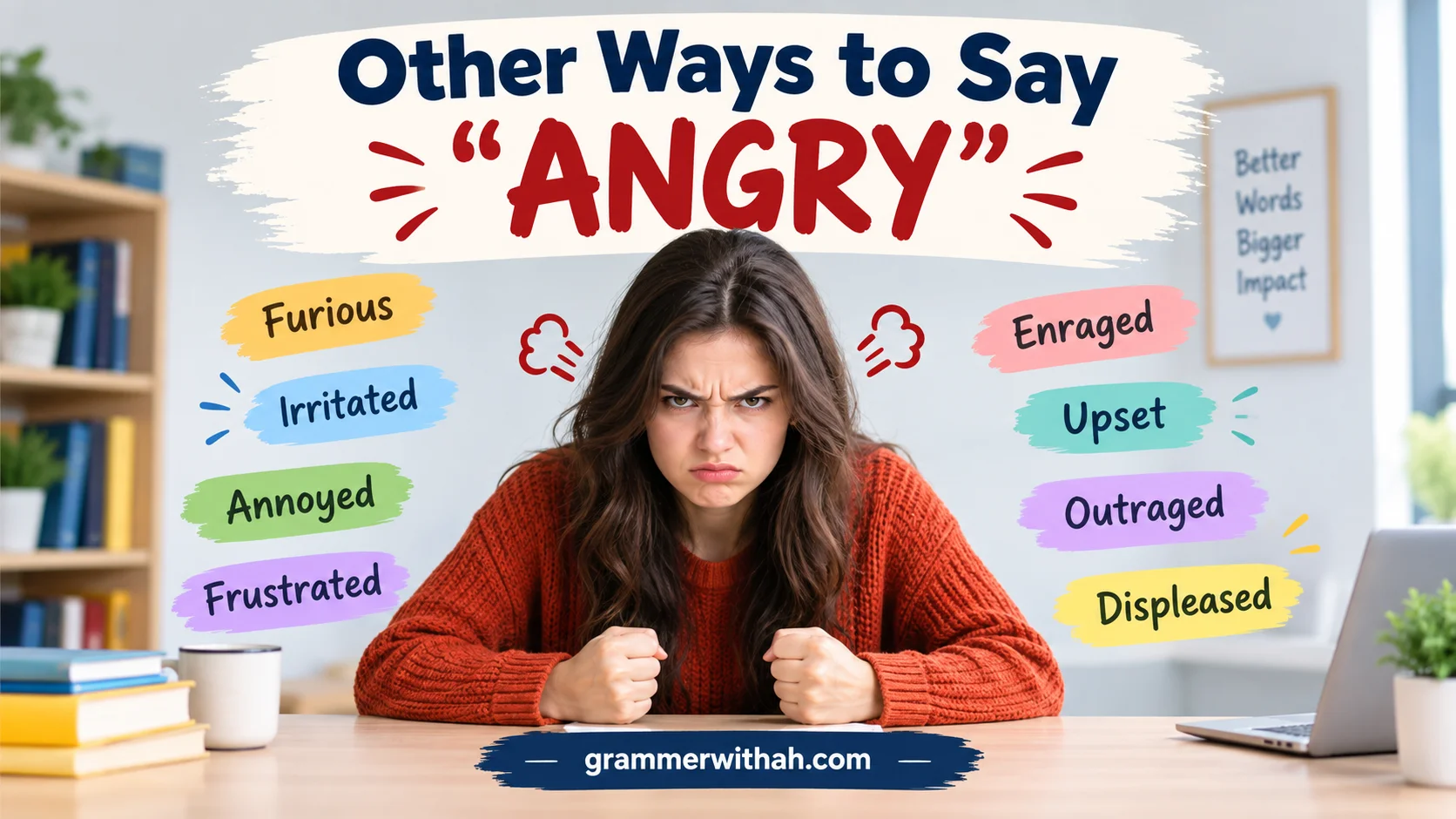
Other Ways to Say “ANGRY” (With Examples) can help you express anger in a clearer and more natural way. Instead of using the same word repeatedly, you can choose alternatives that show different levels of emotion, from mild annoyance and frustration to strong rage. Whether you are writing an essay, creating a story, having a conversation, or describing a heated scene, the right word can make your message more powerful and engaging.
Anger is a powerful human emotion that can appear in many forms. You may feel upset, irritated, annoyed, frustrated, furious, or completely enraged. Learning different synonyms, expressions, and idioms for angry gives you more flexibility in both speaking and writing. In this guide, you will find useful alternatives with clear meanings and examples, making it easier to choose the right expression for each situation and tone.
What Does “ANGRY” Mean?
Angry means feeling strong emotional displeasure, frustration, irritation, or resentment because something feels unfair, hurtful, disappointing, or unacceptable. The word can describe anything from mild irritation to intense emotional rage, depending on the situation and the person’s feelings.
Is It Professional or Polite to Say “ANGRY”?
The word angry is completely acceptable in professional and polite communication when you are describing emotions clearly and respectfully. However, directly saying that someone is angry can sometimes sound judgmental or confrontational, especially when discussing another person’s behavior.
In professional settings, softer alternatives such as frustrated, concerned, disappointed, or displeased can communicate difficult emotions without making the conversation feel unnecessarily harsh. The best word depends on the intensity of the emotion, relationship between speakers, and purpose of the conversation.
Pros And Cons of Saying “ANGRY”
Pros: The word angry is simple, familiar, direct, and easy for almost everyone to understand without needing additional explanation.
It can clearly communicate that someone is experiencing strong negative emotions and needs acknowledgment or understanding.
Cons: The word can sometimes sound blunt, emotionally intense, or confrontational, depending on the surrounding sentence and conversational situation.
Synonyms“ANGRY”
- Annoyed
- Irritated
- Frustrated
- Upset
- Furious
- Enraged
- Infuriated
- Agitated
- Mad
- Resentful
- Offended
- Indignant
- Exasperated
- Cross
- Irate
- Fuming
- Outraged
- Displeased
- Bitter
- Hostile
- Aggravated
- Incensed
- Provoked
- Worked Up
- Livid
1. Annoyed
Scenario Meaning: Annoyed means feeling mildly angry or bothered because something unpleasant, inconvenient, repetitive, or frustrating has happened or continued.
Examples:
- I felt annoyed when the meeting continued for another hour without reaching any useful decision.
- She became annoyed because the constant interruptions made it difficult to finish her important presentation.
- He sounded annoyed after waiting several minutes for someone to answer his repeated questions.
- I was annoyed by the unnecessary noise that continued throughout the entire afternoon.
- They looked annoyed when the schedule suddenly changed without anyone explaining the reason.
Tone: The tone of annoyed is generally mild, casual, and less emotionally intense than stronger words describing anger.
Details Explanation: Annoyed is useful when you want to express irritation without making your feelings sound extremely serious or aggressive. It often describes smaller problems that gradually become frustrating.
Best Use: Use annoyed for everyday conversations when something bothers you but does not cause extremely strong emotional anger.
2. Irritated
Scenario Meaning: Irritated means feeling bothered, impatient, or slightly angry because something repeatedly causes discomfort, inconvenience, or emotional disturbance.
Examples:
- I became irritated when the same problem appeared again despite our previous discussion.
- She sounded irritated after receiving several messages while trying to concentrate on her work.
- He was visibly irritated by the repeated delays affecting his carefully planned schedule.
- The teacher seemed irritated when students continued talking during the important explanation.
- I felt irritated because nobody appeared willing to listen to my reasonable concerns.
Tone: The tone of irritated sounds slightly stronger and more formal than simply saying someone feels annoyed.
Details Explanation: Irritated communicates emotional discomfort while remaining relatively controlled, making it useful when describing frustration without suggesting extreme anger.
Best Use: Use irritated when something repeatedly bothers you and you want to describe your feelings in a calm, understandable way.
3. Frustrated
Scenario Meaning: Frustrated means feeling upset or discouraged because something prevents you from achieving what you want despite your effort or patience.
Examples:
- I felt frustrated because I had worked carefully, but the same technical problem kept returning.
- She became frustrated when nobody responded to her messages despite several polite reminders.
- He was frustrated because the project continued experiencing delays beyond his control.
- We felt frustrated after spending hours trying to solve the complicated problem together.
- I understand why you feel frustrated after putting so much effort into this situation.
Tone: The tone of frustrated is emotional but generally more constructive and professional than directly saying angry.
Details Explanation: Frustrated focuses on the obstacle causing emotional distress rather than simply labeling someone as angry. It can therefore encourage empathy and understanding.
Best Use: Use frustrated when explaining difficulties, workplace problems, communication issues, delays, or situations where your efforts have not produced results.
4. Upset
Scenario Meaning: Upset means feeling emotionally disturbed, unhappy, hurt, disappointed, or angry because something unpleasant has happened.
Examples:
- I was upset when I learned that the plans had changed without anyone telling me beforehand.
- She felt upset after hearing those unexpected comments from someone she trusted.
- He looked upset because the situation had become much more difficult than expected.
- We were upset about the misunderstanding but still wanted to resolve everything peacefully.
- I understand that you are upset, and I genuinely want to hear what happened.
Tone: The tone of upset is softer and more emotionally sensitive than many direct synonyms for angry.
Details Explanation: Upset is especially useful because it can describe several emotions simultaneously, including sadness, disappointment, hurt, frustration, and anger.
Best Use: Use upset when you want to express emotional discomfort gently, especially during sensitive personal or family conversations.
5. Furious
Scenario Meaning: Furious means feeling extremely angry because something has caused serious disappointment, injustice, frustration, or emotional pain.
Examples:
- She was furious after discovering that someone had deliberately ignored the important agreement.
- He became furious when he realized that his concerns had been dismissed repeatedly.
- I was absolutely furious about the unfair decision that affected everyone involved.
- They felt furious after learning that the information had been intentionally hidden.
- She sounded furious, although she eventually calmed down enough to discuss the problem.
Tone: The tone of furious is very strong, dramatic, and emotionally intense, making it unsuitable for mild irritation.
Details Explanation: Furious communicates a much higher level of anger than annoyed, irritated, or frustrated. It should therefore be used when the emotion genuinely feels intense.
Best Use: Use furious when describing very strong anger, particularly after serious wrongdoing, betrayal, unfairness, or major disappointment.
6. Enraged
Scenario Meaning: Enraged means experiencing extremely powerful anger that feels overwhelming, intense, and difficult to control.
Examples:
- The customer became enraged after discovering that the promised service had completely failed.
- She felt enraged when she learned about the unfair treatment of her colleague.
- He appeared enraged by the accusation because he believed it was completely untrue.
- The community became enraged after hearing about the serious injustice.
- I was deeply enraged by the way vulnerable people were treated during the incident.
Tone: The tone of enraged is extremely powerful and dramatic, suggesting anger that has reached a very high level.
Details Explanation: Enraged is stronger than ordinary angry and often suggests an emotional reaction to something considered deeply wrong, unfair, or unacceptable.
Best Use: Use enraged when you need to communicate extreme anger and ordinary words such as irritated or frustrated are not strong enough.
7. Infuriated
Scenario Meaning: Infuriated means made extremely angry by something that feels deeply frustrating, unfair, disrespectful, offensive, or unacceptable.
Examples:
- I was infuriated when the same mistake happened after we had clearly explained everything.
- She became infuriated after discovering that important information had been deliberately withheld.
- He felt infuriated by the unfair criticism he received during the meeting.
- The decision infuriated many people who believed the process had been completely unfair.
- I understand why you were infuriated after being treated that way without explanation.
Tone: The tone of infuriated is very strong and clearly communicates serious emotional anger.
Details Explanation: Infuriated emphasizes the event or behavior that caused intense anger, making it particularly useful when explaining what triggered an emotional reaction.
Best Use: Use infuriated when something has caused exceptionally strong anger, especially because of unfairness or disrespect.
8. Agitated
Scenario Meaning: Agitated means feeling emotionally unsettled, nervous, restless, irritated, or increasingly angry because something has created tension.
Examples:
- He became agitated when nobody could provide a clear answer to his question.
- She appeared agitated after hearing several conflicting explanations about the situation.
- I felt increasingly agitated because the discussion was becoming difficult to manage.
- The customer sounded agitated while explaining the problems they had experienced.
- Everyone became agitated when the unexpected announcement created confusion throughout the room.
Tone: The tone of agitated is moderately strong and often suggests emotional restlessness alongside anger or frustration.
Details Explanation: Agitated does not always mean pure anger because it can also describe nervousness, anxiety, excitement, or emotional disturbance.
Best Use: Use agitated when someone’s anger appears connected with restlessness, tension, nervousness, or emotional uncertainty.
9. Mad
Scenario Meaning: Mad means feeling angry, irritated, or upset because something has happened that feels disappointing, unfair, inconvenient, or personally hurtful.
Examples:
- I was mad when my plans were changed without asking for my opinion first.
- She became mad after hearing that someone had criticized her unfairly.
- He was really mad because nobody listened to his concerns during the conversation.
- We were mad about the unnecessary delay, but we eventually found another solution.
- I know you are mad, but I hope we can talk about what happened calmly.
Tone: The tone of mad is casual, conversational, and common in everyday American English.
Details Explanation: Mad is simple and natural in informal conversations, although it can sound less precise than words such as frustrated or disappointed.
Best Use: Use mad in casual conversations with friends, family members, or people with whom you have a comfortable relationship.
10. Resentful
Scenario Meaning: Resentful means continuing to feel anger, bitterness, or disappointment because of something perceived as unfair or hurtful.
Examples:
- She felt resentful because she believed her efforts had never received proper recognition.
- He became resentful after repeatedly being given responsibilities without receiving meaningful support.
- I felt resentful when my contributions were overlooked while someone else received credit.
- They remained resentful because the disagreement was never properly discussed or resolved.
- His resentful attitude suggested that the old disagreement still affected him deeply.
Tone: The tone of resentful is serious and emotional, often suggesting anger that has continued for some time.
Details Explanation: Resentful describes anger that remains beneath the surface because someone believes they have experienced unfairness, neglect, disrespect, or repeated disappointment.
Best Use: Use resentful when describing long-lasting anger or bitterness rather than a temporary emotional reaction.
11. Offended
Scenario Meaning: Offended means feeling hurt, insulted, disrespected, or angry because someone’s words or actions violated personal expectations or boundaries.
Examples:
- I felt offended by the way my concerns were dismissed during the conversation.
- She was offended when someone made a disrespectful comment about her work.
- He looked offended after hearing an assumption that he considered completely unfair.
- We were offended because the comment seemed unnecessarily disrespectful toward everyone involved.
- I understand that you felt offended, and I am willing to discuss what caused that reaction.
Tone: The tone of offended is serious but often more specific than simply saying someone feels angry.
Details Explanation: Offended focuses on feeling personally disrespected or insulted rather than simply experiencing general frustration.
Best Use: Use offended when someone’s words, behavior, or actions have crossed a personal boundary or caused a sense of disrespect.
12. Indignant
Scenario Meaning: Indignant means feeling angry because something seems unfair, unjust, insulting, dishonest, or morally unacceptable.
Examples:
- She felt indignant after being blamed for a mistake she had not actually made.
- He became indignant when someone questioned his honesty without providing any evidence.
- I was indignant because the decision treated several people unfairly.
- They sounded indignant after hearing the accusation during the public discussion.
- Her indignant response showed that she strongly believed the situation was unjust.
Tone: The tone of indignant is formal, serious, and often associated with a strong sense of justice.
Details Explanation: Indignant is particularly useful when anger comes from believing that something is unfair, dishonest, disrespectful, or morally wrong.
Best Use: Use indignant in formal writing, serious conversations, professional discussions, or situations involving perceived injustice.
13. Exasperated
Scenario Meaning: Exasperated means extremely frustrated, tired, or irritated because a difficult problem continues despite repeated attempts to resolve it.
Examples:
- I felt exasperated after explaining the same instructions several times without improvement.
- She became exasperated when the technical problem returned again after being repaired.
- He sounded exasperated because the conversation kept returning to the same unresolved issue.
- We were exasperated by the repeated delays that prevented the project from moving forward.
- Her exasperated expression showed that she had reached the limit of her patience.
Tone: The tone of exasperated communicates strong frustration, impatience, and emotional exhaustion without necessarily suggesting rage.
Details Explanation: Exasperated is excellent for describing the feeling that develops when something repeatedly goes wrong and your patience becomes increasingly limited.
Best Use: Use exasperated when someone is fed up, exhausted, and frustrated after dealing with a persistent problem.
Also Read This: 25 Other Ways to Say “NICE” (With Examples)
14. Cross
Scenario Meaning: Cross means slightly angry, annoyed, or displeased about something that has caused irritation or inconvenience.
Examples:
- She seemed cross when the children continued making noise during the important conversation.
- He became cross after waiting much longer than he had originally expected.
- I was a little cross because nobody remembered the agreement we had made.
- The manager looked cross when the same mistake happened for another time.
- She sounded cross, although her frustration disappeared after everyone explained what happened.
Tone: The tone of cross is mild, somewhat informal, and especially common in British English.
Details Explanation: Cross generally describes mild anger rather than intense rage, making it suitable when someone feels displeased but remains relatively controlled.
Best Use: Use cross for casual conversations, especially when describing mild irritation or displeasure in a natural and understated way.
15. Irate
Scenario Meaning: Irate means extremely angry, especially because someone believes they have been treated unfairly, disrespectfully, or unprofessionally.
Examples:
- The customer became irate after receiving several incorrect answers from the support team.
- She sounded irate when the company refused to address her reasonable complaint.
- He was irate because the agreement had been changed without informing him beforehand.
- The manager handled the irate customer carefully and listened to every concern.
- An irate response can sometimes make a difficult disagreement even harder to resolve.
Tone: The tone of irate is strong, formal, and somewhat more professional than words such as mad or furious.
Details Explanation: Irate describes intense anger and is frequently used when someone strongly objects to poor treatment, mistakes, delays, or unfair decisions.
Best Use: Use irate in formal writing, news-style descriptions, workplace communication, or situations involving serious complaints.
16. Fuming
Scenario Meaning: Fuming means being extremely angry and emotionally worked up, often while trying to control or contain a strong reaction.
Examples:
- She was fuming after discovering that someone had taken credit for her work.
- He left the meeting fuming because he believed his concerns had been completely ignored.
- I was fuming when I realized that the important information had been changed.
- They were visibly fuming after hearing the unexpected decision from the committee.
- She walked away fuming, although she later returned ready to discuss everything calmly.
Tone: The tone of fuming is vivid, informal, and strongly emotional, often creating a clear picture of intense anger.
Details Explanation: Fuming suggests that anger is visibly or emotionally building inside someone, even when they have not openly expressed everything.
Best Use: Use fuming in conversational writing, storytelling, personal communication, or descriptions of someone experiencing very strong anger.
17. Outraged
Scenario Meaning: Outraged means extremely angry because something is considered deeply unfair, offensive, shocking, cruel, or morally unacceptable.
Examples:
- People were outraged by the unfair treatment described during the public meeting.
- She felt outraged when she learned how the situation had been handled.
- He was outraged by the disrespect shown toward the hardworking employees.
- The community became outraged after hearing about the serious injustice.
- I was genuinely outraged because the decision seemed completely unfair to everyone affected.
Tone: The tone of outraged is powerful, serious, and often connected with moral judgment or strong disagreement.
Details Explanation: Outraged usually expresses anger that goes beyond personal inconvenience because something violates a person’s strong sense of fairness or decency.
Best Use: Use outraged when describing strong anger caused by injustice, cruelty, dishonesty, discrimination, or serious misconduct.
18. Displeased
Scenario Meaning: Displeased means feeling unhappy, dissatisfied, or mildly angry because something did not meet expectations or acceptable standards.
Examples:
- The manager was displeased with the quality of the final report.
- She looked displeased after learning that the deadline had been missed again.
- He was clearly displeased by the decision but remained professional throughout the discussion.
- I was displeased with how the situation was handled without proper communication.
- They seemed displeased because the final result did not match their expectations.
Tone: The tone of displeased is polite, formal, restrained, and considerably softer than saying angry.
Details Explanation: Displeased is a useful professional alternative because it communicates dissatisfaction without creating the same emotional intensity as stronger anger-related words.
Best Use: Use displeased in workplace emails, professional conversations, formal feedback, and respectful discussions about unsatisfactory results.
19. Bitter
Scenario Meaning: Bitter means feeling deeply resentful, disappointed, or angry because of a painful experience that remains emotionally difficult to accept.
Examples:
- He became bitter after feeling repeatedly overlooked despite his years of dedicated effort.
- She sounded bitter when discussing the opportunity she believed had been unfairly taken away.
- I do not want to become bitter because of something that happened several years ago.
- His bitter comments suggested that the old disagreement still caused emotional pain.
- She felt bitter about the decision because she believed she had been treated unfairly.
Tone: The tone of bitter is serious, emotional, and often suggests long-lasting resentment rather than temporary anger.
Details Explanation: Bitter describes anger mixed with disappointment or resentment that has remained over time and can influence how someone views a situation.
Best Use: Use bitter when discussing deep disappointment, unresolved resentment, or anger connected with painful past experiences.
20. Hostile
Scenario Meaning: Hostile means showing strong anger, opposition, aggression, or unwillingness to cooperate with another person or group.
Examples:
- The conversation became hostile when both sides stopped listening to each other’s concerns.
- He responded in a hostile manner after feeling personally criticized during the discussion.
- She avoided making the conversation hostile by calmly explaining her concerns instead.
- The meeting became increasingly hostile because neither side wanted to compromise.
- A hostile response can make constructive communication much more difficult for everyone involved.
Tone: The tone of hostile is strong and serious, often suggesting aggression or open opposition rather than simple emotional anger.
Details Explanation: Hostile describes behavior, communication, or an atmosphere that feels aggressive, unfriendly, threatening, or strongly opposed.
Best Use: Use hostile when describing aggressive communication, unfriendly behavior, tense environments, or strong opposition.
21. Aggravated
Scenario Meaning: Aggravated means feeling increasingly annoyed, frustrated, or angry because something repeatedly causes difficulty, inconvenience, or unnecessary stress.
Examples:
- I became aggravated when the computer stopped working immediately before the presentation.
- She felt aggravated because the same issue continued despite several attempts to fix it.
- He was aggravated by the unnecessary delays that disrupted his entire afternoon.
- We became aggravated when nobody provided a clear explanation for the sudden change.
- I was understandably aggravated after spending so much time solving the same problem.
Tone: The tone of aggravated is conversational and moderately strong, usually describing frustration rather than extreme rage.
Details Explanation: Aggravated works well when something repeatedly makes an already difficult situation worse and gradually increases emotional frustration.
Best Use: Use aggravated in everyday communication when describing growing irritation caused by repeated problems or inconveniences.
22. Incensed
Scenario Meaning: Incensed means extremely angry because something has caused deep offense, outrage, injustice, or strong personal disagreement.
Examples:
- She was incensed by the unfair accusation made against her during the meeting.
- He became incensed when the organization ignored the concerns of its employees.
- I felt incensed after discovering that the decision had been made dishonestly.
- The community was incensed by the treatment of people who deserved better support.
- They were deeply incensed because the situation seemed completely unfair and disrespectful.
Tone: The tone of incensed is very strong, formal, and often connected with outrage about unfair or offensive behavior.
Details Explanation: Incensed is an expressive alternative to angry that emphasizes serious offense and intense emotional reaction.
Best Use: Use incensed in formal writing, serious discussions, opinion pieces, or situations involving strong outrage over injustice.
23. Provoked
Scenario Meaning: Provoked means made angry or emotionally reactive because someone’s words, actions, or behavior deliberately or unintentionally caused a strong response.
Examples:
- He felt provoked by the repeated comments that seemed designed to upset him.
- She became provoked after being challenged several times during the discussion.
- I tried not to become provoked by the unfair criticism I received.
- His comments clearly provoked an emotional reaction from several people in the room.
- She felt provoked but decided to respond calmly instead of escalating the disagreement.
Tone: The tone of provoked focuses more on the cause of anger than the intensity of anger itself.
Details Explanation: Provoked suggests that someone or something triggered an emotional reaction, often through words, behavior, criticism, teasing, or perceived disrespect.
Best Use: Use provoked when you want to explain that something caused or triggered someone’s anger rather than simply describing their emotional state.
24. Worked Up
Scenario Meaning: Worked up means becoming very emotional, worried, frustrated, or angry because a situation feels stressful, upsetting, or difficult.
Examples:
- She became worked up after hearing several different explanations about what had happened.
- He was getting worked up because nobody seemed willing to listen carefully.
- I was worked up about the situation, but taking some time helped me think clearly.
- They became worked up when the conversation started becoming more personal and emotional.
- Try not to get too worked up before you understand everything that happened.
Tone: The tone of worked up is informal, conversational, and softer than words such as enraged or furious.
Details Explanation: Worked up can describe a mixture of anger, worry, stress, excitement, or emotional tension rather than anger alone.
Best Use: Use worked up in casual conversations when someone is becoming emotionally overwhelmed or increasingly upset.
25. Livid
Scenario Meaning: Livid means extremely angry because something has caused serious frustration, betrayal, disrespect, injustice, or emotional shock.
Examples:
- She was livid when she discovered that someone had shared her private information.
- He became livid after realizing that the agreement had been broken intentionally.
- I was absolutely livid about the unfair decision that affected our entire team.
- They looked livid when they learned that the important deadline had been changed.
- She felt livid, but she waited until she was calmer before discussing the problem.
Tone: The tone of livid is extremely strong, dramatic, and emotionally intense, making it appropriate for severe anger.
Details Explanation: Livid communicates one of the strongest levels of anger in everyday English and suggests that the person feels deeply and intensely upset.
Best Use: Use livid when describing extreme anger caused by serious disrespect, betrayal, unfairness, or major disappointment.
FAQs :
1. What are some other ways to say “angry”?
Some common alternatives include mad, annoyed, irritated, frustrated, furious, enraged, upset, and irate. The best choice depends on the intensity and situation.
2. What is a polite way to say “angry”?
You can say upset, frustrated, concerned, displeased, or dissatisfied when you want to describe anger in a more polite or professional way.
3. What is a stronger word for angry?
Words such as furious, enraged, livid, and irate express a stronger level of anger than the simple word “angry.”
4. Can I use these alternatives in formal writing?
Yes. Words like irritated, frustrated, displeased, and irate can work well in formal writing. Choose an expression that matches the tone and context of your sentence.
5. Why should I use different words for angry?
Using different synonyms and expressions makes your writing more interesting and precise. It also helps you show whether someone is slightly annoyed or experiencing intense anger.
Conclusion :
Knowing other ways to say “angry” can make your speaking and writing more expressive. From annoyed and irritated to furious and enraged, each word can communicate a different level of emotion. Choose the alternative that best fits your meaning, tone, and situation to make your sentences clearer and more engaging.