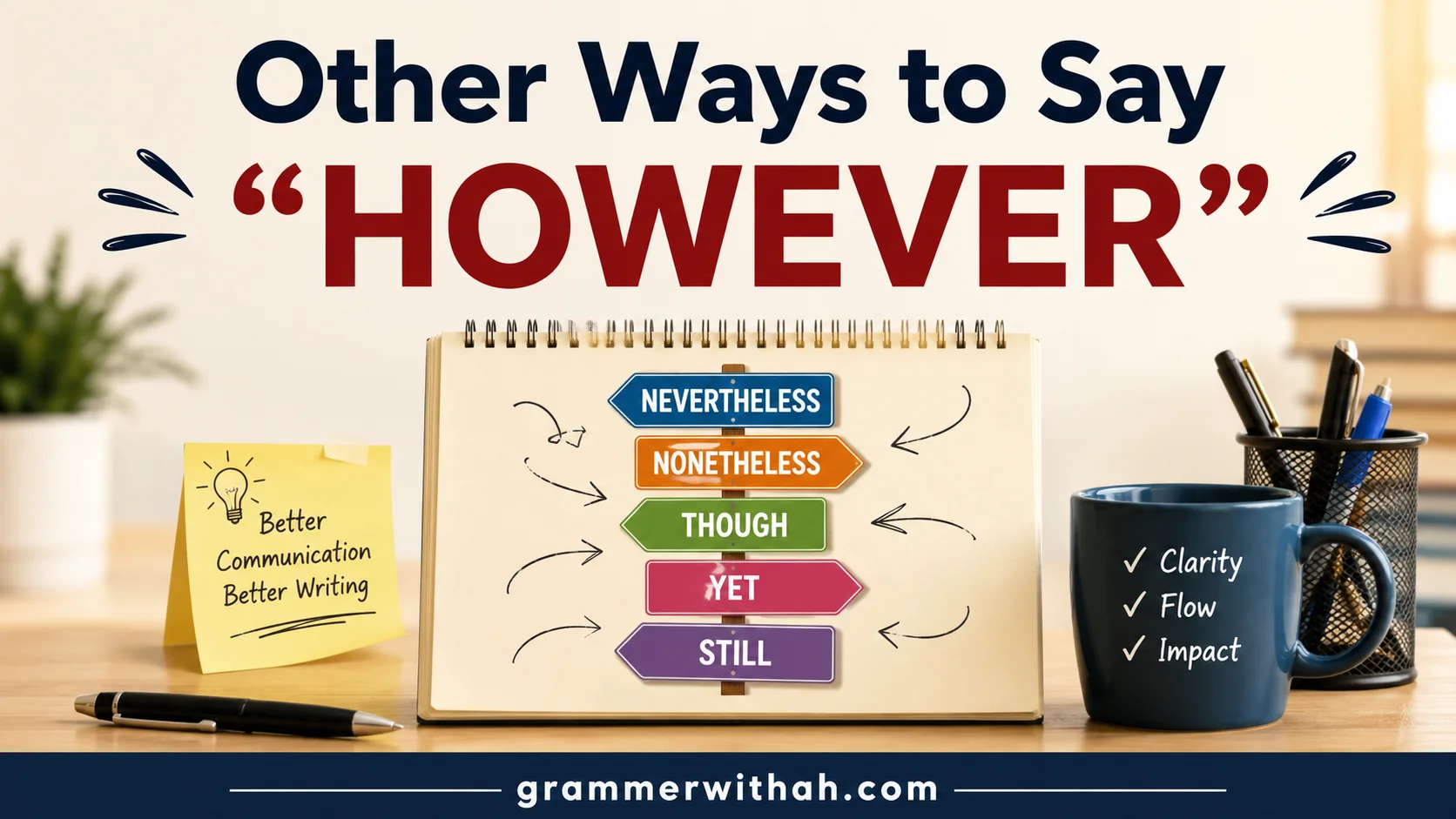
Other Ways to Say “However” can make your writing more natural, engaging, and professional. While however is a common word for showing contrast, using different alternatives keeps your sentences fresh and easier to read. Whether you are writing a business email, academic paper, or everyday message, learning new expressions helps you communicate more clearly and confidently without sounding repetitive.
Choosing the right alternative depends on your tone, audience, and purpose. Formal options like nevertheless and nonetheless work well in professional writing, while simple words like but and yet fit casual conversations. Exploring these alternatives will improve your English vocabulary, increase clarity, and help you express different ideas in a smoother, more effective way.
What Does “However” Mean?
However is a linking word that shows contrast, difference, or a change in idea. It connects two parts of a sentence and helps the reader understand that the second idea does not completely match the first idea. In simple English, however means “but,” “yet,” or “still,” depending on the sentence.
Is It Professional or Polite to Say “However”?
Yes, however is very professional, polite, and widely used in writing and speaking. It sounds clear, respectful, and suitable for formal communication, business writing, school work, and everyday conversation. Still, using different alternatives can make your writing feel more human, more smooth, and less repetitive.
Pros and Cons of Saying “However”
Pros: However is clear, formal, and easy to understand in most situations. It works well when you want to show contrast without sounding rude or too direct.
Cons: Using however too often can make your writing feel repetitive, stiff, or overly formal. That is why learning other natural alternatives can improve your tone and make your writing feel more personal.
“However” Synonyms
- Nevertheless
- Nonetheless
- Still
- Yet
- But
- On the Other Hand
- In Contrast
- Alternatively
- Although
- Though
- Even So
- That Said
- All the Same
- In Spite of That
- Despite That
- Be That as It May
- After All
- In Any Case
- Granted
- Conversely
- Otherwise
- Instead
- Even Then
- Having Said That
- For All That
1. Nevertheless
Scenario Meaning: Nevertheless means despite that, in spite of that, or even with the difference or problem mentioned before, the second idea still remains true and important.
Examples:
- The weather was cold and windy; nevertheless, the team finished the outdoor event successfully.
- The task looked difficult; nevertheless, she stayed calm and completed it carefully.
- He felt tired after work; nevertheless, he helped his friend move into a new house.
- The report was long; nevertheless, I read it carefully and took useful notes.
- The road was closed; nevertheless, many people found another safe way home.
Tone: Nevertheless sounds formal, polite, and slightly polished, which makes it useful in academic writing and professional communication.
Details Explanation: This word works well when you want to show that something remains true even though the first part of the sentence suggests a challenge, problem, or opposite idea.
Best Use: Use nevertheless in essays, reports, articles, and formal writing when you want a smooth and respectful contrast.
2. Nonetheless
Scenario Meaning: Nonetheless means even so, still, or despite what was just said, the second idea continues to matter and remains true.
Examples:
- The instructions were unclear; nonetheless, the workers completed the job on time.
- The movie was long; nonetheless, it held my attention from start to finish.
- She was nervous; nonetheless, she gave a confident speech in front of everyone.
- The project had delays; nonetheless, the final result was impressive.
- The path was steep; nonetheless, they kept walking toward the top.
Tone: Nonetheless sounds formal, steady, and confident, and it often feels slightly more polished than everyday speech.
Details Explanation: This alternative is useful when you want to show that a second idea survives the first challenge, and the tone should remain calm and controlled.
Best Use: Use nonetheless in academic writing, business writing, and formal explanations where you need a strong contrast.
3. Still
Scenario Meaning: Still means even with that, despite that, or in spite of the earlier idea, something continues or remains true.
Examples:
- The meeting ran late; still, everyone stayed focused until the end.
- It was raining heavily; still, the children played happily outside.
- The work was hard; still, she never gave up on her goal.
- The hotel was busy; still, the staff treated every guest kindly.
- The price was high; still, many people wanted to buy the product.
Tone: Still sounds simple, natural, and friendly, which makes it useful in everyday speaking and writing.
Details Explanation: This word is one of the easiest contrast words to understand, and it often feels less formal than however while still sounding clear.
Best Use: Use still in casual writing, conversation, and simple explanations when you want a natural contrast.
4. Yet
Scenario Meaning: Yet means up to now, even so, or despite that, the second part of the sentence shows an unexpected contrast.
Examples:
- The exam was difficult, yet many students achieved excellent results.
- He worked slowly, yet he finished everything before dinner.
- The plan looked simple, yet it solved a very serious problem.
- The restaurant was small, yet it felt warm and welcoming.
- She felt exhausted, yet she kept smiling through the evening.
Tone: Yet sounds clean, direct, and slightly more dramatic, which gives the sentence a strong contrast.
Details Explanation: This word is very useful when the second idea feels surprising compared with the first idea, especially in strong and clear writing.
Best Use: Use yet in both formal and informal writing when you want a quick and effective contrast.
5. But
Scenario Meaning: But means on the other hand, in contrast, or the second idea changes or limits the first idea in a very direct way.
Examples:
- I wanted to go outside, but the rain started suddenly.
- The dish looked simple, but it tasted amazing.
- She was young, but she had strong leadership skills.
- The book was short, but it gave useful lessons.
- We planned carefully, but the traffic still caused delays.
Tone: But sounds natural, direct, and easy to understand, so it works in almost every kind of communication.
Details Explanation: This is the most common contrast word, and it often replaces however in speech because it feels simple and conversational.
Best Use: Use but in casual conversation, simple writing, and clear everyday communication.
6. On the Other Hand
Scenario Meaning: On the other hand means from a different point of view, with another side to consider, or showing a balanced contrast.
Examples:
- City life is exciting; on the other hand, it can also feel very crowded.
- This laptop is expensive; on the other hand, it offers excellent performance.
- He enjoys quiet evenings; on the other hand, his brother prefers busy parties.
- The job pays well; on the other hand, it requires long hours every week.
- The route is shorter; on the other hand, it has more traffic lights.
Tone: On the other hand sounds balanced, thoughtful, and careful, which helps when comparing two sides fairly.
Details Explanation: This phrase is useful when you want to compare two ideas without sounding too sharp, and it often helps readers think more deeply.
Best Use: Use on the other hand in essays, reports, and thoughtful writing where comparison matters.
7. In Contrast
Scenario Meaning: In contrast means showing a clear difference between two ideas, people, objects, or situations.
Examples:
- The first room was dark; in contrast, the second room was bright and open.
- Her writing style is simple; in contrast, his style is detailed and formal.
- One solution is temporary; in contrast, this one is long-term and stable.
- The old policy was confusing; in contrast, the new policy is easy to follow.
- His approach was careful; in contrast, hers was quick and bold.
Tone: In contrast sounds formal, clear, and analytical, which makes it very useful in academic and professional writing.
Details Explanation: This phrase helps readers see difference very clearly, and it works especially well when you want to compare two sides in a neat way.
Best Use: Use in contrast in essays, research writing, and formal comparisons.
8. Alternatively
Scenario Meaning: Alternatively means as another option, as a different choice, or with a second possible idea to consider.
Examples:
- We can meet at the café; alternatively, we can talk on a video call.
- You can submit the form today; alternatively, you may send it tomorrow morning.
- She can study in the library; alternatively, she can work quietly at home.
- The team can revise the draft; alternatively, they can start a new version.
- You may choose the fast route; alternatively, you may take the scenic road.
Tone: Alternatively sounds careful, polite, and practical, especially when offering another choice.
Details Explanation: This word is not always used for direct contrast, but it is excellent when you want to present another path or solution clearly.
Best Use: Use alternatively when giving options in instructions, planning, business writing, and clear communication.
9. Although
Scenario Meaning: Although means even though, despite the fact that, or while something is true, another idea still follows.
Examples:
- Although it was late, they kept working until the task was complete.
- Although the room was small, it felt comfortable and organized.
- Although she was new, she learned the process very quickly.
- Although the price was high, many customers still wanted it.
- Although he was busy, he made time to answer the message.
Tone: Although sounds formal, smooth, and grammatically flexible, so it fits many kinds of writing.
Details Explanation: This word is useful when one idea exists at the same time as another idea that seems surprising, different, or limiting.
Best Use: Use although in essays, reports, and polished writing where sentence variety matters.
10. Though
Scenario Meaning: Though means even if, even though, or despite that, and it often appears at the beginning or end of a sentence.
Examples:
- The plan was simple, though it still needed careful attention.
- She was tired, though she stayed positive throughout the meeting.
- The shop is small, though it has many useful products.
- The lesson was short, though it gave us important ideas.
- He spoke quietly, though everyone understood him clearly.
Tone: Though sounds natural, light, and slightly informal, which makes it very common in speech.
Details Explanation: This alternative is easy to use and often feels softer than however, especially when you want a less formal contrast.
Best Use: Use though in everyday conversation, casual writing, and friendly communication.
11. Even So
Scenario Meaning: Even so means despite that, still, or the second idea remains true even after the first idea is considered.
Examples:
- The weather was terrible; even so, the event continued safely.
- The assignment was confusing; even so, the students tried their best.
- She had little time; even so, she finished the work carefully.
- The road was blocked; even so, drivers found another route home.
- The problem looked serious; even so, they stayed calm and hopeful.
Tone: Even so sounds thoughtful, calm, and balanced, which makes it useful when you want gentle contrast.
Details Explanation: This phrase works well when the second part of the sentence shows strength, persistence, or a result that continues despite difficulty.
Best Use: Use even so in writing that needs a warm, reflective, and easy-to-follow tone.
12. That Said
Scenario Meaning: That said means after saying that, with that in mind, or the next idea should be considered too.
Examples:
- The restaurant is expensive; that said, the food is worth the price.
- The task was difficult; that said, the final result was impressive.
- The book is long; that said, it is still very enjoyable.
- The work schedule is busy; that said, the team remains highly committed.
- The plan has risks; that said, it also offers strong benefits.
Tone: That said sounds modern, polite, and slightly conversational, so it often feels more natural than formal alternatives.
Details Explanation: This phrase helps you shift smoothly from one idea to another without sounding harsh, and it is especially common in thoughtful writing.
Best Use: Use that said in blogs, business writing, articles, and clear everyday explanations.
13. All the Same
Scenario Meaning: All the same means despite that, in the end, or the second idea still matters even after the first one is considered.
Examples:
- The road was rough; all the same, we reached the village safely.
- The message was brief; all the same, it felt kind and caring.
- The job was tiring; all the same, he kept a positive attitude.
- The room was noisy; all the same, she managed to concentrate well.
- The meal was simple; all the same, everyone enjoyed it.
Tone: All the same sounds soft, natural, and gentle, which makes it a friendly contrast phrase.
Details Explanation: This phrase is useful when you want to acknowledge a limitation or difference, but still keep the second idea meaningful and respected.
Best Use: Use all the same in polite conversation, reflective writing, and warm communication.
Also Read This: 25 Other Ways to Say “SIMILAR” (With Examples)
14. In Spite of That
Scenario Meaning: In spite of that means despite the thing just mentioned, the next idea still happens or remains true.
Examples:
- The weather changed suddenly; in spite of that, the picnic continued.
- The project faced delays; in spite of that, the team stayed focused.
- He felt discouraged; in spite of that, he kept improving every day.
- The route was long; in spite of that, they kept driving forward.
- The room was crowded; in spite of that, the conversation stayed friendly.
Tone: In spite of that sounds formal, clear, and serious, which makes it useful in written communication.
Details Explanation: This phrase shows strong contrast, and it works well when you want to highlight effort, persistence, or a result that continues.
Best Use: Use in spite of that in essays, reports, and polished writing with a serious tone.
15. Despite That
Scenario Meaning: Despite that means even with that problem or difference, the next idea still stands or happens.
Examples:
- The schedule was tight; despite that, the team delivered the work early.
- The weather was cold; despite that, the crowd stayed for the concert.
- The lesson was difficult; despite that, the students understood it well.
- The package was late; despite that, the customer remained patient.
- The path was muddy; despite that, they continued walking carefully.
Tone: Despite that sounds clean, formal, and easy to follow, which makes it strong in written contrast.
Details Explanation: This phrase is a simple and professional way to show that one idea continues even after an obstacle or difference appears.
Best Use: Use despite that in essays, business writing, and respectful explanations.
16. Be That as It May
Scenario Meaning: Be that as it may means whether or not the first idea is true, the second idea still deserves attention.
Examples:
- The plan may seem risky; be that as it may, it could still succeed.
- He may be tired; be that as it may, he must finish the report today.
- The situation may look difficult; be that as it may, we should remain calm.
- The theory may be old; be that as it may, it still offers useful insight.
- The room may be crowded; be that as it may, we can still continue talking.
Tone: Be that as it may sounds formal, old-fashioned, and carefully reasoned, which gives it a strong written style.
Details Explanation: This phrase is best when you want to sound thoughtful, measured, and slightly sophisticated without sounding too emotional.
Best Use: Use be that as it may in formal essays, speeches, and careful argument writing.
17. After All
Scenario Meaning: After all means when everything is considered, the second idea is still true, or the final point changes the view a little.
Examples:
- She deserves praise, after all, she handled the project beautifully.
- The choice was wise, after all, it saved both time and money.
- He was right, after all, because the facts supported his point.
- The trip was tiring, after all, we walked for many hours.
- The answer was simple, after all, once we looked at it carefully.
Tone: After all sounds natural, thoughtful, and slightly reflective, which makes it useful in many kinds of writing.
Details Explanation: This phrase helps you add a final thought or reminder that explains why the second idea matters more than the first one.
Best Use: Use after all in essays, friendly writing, and reflective conversation.
18. In Any Case
Scenario Meaning: In any case means no matter what happens, the next idea is still important, or the result stays the same.
Examples:
- The plan may change; in any case, we need to stay prepared.
- The meeting may start late; in any case, everyone should arrive early.
- The weather may improve; in any case, we should bring an umbrella.
- The design may be revised; in any case, the deadline remains the same.
- The issue may sound small; in any case, it still deserves attention.
Tone: In any case sounds calm, practical, and professional, which makes it useful for clear communication.
Details Explanation: This phrase works well when you want to move forward in the discussion without getting stuck on one detail or one disagreement.
Best Use: Use in any case in formal writing, planning, and problem-solving discussions.
19. Granted
Scenario Meaning: Granted means it is accepted that, it is true that, or the first idea is valid, but another point still follows.
Examples:
- Granted, the work is difficult, but it can still be done well.
- Granted, the room is small, but it feels comfortable and organized.
- Granted, he is young, but he already shows strong discipline.
- Granted, the price is high, but the quality is excellent.
- Granted, the road is long, but the scenery is beautiful.
Tone: Granted sounds formal, clear, and slightly argumentative, which helps when acknowledging one side before adding another.
Details Explanation: This word is useful when you want to show fairness, because you accept the first idea before gently presenting a second one.
Best Use: Use granted in debates, essays, and thoughtful formal writing.
20. Nonetheless, Still
Scenario Meaning: Still in this structure means the second idea remains true even after the first one is considered, and it keeps the sentence steady.
Examples:
- The task was difficult; still, the group finished it together.
- The event was quiet; still, everyone seemed happy to be there.
- She was busy; still, she answered the message kindly.
- The report was long; still, it was easy to understand.
- The weather was warm; still, they brought jackets just in case.
Tone: Still sounds simple, calm, and friendly, which helps sentences feel less formal and more human.
Details Explanation: This alternative is strong when you want a contrast that feels natural, easy, and direct without sounding heavy or strict.
Best Use: Use still in conversation, blogs, and simple writing that needs smooth contrast.
21. Conversely
Scenario Meaning: Conversely means in an opposite way, from the other direction, or showing the reverse relationship between two ideas.
Examples:
- Some people like silence; conversely, others feel energized by noise.
- The first method is slow; conversely, the second method is very fast.
- One team prefers planning; conversely, another prefers quick action.
- The city is expensive; conversely, the countryside is often cheaper.
- The old version was simple; conversely, the new version is advanced.
Tone: Conversely sounds formal, precise, and analytical, so it fits structured writing very well.
Details Explanation: This word is useful when the second idea is not just different, but almost the opposite of the first idea in a clear way.
Best Use: Use conversely in academic writing, analysis, and formal comparison.
22. Meanwhile
Scenario Meaning: Meanwhile means at the same time, during that period, or while something else is happening.
Examples:
- The chef prepared dinner; meanwhile, the guests relaxed in the garden.
- She studied for the test; meanwhile, her brother cleaned the kitchen.
- The project moved forward; meanwhile, the team fixed the final details.
- He waited at the station; meanwhile, his friend searched for parking.
- The children played outside; meanwhile, their parents finished the shopping.
Tone: Meanwhile sounds smooth, natural, and story-like, which helps with flow in writing.
Details Explanation: This word is not always a direct replacement for however, but it is excellent when you want to show two things happening at once.
Best Use: Use meanwhile in storytelling, explanation, and clear sequence writing.
23. Yet Again
Scenario Meaning: Yet again means once more despite expectation, or the same thing happens one more time in a noticeable way.
Examples:
- The train was late yet again, and many passengers became frustrated.
- She solved the problem yet again with patience and skill.
- The teacher explained the rule yet again very clearly.
- The company changed the deadline yet again, which caused confusion.
- The team proved their strength yet again in the final match.
Tone: Yet again sounds slightly expressive, clear, and sometimes frustrated, depending on the sentence.
Details Explanation: This phrase is useful when repetition matters, and it can show annoyance, surprise, or admiration depending on the context.
Best Use: Use yet again in stories, articles, and writing where repetition is important.
24. For All That
Scenario Meaning: For all that means despite everything just mentioned, the second idea still stands, or the point remains true anyway.
Examples:
- The road was rough; for all that, the journey felt worthwhile.
- The room was small; for all that, it was clean and peaceful.
- He faced many problems; for all that, he stayed hopeful.
- The plan had limits; for all that, it still offered real value.
- The evening was quiet; for all that, everyone enjoyed it greatly.
Tone: For all that sounds formal, poetic, and slightly old-fashioned, which gives it a thoughtful style.
Details Explanation: This phrase is useful when you want to sound reflective and elegant, especially in literary or carefully written content.
Best Use: Use for all that in formal essays, literary writing, and reflective language.
25. Having Said That
Scenario Meaning: Having said that means after mentioning one idea, a different but related idea should also be considered carefully.
Examples:
- The task is demanding; having said that, it offers valuable experience.
- The design is simple; having said that, it still looks elegant and modern.
- The schedule is full; having said that, the team remains highly organized.
- The lesson was long; having said that, it taught many useful points.
- The route is slower; having said that, it is also much safer.
Tone: Having said that sounds polite, natural, and slightly conversational, which makes it very useful in modern writing.
Details Explanation: This phrase helps you transition smoothly from one point to another, and it often feels warmer than many formal contrast words.
Best Use: Use having said that in articles, thoughtful conversation, and balanced writing.
FAQs:
1. What are the best other ways to say “however”?
Some of the best alternatives include but, yet, nevertheless, nonetheless, still, even so, and on the other hand, depending on the context.
2. Is it professional to use words instead of “however”?
Yes. Using suitable alternatives can make your professional writing sound more polished and less repetitive, especially in emails, reports, and business documents.
3. Can I use “but” instead of “however”?
Yes, but is one of the most common alternatives. It works well in casual conversations and informal writing, though however often sounds more formal.
4. Why should I use different alternatives to “however”?
Using different expressions improves readability, adds variety, and helps you choose the best tone for your audience and purpose.
5. Which alternative to “however” is the most formal?
Nevertheless, nonetheless, and even so are considered more formal and are commonly used in academic, professional, and business writing.
Conclusion:
Learning Other Ways to Say “However” can make your writing more clear, natural, and engaging. Whether you’re writing a formal document, business email, or having an everyday conversation, choosing the right alternative helps you express contrast smoothly and avoid repeating the same word. By using these expressions correctly, you can improve your English vocabulary, match the right tone, and communicate with greater confidence.