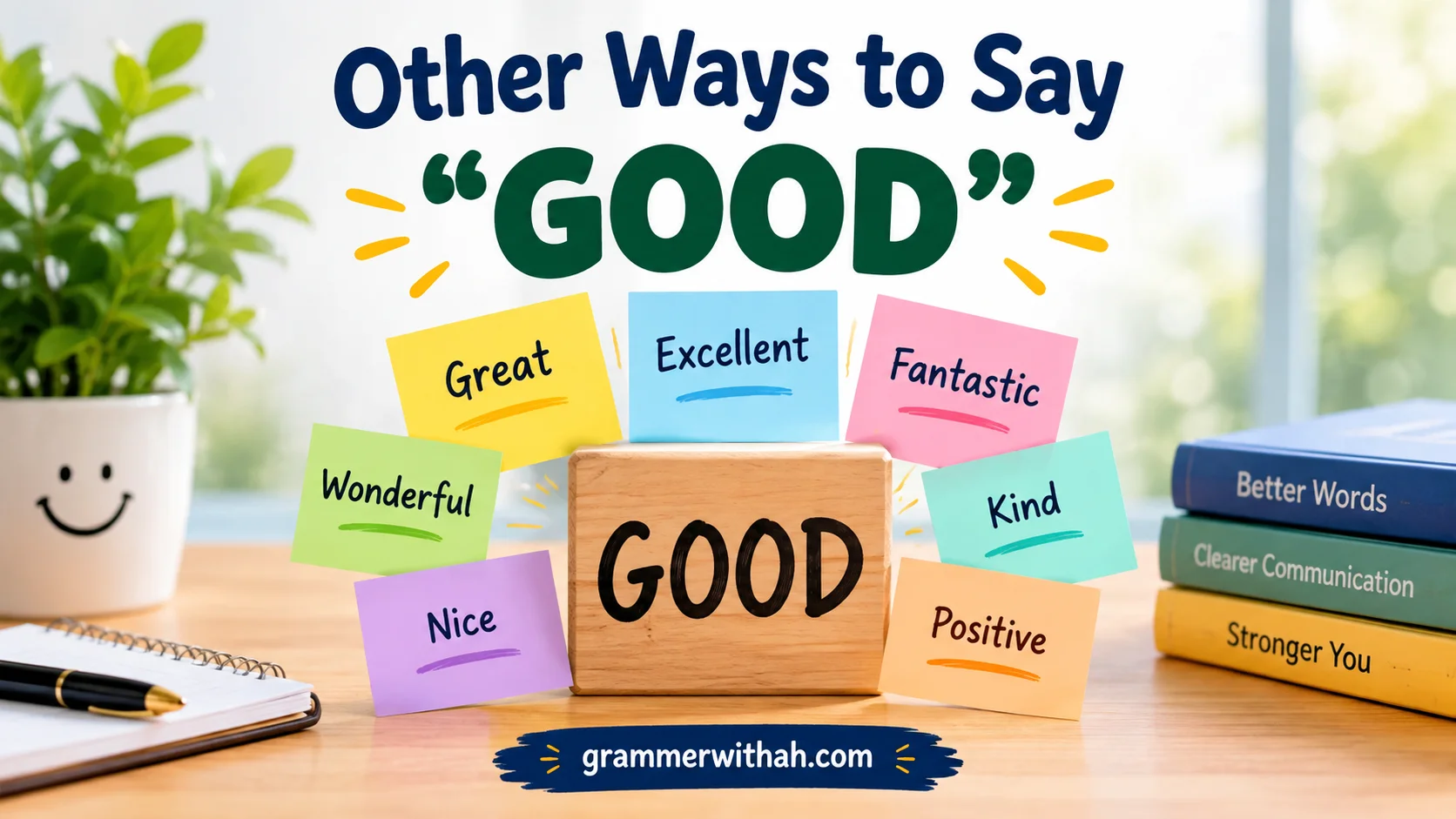
When you need an alternative to good, choosing the right words can make your speaking and writing sound clearer, warmer, and more meaningful. In Other Ways to Say “GOOD” (With Examples), you can explore excellent, superb, thoughtful, and genuine choices for praising someone or describing an experience. Instead of repeating good, these alternatives help show exactly what you mean and let readers understand your feelings clearly. A specific word can also make a personal message feel more natural and confident.
Using good too often can make your writing sound boring or weak, even when your idea is strong. A fresh, simple, and powerful word can bring your message alive. While learning the English language, notice which expression fits different moments and situations. Clear communication becomes easier when you make better choices and select the right expression. For example, excellent may describe outstanding work, while thoughtful can describe a kind action or meaningful message.
What Does “Good” Mean?
The word “good” generally describes something that is positive, satisfactory, enjoyable, useful, kind, successful, or pleasing. Because it can describe many different situations, its exact meaning often depends on the context, emotion, and purpose behind the sentence.
For example, saying someone did a good job can express approval, while saying someone is a good person can describe their kindness, character, or positive behavior. Learning more specific alternatives allows you to communicate your thoughts with greater warmth and precision.
Is It Professional or Polite to Say “Good”?
Yes, “good” is both professional and polite in most everyday and workplace situations. However, the word can sometimes sound too general when you want to give detailed feedback, meaningful praise, or professional recognition.
Using a more specific alternative can make your communication feel more thoughtful, confident, and sincere. For example, “excellent,” “effective,” or “impressive” may communicate stronger appreciation than simply saying something was good.
Pros and Cons of “Good”
Pros: The word good is simple, familiar, positive, and easy for almost everyone to understand. It works naturally in casual conversations, professional messages, friendly discussions, and everyday writing.
Cons: Because good is so common, it can sometimes sound vague, repetitive, or less expressive than a more specific descriptive word. A stronger alternative can explain exactly why something deserves praise or appreciation.
Synonyms“Good”
- Excellent
- Great
- Wonderful
- Fantastic
- Amazing
- Outstanding
- Superb
- Impressive
- Remarkable
- Terrific
- Positive
- Effective
- Satisfying
- Pleasant
- Enjoyable
- Helpful
- Valuable
- Beneficial
- Successful
- Promising
- Solid
- Quality
- Kind
- Admirable
- Exceptional
1. Excellent
Scenario Meaning: Excellent describes something that has a very high level of quality, performance, ability, or value and clearly stands above ordinary expectations.
Examples:
- Your presentation was excellent, and everyone appreciated the thoughtful information you shared.
- She did an excellent job explaining the complicated topic in simple language.
- We received excellent service from the team throughout the entire project.
- His writing shows excellent attention to detail and careful organization.
- This restaurant offers excellent food with friendly service and a welcoming atmosphere.
Tone: Excellent sounds professional, confident, appreciative, and stronger than ordinary positive praise.
Details Explanation: This word is useful when something deserves clear recognition because its quality or performance is especially strong.
Best Use: Use excellent for professional feedback, academic praise, customer experiences, achievements, skills, and high-quality results.
2. Great
Scenario Meaning: Great describes something that is very good, enjoyable, successful, impressive, or pleasing and creates a clearly positive impression.
Examples:
- You did a great job handling the difficult conversation with patience and understanding.
- We had a great time talking together after the meeting finished.
- Your idea is great, and I think it could solve the problem effectively.
- She has a great attitude that makes working with her much easier.
- That was a great opportunity to learn something valuable from experienced professionals.
Tone: Great feels friendly, natural, positive, and conversational while remaining appropriate for many professional situations.
Details Explanation: This alternative is extremely common, but it often sounds warmer and more enthusiastic than simply repeating the word good.
Best Use: Use great in everyday conversations, friendly messages, casual praise, workplace communication, and encouraging responses.
3. Wonderful
Scenario Meaning: Wonderful describes something exceptionally pleasing, enjoyable, heartwarming, or satisfying that creates strong positive feelings.
Examples:
- It was wonderful to see everyone supporting one another during the difficult project.
- You shared a wonderful message that made the entire group feel appreciated.
- We had a wonderful evening filled with meaningful conversations and laughter.
- She has a wonderful way of making people feel comfortable and welcomed.
- Your thoughtful gesture was wonderful, and it meant more than you probably realized.
Tone: Wonderful sounds warm, affectionate, enthusiastic, and emotionally positive in most personal conversations.
Details Explanation: This word works especially well when you want your praise to carry warmth and genuine emotional appreciation.
Best Use: Use wonderful for personal compliments, memorable experiences, thoughtful gestures, relationships, celebrations, and heartfelt messages.
4. Fantastic
Scenario Meaning: Fantastic describes something extremely good, exciting, enjoyable, or impressive that creates a strong feeling of enthusiasm.
Examples:
- You came up with a fantastic solution that helped everyone finish the project faster.
- We had a fantastic experience during our weekend trip together.
- Your performance was fantastic, and the audience clearly enjoyed every moment.
- That is a fantastic idea that deserves serious consideration from the entire team.
- She gave us fantastic advice that helped us approach the situation differently.
Tone: Fantastic sounds energetic, enthusiastic, cheerful, and strongly positive.
Details Explanation: This alternative communicates more excitement than good, making it useful when ordinary praise does not fully express your enthusiasm.
Best Use: Use fantastic for exciting experiences, creative ideas, impressive achievements, celebrations, and enthusiastic compliments.
5. Amazing
Scenario Meaning: Amazing describes something surprisingly impressive, extraordinary, exciting, or wonderful that creates strong admiration.
Examples:
- Your progress has been amazing, especially considering how challenging the task originally seemed.
- She gave an amazing performance that everyone remembered afterward.
- It was amazing to watch the team complete such a difficult project together.
- You have an amazing ability to make complicated ideas easier for others.
- The final results were amazing, and they exceeded what we originally expected.
Tone: Amazing sounds enthusiastic, emotional, appreciative, and highly complimentary.
Details Explanation: This word is particularly effective when something genuinely surprises you or exceeds your expectations in a positive way.
Best Use: Use amazing for achievements, talents, experiences, unexpected successes, memorable moments, and enthusiastic praise.
6. Outstanding
Scenario Meaning: Outstanding describes something exceptionally strong, impressive, successful, or remarkable that clearly performs better than ordinary standards.
Examples:
- Your outstanding work helped the entire team complete the assignment successfully.
- She delivered an outstanding presentation that was both clear and informative.
- His outstanding leadership helped everyone remain focused during the difficult project.
- The company received outstanding feedback from customers after introducing the new service.
- Your outstanding effort deserves recognition from everyone involved in this project.
Tone: Outstanding sounds professional, formal, confident, and strongly appreciative.
Details Explanation: This word is especially powerful when praising performance that clearly exceeds expectations or established standards.
Best Use: Use outstanding for workplace achievements, academic performance, leadership, professional skills, and significant accomplishments.
7. Superb
Scenario Meaning: Superb describes something of exceptionally high quality that demonstrates excellence, skill, effectiveness, or impressive performance.
Examples:
- The chef prepared a superb meal that everyone enjoyed throughout the evening.
- Your explanation was superb, especially because you made every difficult point understandable.
- She provided superb customer service from the beginning until the final conversation.
- His attention to detail produced a superb final result for the entire project.
- The team delivered a superb performance despite facing several unexpected challenges.
Tone: Superb sounds polished, confident, appreciative, and somewhat more formal than great.
Details Explanation: This alternative emphasizes high quality and excellence, making it useful when you want your praise to sound refined.
Best Use: Use superb for professional writing, reviews, performances, services, craftsmanship, food, and impressive results.
8. Impressive
Scenario Meaning: Impressive describes something that causes admiration because of its quality, achievement, ability, appearance, or noticeable effectiveness.
Examples:
- Your progress is impressive, especially considering the limited amount of time available.
- She showed an impressive understanding of the subject during the discussion.
- The team achieved an impressive result despite several unexpected difficulties.
- Your ability to remain calm under pressure is genuinely impressive.
- The final presentation looked impressive and communicated the main ideas clearly.
Tone: Impressive sounds respectful, professional, admiring, and sincere.
Details Explanation: This word focuses on the feeling of admiration created by someone’s performance, achievement, skill, or result.
Best Use: Use impressive when praising accomplishments, abilities, progress, presentations, skills, or noticeable improvements.
9. Remarkable
Scenario Meaning: Remarkable describes something unusual, memorable, or exceptionally impressive that deserves attention because of its distinctive quality.
Examples:
- She made remarkable progress after working consistently toward her goals.
- Your ability to explain difficult subjects is truly remarkable.
- The team achieved a remarkable improvement within only a few months.
- His story is remarkable because it shows extraordinary determination and patience.
- The project produced remarkable results that surprised everyone involved.
Tone: Remarkable sounds thoughtful, respectful, sophisticated, and strongly appreciative.
Details Explanation: This alternative is stronger than good because it suggests something deserves special attention or admiration.
Best Use: Use remarkable for achievements, personal growth, unusual abilities, meaningful experiences, and significant results.
10. Terrific
Scenario Meaning: Terrific describes something very enjoyable, successful, impressive, or exciting that creates a strong positive reaction.
Examples:
- You did a terrific job organizing everything before the important meeting.
- We had a terrific conversation that helped us understand each other better.
- Your suggestion is terrific, and it could make the process much simpler.
- She gave a terrific performance that kept everyone interested throughout the event.
- The team made a terrific effort despite having very little preparation time.
Tone: Terrific sounds friendly, enthusiastic, cheerful, and encouraging.
Details Explanation: This word provides energetic praise while still feeling natural in everyday communication and friendly professional conversations.
Best Use: Use terrific for compliments, achievements, ideas, experiences, teamwork, performances, and encouraging messages.
11. Positive
Scenario Meaning: Positive describes something favorable, constructive, encouraging, beneficial, or associated with desirable results and attitudes.
Examples:
- She maintained a positive attitude even when the situation became unexpectedly difficult.
- Your feedback provided a positive direction for improving the project.
- We received a positive response from customers after making the changes.
- His positive approach helped the team remain motivated throughout the challenge.
- The meeting ended with a positive feeling about our next steps.
Tone: Positive sounds calm, professional, constructive, and encouraging.
Details Explanation: Unlike stronger words such as excellent, positive focuses more on favorable qualities, attitudes, reactions, or outcomes.
Best Use: Use positive for feedback, attitudes, responses, results, workplace discussions, relationships, and constructive communication.
12. Effective
Scenario Meaning: Effective describes something that successfully produces the intended result, solves a problem, or achieves a specific purpose.
Examples:
- Your explanation was effective because everyone understood the main point clearly.
- This strategy has been effective in improving communication between different team members.
- She used an effective approach that reduced unnecessary confusion during the project.
- The new system is effective and makes daily tasks much easier.
- His advice was effective because it addressed the real problem directly.
Tone: Effective sounds professional, practical, objective, and confident.
Details Explanation: This alternative is particularly useful when good means something works successfully rather than simply feeling pleasant or enjoyable.
Best Use: Use effective for strategies, methods, communication, solutions, systems, advice, and professional performance.
13. Satisfying
Scenario Meaning: Satisfying describes something that fulfills expectations, needs, desires, or feelings and leaves someone with a sense of contentment.
Examples:
- Completing the project after months of effort was incredibly satisfying.
- The final result was satisfying because it matched what we had hoped to achieve.
- Helping someone solve a difficult problem can be deeply satisfying.
- The meal was simple but surprisingly satisfying after such a long day.
- Seeing the finished work gave everyone a satisfying sense of accomplishment.
Tone: Satisfying sounds thoughtful, calm, positive, and emotionally fulfilled.
Details Explanation: This word emphasizes the feeling of contentment or fulfillment that comes from achieving or experiencing something worthwhile.
Best Use: Use satisfying for accomplishments, experiences, meals, work, personal goals, creative projects, and meaningful outcomes.
Read More: 25 Other Ways to Say “GREAT” (With Examples)
14. Pleasant
Scenario Meaning: Pleasant describes something enjoyable, comfortable, agreeable, friendly, or pleasing without necessarily being unusually exciting.
Examples:
- We had a pleasant conversation while waiting for the meeting to begin.
- The staff created a pleasant environment that made everyone feel comfortable.
- It was a pleasant afternoon filled with quiet conversation and relaxing activities.
- She has a pleasant personality that makes people feel welcome around her.
- The experience was pleasant from beginning to end, without any unnecessary complications.
Tone: Pleasant sounds polite, gentle, calm, and moderately positive.
Details Explanation: This word works well when you want to describe something enjoyable without making the praise sound overly enthusiastic.
Best Use: Use pleasant for conversations, environments, experiences, personalities, visits, weather, and everyday interactions.
15. Enjoyable
Scenario Meaning: Enjoyable describes something that provides pleasure, happiness, entertainment, comfort, or positive feelings while someone experiences it.
Examples:
- The workshop was enjoyable because everyone had opportunities to participate and learn.
- We had an enjoyable evening discussing our favorite books and personal interests.
- The course was both educational and enjoyable for everyone involved.
- She made the event more enjoyable by creating a relaxed and welcoming atmosphere.
- Reading the book was an enjoyable experience from beginning to end.
Tone: Enjoyable sounds friendly, relaxed, positive, and descriptive.
Details Explanation: This alternative is useful when good means something provided pleasure, entertainment, comfort, or a pleasant experience.
Best Use: Use enjoyable for activities, events, books, movies, trips, conversations, courses, and personal experiences.
16. Helpful
Scenario Meaning: Helpful describes something that provides useful assistance, guidance, support, information, or practical value to another person.
Examples:
- Your advice was helpful because it gave me a clearer way to approach the problem.
- She provided helpful information that made the entire process easier to understand.
- His comments were helpful and gave us several useful ideas for improvement.
- The guide contains helpful suggestions for people learning this skill.
- Thank you for being so helpful when I needed support during the project.
Tone: Helpful sounds warm, appreciative, practical, and considerate.
Details Explanation: This word is ideal when good refers specifically to usefulness, assistance, guidance, or support provided to someone.
Best Use: Use helpful for advice, people, information, instructions, resources, feedback, and supportive actions.
17. Valuable
Scenario Meaning: Valuable describes something that has significant usefulness, importance, benefit, worth, or positive contribution to a person or situation.
Examples:
- Your experience provided valuable insight that helped us make a better decision.
- She offered valuable feedback that improved the final version considerably.
- The training gave us valuable knowledge that we can use later.
- His contribution was valuable because it addressed an important part of the project.
- These conversations can provide valuable opportunities for learning and personal growth.
Tone: Valuable sounds professional, respectful, thoughtful, and appreciative.
Details Explanation: This word emphasizes the worth or importance of something rather than simply describing it as generally good.
Best Use: Use valuable for advice, knowledge, experience, feedback, contributions, opportunities, resources, and relationships.
18. Beneficial
Scenario Meaning: Beneficial describes something that produces helpful, favorable, healthy, useful, or advantageous effects for someone or something.
Examples:
- Regular communication can be beneficial for building stronger professional relationships.
- The new approach has been beneficial for improving teamwork across the organization.
- Taking time to reflect can be beneficial when making important decisions.
- The changes created several beneficial results for both customers and employees.
- This experience was beneficial because it taught us how to handle challenges better.
Tone: Beneficial sounds professional, thoughtful, objective, and practical.
Details Explanation: This alternative works especially well when good means something creates an advantage or produces a favorable effect.
Best Use: Use beneficial in professional, academic, educational, business, health-related, and analytical writing.
19. Successful
Scenario Meaning: Successful describes something that achieves its intended goal, produces desired results, or reaches a planned level of accomplishment.
Examples:
- The event was successful because everyone participated and enjoyed the experience.
- She developed a successful strategy for improving communication within the team.
- Our campaign was successful and reached more people than originally expected.
- His efforts helped create a successful outcome for the entire organization.
- The meeting was successful because we reached several important agreements.
Tone: Successful sounds confident, professional, objective, and achievement-focused.
Details Explanation: This word is stronger and more specific than good when describing results that meet or exceed an intended goal.
Best Use: Use successful for projects, businesses, campaigns, events, strategies, careers, plans, and measurable achievements.
20. Promising
Scenario Meaning: Promising describes something that shows encouraging signs of future success, improvement, development, usefulness, or positive potential.
Examples:
- The early results are promising, although we still need more information.
- She has shown promising progress since beginning her new responsibilities.
- This idea looks promising and could become useful with further development.
- The project has a promising future if the team continues working consistently.
- His first attempt was promising and showed strong potential for improvement.
Tone: Promising sounds hopeful, encouraging, realistic, and optimistic.
Details Explanation: This word is especially useful when something is not fully successful yet but shows strong signs of future potential.
Best Use: Use promising for ideas, plans, early results, talent, projects, opportunities, and developing situations.
21. Solid
Scenario Meaning: Solid describes something dependable, reliable, satisfactory, well-built, sensible, or consistently strong without necessarily being extraordinary.
Examples:
- You made a solid argument that addressed the main concerns clearly.
- The team achieved a solid result despite having limited resources available.
- She has a solid understanding of the subject and its basic principles.
- That was a solid decision because it balanced several important factors.
- His performance was solid and showed consistent effort throughout the project.
Tone: Solid sounds practical, confident, balanced, and straightforward.
Details Explanation: This alternative is useful when good means dependable or satisfactory rather than exceptional, emotional, or exciting.
Best Use: Use solid for work, arguments, decisions, performances, plans, skills, results, and reliable contributions.
22. Quality
Scenario Meaning: Quality describes something that has desirable standards, strong characteristics, reliable construction, or a level of excellence worth recognizing.
Examples:
- The company provides quality products that customers can depend on for regular use.
- She produces quality work because she carefully checks every important detail.
- We are looking for quality materials that will last for several years.
- His writing demonstrates quality research and thoughtful organization throughout the article.
- The team delivered quality service while maintaining a friendly and respectful approach.
Tone: Quality sounds professional, practical, confident, and standards-focused.
Details Explanation: This word emphasizes the standard or characteristics of something rather than simply expressing general approval.
Best Use: Use quality for products, services, work, materials, writing, research, craftsmanship, and professional standards.
23. Kind
Scenario Meaning: Kind describes someone or something that shows care, generosity, consideration, compassion, friendliness, or concern toward others.
Examples:
- She was kind enough to listen when I needed someone to understand.
- Your kind words helped me feel more confident during a difficult moment.
- He made a kind gesture that everyone genuinely appreciated.
- It was kind of you to offer assistance without expecting anything in return.
- Her kind nature makes people feel comfortable sharing their thoughts with her.
Tone: Kind sounds warm, caring, gentle, respectful, and deeply personal.
Details Explanation: This alternative is especially meaningful when good refers to someone’s character, behavior, compassion, or treatment of other people.
Best Use: Use kind for people, gestures, words, actions, personalities, support, and expressions of care.
24. Admirable
Scenario Meaning: Admirable describes something deserving respect, approval, appreciation, or praise because of its positive qualities, effort, courage, or character.
Examples:
- Her commitment to helping others is truly admirable and deeply inspiring.
- His patience during the difficult situation was admirable and deserves recognition.
- Your willingness to accept responsibility is an admirable quality.
- The team’s dedication to improving the community is admirable and meaningful.
- She showed an admirable level of determination despite facing several obstacles.
Tone: Admirable sounds respectful, thoughtful, sincere, and strongly appreciative.
Details Explanation: This word is particularly useful when praising qualities that deserve respect rather than simple enjoyment or approval.
Best Use: Use admirable for character, courage, determination, generosity, leadership, commitment, and meaningful actions.
25. Exceptional
Scenario Meaning: Exceptional describes something unusually excellent, remarkable, outstanding, or far above normal expectations in quality or performance.
Examples:
- She demonstrated exceptional leadership throughout the entire project.
- Your attention to detail has been exceptional from the beginning.
- The team provided exceptional service despite handling an unusually demanding situation.
- His performance was exceptional and clearly exceeded the expected standard.
- This opportunity offers an exceptional chance to learn from experienced professionals.
Tone: Exceptional sounds formal, powerful, confident, and highly complimentary.
Details Explanation: This word is one of the strongest alternatives to good because it suggests something stands clearly above ordinary expectations.
Best Use: Use exceptional for outstanding achievements, professional performance, leadership, customer service, skills, opportunities, and remarkable qualities.
FAQs:
1. What is the meaning of “sad”?
Sad means feeling unhappy, sorrowful, or emotionally hurt. It can describe a person, situation, event, or experience that causes unhappiness.
2. What are some synonyms for sad?
Common synonyms for sad include unhappy, sorrowful, miserable, gloomy, depressed, heartbroken, upset, disappointed, and melancholy. The best choice depends on the situation and level of emotion.
3. Is “sad” always used for emotions?
No. Although sad usually describes an unhappy feeling, it can also be used informally to describe something that seems pathetic, disappointing, or worthy of scorn.
4. What is the comparative form of sad?
The comparative form is sadder, while the superlative form is saddest. For example, “This story is sadder than the previous one.”
5. What is the opposite of sad?
The most common opposite of sad is happy. Other opposites include cheerful, joyful, delighted, positive, and content, depending on the context.
Conclusion:
The word sad is simple, but it can express many levels and types of unhappiness. Whether you mean mild disappointment, deep sorrow, loneliness, or heartbreak, choosing the right synonym can make your writing more precise. Words such as unhappy, gloomy, miserable, sorrowful, heartbroken, and melancholy each add a slightly different feeling. By understanding these alternatives, you can describe emotions more clearly and make your communication more natural and expressive.