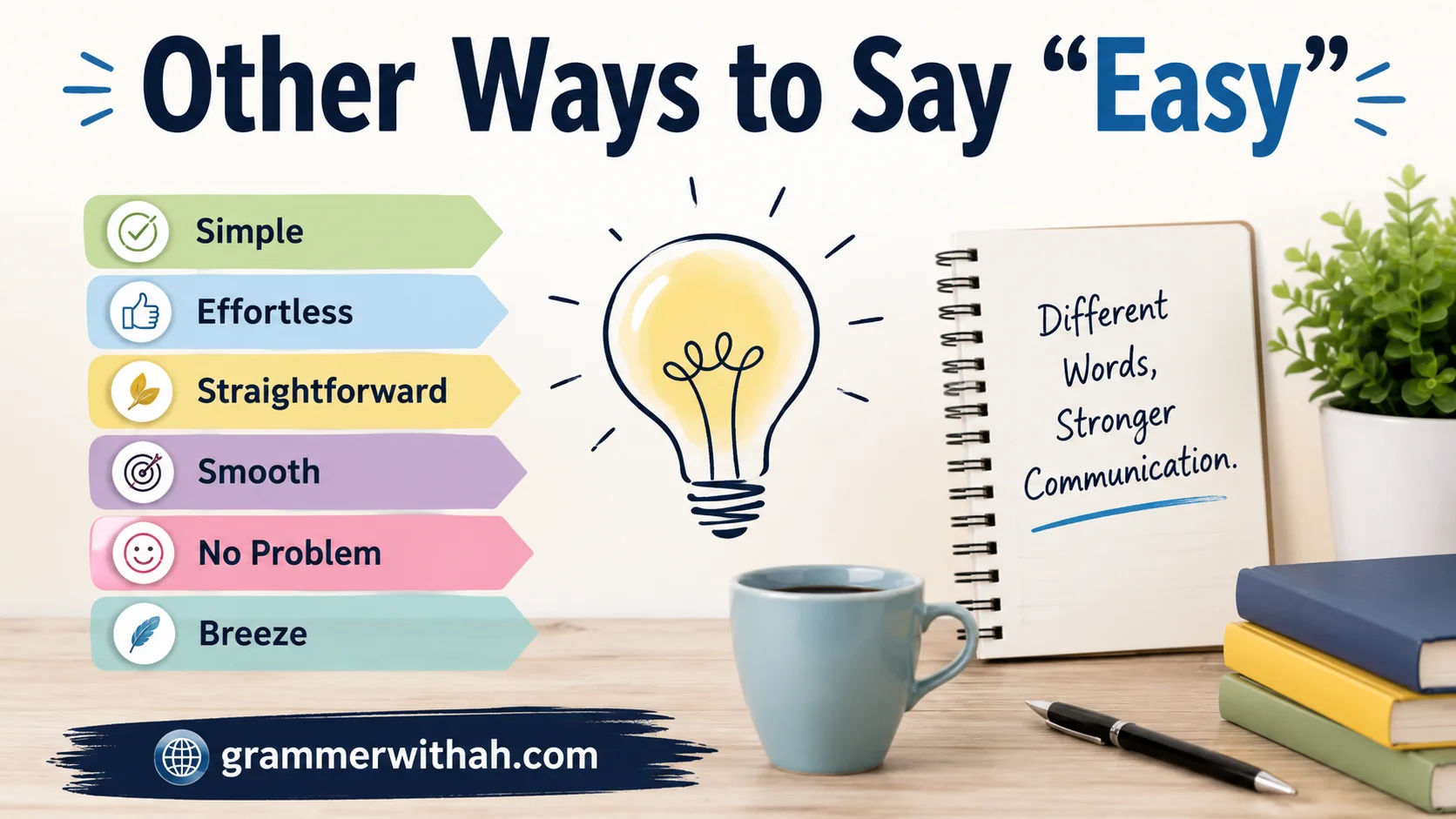
The phrase Other Ways to Say “Easy” helps you expand your vocabulary and improve your English communication with confidence. While the word easy is common, using different expressions can make your writing and speaking sound more natural, interesting, and engaging. Learning the right alternative for the right situation also helps you express your ideas more clearly and avoid repeating the same word too often.
Whether you are writing an email, completing schoolwork, creating content, or having everyday conversations, knowing different words for easy can make a big difference. In this article, you will discover other ways to say “easy”, along with their meanings, examples, tone, and best uses. These practical alternatives will help you choose the most suitable word for every situation and communicate more effectively.
What Does “Easy” Mean?
The word easy usually describes something that does not require much effort, stress, skill, or struggle, and it often feels comfortable to handle. It can also describe a person, task, process, or situation that feels simple, smooth, light, or not difficult to understand.
Is It Professional or Polite to Say “Easy”?
Yes, easy is generally polite, clear, and completely normal in both casual and professional communication. However, in more careful writing, you may sometimes choose a softer, more precise word such as straightforward, simple, or manageable, because those choices can sound more polished and thoughtful.
Pros and Cons of Saying “Easy”
The pros are that easy is quick, familiar, and very simple for almost everyone to understand. The cons are that it can sometimes sound a little plain, and it may not always express the exact feeling you want in a warm, professional, or expressive sentence.
“Easy” Synonyms
- Simple
- Straightforward
- Uncomplicated
- Effortless
- Manageable
- Straight
- Clear
- Basic
- Plain
- Convenient
- Light
- Relaxed
- Accessible
- Handy
- Soft
- Breezy
- Easygoing
- User-Friendly
- No-Fuss
- Stress-Free
- Painless
- Quick
- Trouble-Free
- Low-Effort
- Smooth
1. Simple
Scenario Meaning: Simple means something that is not complicated, not confusing, and not made harder than necessary.
Examples:
- The instructions were simple, clear, and very easy to follow.
- She gave a simple answer that everyone understood quickly.
- This was a simple decision for the whole team to support.
- The teacher explained the lesson in a simple and friendly way.
- It became simple once the main steps were shown clearly.
Tone: Simple sounds calm, clear, and helpful, while also feeling very natural in both speaking and writing.
Details Explanation: This word works well when you want to show that something is direct, clear, and free from unnecessary difficulty. It often feels gentle and easy to understand, which makes it useful for everyday communication.
Best Use: Use simple when you want your message to sound clear, friendly, and easy for others to follow.
2. Straightforward
Scenario Meaning: Straightforward means something is direct, clear, and not full of hidden difficulty or confusion.
Examples:
- The process was straightforward, and nobody felt lost.
- Her explanation was straightforward and very easy to trust.
- This is a straightforward way to complete the task.
- The instructions were straightforward, so we finished quickly.
- He gave a straightforward response without any extra confusion.
Tone: Straightforward sounds professional, honest, and organized, while still remaining easy to understand.
Details Explanation: This word is useful when you want to sound clear and practical without sounding too casual. It often gives a message a neat, confident, and reliable feeling.
Best Use: Use straightforward in professional writing, work messages, and clear explanations.
3. Uncomplicated
Scenario Meaning: Uncomplicated means something is not difficult, not tangled, and not made confusing by extra problems.
Examples:
- The setup was uncomplicated and took very little time.
- Her plan was uncomplicated, which made it easier to follow.
- The answer was uncomplicated and easy for everyone to accept.
- We kept the instructions uncomplicated for better understanding.
- The whole idea sounded uncomplicated from the very beginning.
Tone: Uncomplicated sounds calm, neutral, and thoughtful, especially when you want to avoid sounding dramatic.
Details Explanation: This word is helpful when you want to emphasize the absence of confusion, pressure, or extra layers. It gives a mature and balanced feel to your sentence.
Best Use: Use uncomplicated when you want to describe something that stays clear and free from unnecessary complexity.
4. Effortless
Scenario Meaning: Effortless means something appears easy to do, smooth to complete, and free from visible struggle.
Examples:
- Her performance looked effortless and beautifully natural.
- The solution felt effortless once we understood the issue.
- He made the task seem effortless from start to finish.
- Their teamwork was effortless, smooth, and very effective.
- The conversation flowed in an effortless and pleasant way.
Tone: Effortless sounds smooth, positive, and graceful, and it often creates a strong, polished feeling.
Details Explanation: This word suggests that something happens with little visible strain, even if real work may still exist behind the scenes. It is often used when you want to sound elegant, confident, or polished.
Best Use: Use effortless when you want to describe smooth results, graceful action, or natural skill.
5. Manageable
Scenario Meaning: Manageable means something is not too difficult and can be handled with reasonable effort.
Examples:
- The workload was manageable, even with a busy schedule.
- Her concerns became manageable after we made a clear plan.
- The project felt manageable once the steps were broken down.
- This problem is manageable if we stay organized.
- The situation was manageable, so we stayed calm and focused.
Tone: Manageable sounds practical, reassuring, and steady, which makes it useful in serious or careful writing.
Details Explanation: This word is especially helpful when you want to show that something may not be perfectly easy, but it is still within reach. It feels honest, responsible, and comforting.
Best Use: Use manageable when you want to show that a task can be handled without becoming overwhelming.
6. Straight
Scenario Meaning: Straight can mean direct, simple, and not complicated by extra steps or confusion.
Examples:
- The answer was straight and easy to understand.
- She gave a straight explanation without extra details.
- The route was straight and very easy to remember.
- We preferred a straight approach for this task.
- His message was straight, clear, and respectful.
Tone: Straight sounds direct, simple, and sometimes a little casual, depending on the sentence.
Details Explanation: This word is often useful when you want to avoid complicated language and keep the meaning direct. It can sound friendly in casual use, but it may feel too short for formal writing.
Best Use: Use straight when you want a direct, plain, and simple way to describe something.
7. Clear
Scenario Meaning: Clear means easy to understand, easy to see, and free from confusion or doubt.
Examples:
- The instructions were clear and very comforting to follow.
- Her message was clear, kind, and easy to understand.
- The rules were clear, so nobody felt confused.
- He gave a clear explanation with calm confidence.
- The picture became clear after we adjusted the light.
Tone: Clear sounds honest, helpful, and calm, and it often feels very reader-friendly.
Details Explanation: This word is excellent when you want to show that something is easy to follow because it is well explained. It helps create trust because the message feels open and understandable.
Best Use: Use clear when your main goal is to communicate something without confusion.
8. Basic
Scenario Meaning: Basic means simple, common, or not advanced, with only the most important parts included.
Examples:
- The lesson started with a basic explanation of the topic.
- She gave a basic answer that everyone could follow.
- We used a basic method to keep things simple.
- The tool has basic features that are still very useful.
- He understood the basic idea before moving forward.
Tone: Basic sounds simple and practical, although it can sometimes feel plain if overused.
Details Explanation: This word is good when you want to show that something stays at an easy level without extra detail. It is useful in learning, teaching, and everyday conversation.
Best Use: Use basic when you want to describe something simple, simple-minded, or not advanced.
9. Plain
Scenario Meaning: Plain means simple, ordinary, and not decorated with extra complexity or style.
Examples:
- The explanation was plain and easy for everyone to follow.
- She used plain language that felt warm and honest.
- The idea sounded plain but still very effective.
- He gave a plain answer without any confusion.
- The message was plain, direct, and easy to trust.
Tone: Plain sounds honest, calm, and simple, although it may also feel a little direct or bare.
Details Explanation: This word helps when you want language that feels open and uncomplicated. It often works well in writing that values honesty, simplicity, and directness.
Best Use: Use plain when you want to keep your meaning simple and free from extra decoration.
10. Convenient
Scenario Meaning: Convenient means easy to use, helpful, and suited to a person’s needs or situation.
Examples:
- The location was convenient and easy to reach.
- This time is convenient for everyone on the team.
- The app makes the whole process feel convenient.
- It was a convenient choice for our busy schedule.
- The solution felt convenient and saved us time.
Tone: Convenient sounds practical, useful, and considerate, especially in daily planning or service-related writing.
Details Explanation: This word focuses more on helpful timing, access, or ease of arrangement. It is especially useful when you want to describe something that fits smoothly into real life.
Best Use: Use convenient when something is easy to access, simple to arrange, or helpful in practice.
11. Light
Scenario Meaning: Light means not heavy in effort, pressure, or seriousness, and it often feels gentle or easy.
Examples:
- The task felt light after we divided the work.
- She kept the tone light and pleasant during the talk.
- The schedule was light for most of the week.
- We had a light discussion about the problem.
- His workload seemed light compared with last month.
Tone: Light sounds soft, relaxed, and easygoing, which makes it useful in friendly communication.
Details Explanation: This word can describe effort, mood, or seriousness in a softer way. It often suggests less pressure, less intensity, and a more comfortable experience.
Best Use: Use light when you want to describe something gentle, mild, or not demanding.
12. Relaxed
Scenario Meaning: Relaxed means calm, not tense, and free from pressure or stress.
Examples:
- The atmosphere felt relaxed and easy to enjoy.
- She stayed relaxed even during the difficult conversation.
- We kept the meeting relaxed and friendly.
- His style was relaxed, natural, and comfortable.
- The evening became relaxed after the busy day ended.
Tone: Relaxed sounds calm, warm, and friendly, and it often creates a peaceful feeling.
Details Explanation: This word is useful when you want to show that a situation feels comfortable instead of stressful. It can help make your writing sound human, kind, and emotionally steady.
Best Use: Use relaxed when you want to describe a calm feeling, easy mood, or low-pressure situation.
13. Accessible
Scenario Meaning: Accessible means easy to reach, easy to understand, or easy for people to use.
Examples:
- The information was accessible and simple to read.
- The building is accessible for all visitors.
- Her explanation felt accessible to new learners.
- The website is accessible on many devices.
- The support team made the service accessible and welcoming.
Tone: Accessible sounds thoughtful, inclusive, and professional, especially in formal writing.
Details Explanation: This word is especially useful when you want to show that something is easy for different people to use or understand. It often carries a respectful and user-friendly feeling.
Best Use: Use accessible when you want to emphasize reach, understanding, or ease of use for many people.
Read More: 25 Other Ways to Say “Dark” (With Examples)
14. Handy
Scenario Meaning: Handy means useful, easy to have nearby, and simple to use when needed.
Examples:
- This tool is handy for quick daily tasks.
- Her notes were handy during the presentation.
- The guide was handy and saved us time.
- It is always handy to keep a list ready.
- The feature is handy for beginners and experts alike.
Tone: Handy sounds friendly, casual, and practical, which makes it very common in everyday speech.
Details Explanation: This word often suggests convenience and usefulness in a simple way. It is great when you want to show that something makes life easier without sounding too formal.
Best Use: Use handy when you want to describe something useful, practical, and easy to keep close.
15. Soft
Scenario Meaning: Soft means gentle, not harsh, and easy in a quiet or mild way.
Examples:
- She used a soft voice to calm the room.
- The colors created a soft and peaceful feeling.
- His tone was soft, kind, and reassuring.
- We chose a soft approach for the discussion.
- The lighting gave the space a soft look.
Tone: Soft sounds gentle, caring, and emotionally warm, which makes it useful in thoughtful writing.
Details Explanation: This word can describe tone, mood, style, or approach when you want to avoid sharpness. It often adds kindness and emotional comfort to the message.
Best Use: Use soft when you want a gentle, caring, or less intense way to describe something.
16. Breezy
Scenario Meaning: Breezy means light, easy, and smooth, with very little pressure or heaviness.
Examples:
- The conversation felt breezy and comfortable.
- Her writing style is breezy and easy to read.
- We had a breezy walk through the park.
- The meeting stayed breezy and pleasantly short.
- His explanation was breezy, relaxed, and clear.
Tone: Breezy sounds light, cheerful, and easygoing, while also feeling modern and friendly.
Details Explanation: This word works well when you want a situation to sound smooth and not overly serious. It often gives a sentence a fresh and pleasant energy.
Best Use: Use breezy when you want to describe something light, smooth, and pleasantly easy.
17. Easygoing
Scenario Meaning: Easygoing means relaxed, flexible, and not difficult to be around or deal with.
Examples:
- She has an easygoing style that makes people feel comfortable.
- The manager was easygoing but still responsible.
- Their friendship has an easygoing and warm feeling.
- He gave an easygoing reply to the question.
- The group had an easygoing meeting without pressure.
Tone: Easygoing sounds warm, friendly, and relaxed, especially when describing people or social situations.
Details Explanation: This word is especially useful for describing personality, atmosphere, or communication style. It shows that things feel calm, flexible, and pleasant rather than strict or tense.
Best Use: Use easygoing when you want to describe a calm person, relaxed mood, or flexible style.
18. User-Friendly
Scenario Meaning: User-friendly means designed or written in a way that is easy for people to understand and use.
Examples:
- The app is user-friendly and simple to navigate.
- The website has a user-friendly layout for beginners.
- Their system feels user-friendly and efficient.
- The instructions are user-friendly and well organized.
- We need a user-friendly design for all customers.
Tone: User-friendly sounds modern, practical, and helpful, especially in business, tech, or service writing.
Details Explanation: This phrase focuses on the experience of the person using something. It is excellent when you want to show that a product, service, or process is easy for real people.
Best Use: Use user-friendly when you are talking about tools, systems, apps, or services that are easy to use.
19. No-Fuss
Scenario Meaning: No-fuss means simple, easy, and free from unnecessary trouble or extra steps.
Examples:
- The process was no-fuss and very quick.
- She wanted a no-fuss solution for the problem.
- The restaurant offered a no-fuss dining experience.
- We chose a no-fuss plan for the event.
- His approach was no-fuss, direct, and practical.
Tone: No-fuss sounds casual, practical, and efficient, while also feeling refreshingly simple.
Details Explanation: This word is great when you want to show that something avoids stress, drama, or unnecessary complexity. It often feels honest and useful in everyday conversation.
Best Use: Use no-fuss when you want to describe something simple, practical, and free from extra trouble.
20. Stress-Free
Scenario Meaning: Stress-free means calm, comfortable, and without pressure or worry.
Examples:
- The trip was stress-free and enjoyable from the start.
- She made the whole process feel stress-free.
- We wanted a stress-free way to finish the work.
- The service was smooth, stress-free, and helpful.
- His calm voice made the moment feel stress-free.
Tone: Stress-free sounds reassuring, kind, and emotionally comforting, which makes it very positive.
Details Explanation: This word is useful when you want to highlight peace, ease, and emotional comfort. It helps the reader feel that the situation is safe, manageable, and pleasant.
Best Use: Use stress-free when you want to emphasize comfort, calmness, and low pressure.
21. Painless
Scenario Meaning: Painless means without pain, difficulty, or unpleasant struggle.
Examples:
- The update was painless and very quick to complete.
- She made the change feel painless and simple.
- The process was painless for everyone involved.
- It became a painless task after the first step.
- Their support made the experience feel painless.
Tone: Painless sounds reassuring, smooth, and a little practical, especially in service or process writing.
Details Explanation: This word often suggests that something happened with very little discomfort or trouble. It is useful when you want to reassure someone that the process will not be difficult.
Best Use: Use painless when you want to describe something that is easy and does not cause trouble.
22. Quick
Scenario Meaning: Quick means happening in a short amount of time and often feeling simple because of that speed.
Examples:
- The answer was quick and easy to give.
- She made a quick decision after thinking carefully.
- The task was quick and finished before lunch.
- We had a quick talk about the main issue.
- His reply was quick, clear, and helpful.
Tone: Quick sounds efficient, direct, and practical, especially when time matters.
Details Explanation: This word focuses on speed, but it often connects to ease as well. It works well when you want to show that something does not take much time or effort.
Best Use: Use quick when you want to emphasize speed, simplicity, and efficiency.
23. Trouble-Free
Scenario Meaning: Trouble-free means free from problems, complications, or unwanted difficulty.
Examples:
- The journey was trouble-free from beginning to end.
- Her plan was trouble-free and very well organized.
- We wanted a trouble-free solution for the group.
- The setup turned out to be trouble-free.
- Their support made the whole process trouble-free.
Tone: Trouble-free sounds calm, reassuring, and dependable, which makes it very useful in practical writing.
Details Explanation: This word is strong when you want to show that something goes smoothly without unwanted problems. It feels organized, safe, and easy to trust.
Best Use: Use trouble-free when you want to highlight a smooth process with no major issues.
24. Low-Effort
Scenario Meaning: Low-effort means requiring little work, energy, or involvement compared with other choices.
Examples:
- The activity was low-effort and easy to start.
- He wanted a low-effort way to finish the job.
- The plan felt low-effort but still effective.
- We chose a low-effort option for the weekend.
- Her approach was low-effort, simple, and practical.
Tone: Low-effort sounds practical, modern, and direct, although it can sometimes feel slightly blunt.
Details Explanation: This word is useful when you want to describe something that asks for very little energy or attention. It is often used in casual writing, product talk, or simple comparison.
Best Use: Use low-effort when you want to clearly show that something does not demand much work.
25. Smooth
Scenario Meaning: Smooth means flowing well, working well, and not stopping because of problems or difficulty.
Examples:
- The process was smooth from the very beginning.
- Her delivery sounded smooth and very confident.
- We had a smooth transition into the new plan.
- The conversation stayed smooth, respectful, and calm.
- Their teamwork was smooth and easy to admire.
Tone: Smooth sounds polished, calm, and natural, and it often gives a strong sense of comfort.
Details Explanation: This word is useful when you want to describe something that happens without friction, struggle, or awkwardness. It is one of the most flexible words for showing ease in action or communication.
Best Use: Use smooth when you want to describe a process, conversation, or result that feels natural and easy.
FAQs :
1. What are some other ways to say easy?
Some common alternatives to easy include simple, effortless, straightforward, smooth, manageable, painless, and user-friendly. Each word fits a different situation and helps make your writing more natural.
2. When should I use a synonym for easy?
You should use a synonym when you want to avoid repeating the word easy or when a different word better matches the context. Choosing the right alternative makes your communication clearer and more engaging.
3. Is simple the same as easy?
Not always. Simple means something has few steps or is uncomplicated, while easy means it requires little effort. In many situations, they can be used interchangeably, but the meaning may vary slightly.
4. Which synonym for easy is best for professional writing?
For professional or academic writing, words like straightforward, manageable, clear, and practical are often better choices because they sound more formal and precise.
5. How can learning other ways to say easy improve my English?
Learning different ways to say easy expands your vocabulary, improves your writing and speaking, and helps you express ideas more accurately. It also makes your sentences more interesting and less repetitive.
Conclusion :
Using other ways to say “easy” is a simple way to make your English more expressive and engaging. Whether you are writing, speaking, or creating content, the right synonym can add clarity and variety to your message. By understanding the meaning, tone, and best use of each alternative, you can choose the most suitable word for every situation and communicate with greater confidence.