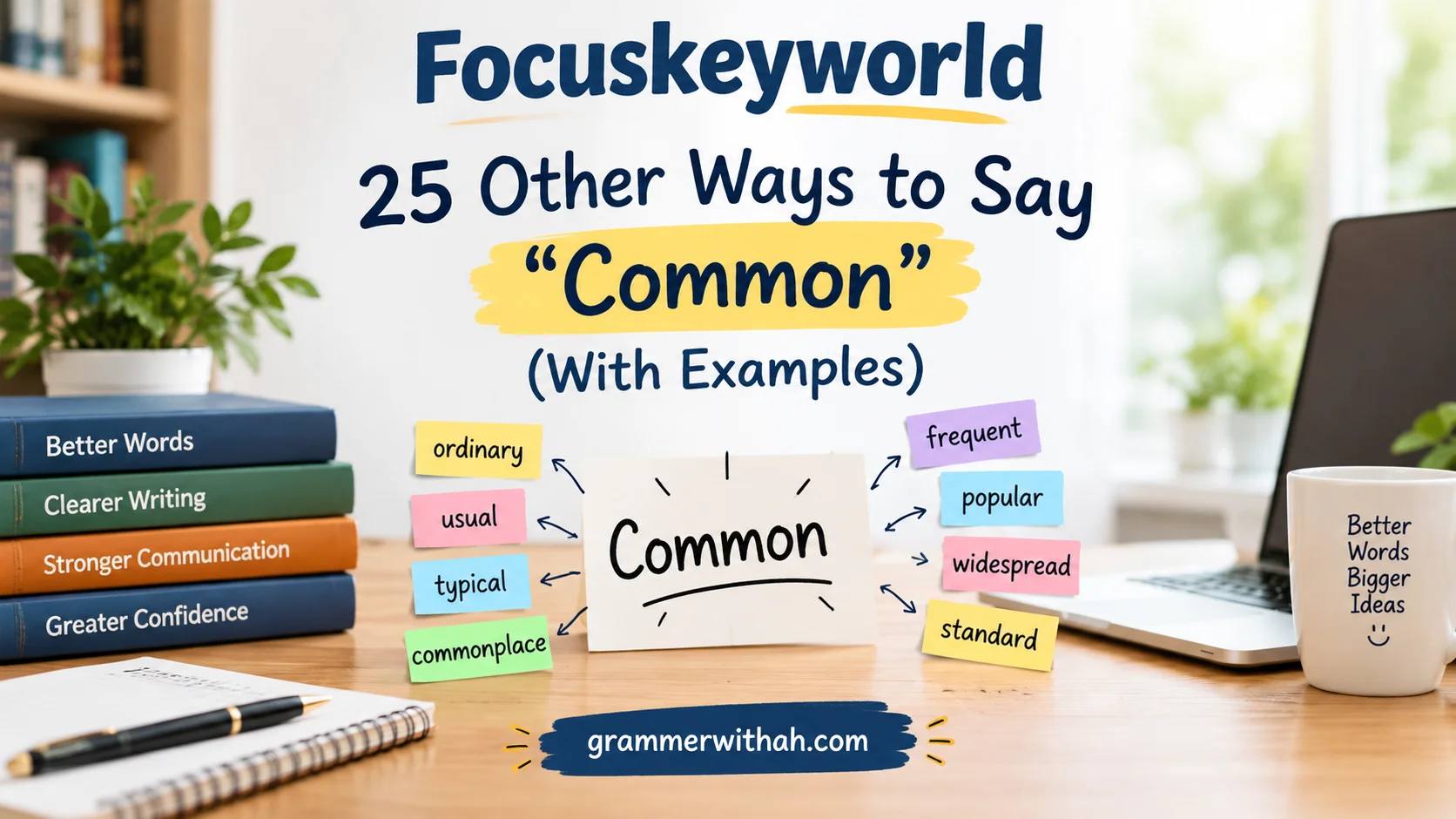
Other Ways to Say “Common” can help English learners use common synonyms to describe something familiar, usual, ordinary, widespread, or prevalent in everyday English. Learning the word common is important because, in everyday life, people often need to express frequency, normalcy, or generality without repetition. When you explore different contexts,
these synonyms can make writing and speaking more varied and engaging, while the right meaning, usage, subject, phrase, and alternative can improve communication. Expanding your vocabulary gives you more alternatives to leverage when you want greater variety and precision in your ideas. For English learners, a simple explanation, visual examples, and pictures can make studying more enjoyable, especially when exploring 100 synonyms for common in English with pictures.
A quick story about the origins of English can also make the English language more interesting, while the Norman Conquests of England provide useful history and background for understanding how English developed. You can identify useful words through an article that has compiled 100 Common Synonyms you may hear in everyday communication, and continued study can even support an academic career focused on language.
What Does “Common” Mean?
Common describes something that happens often, exists in many places, or is experienced, understood, or shared by many people.
The word can describe ordinary experiences, familiar situations, popular ideas, frequent events, or widely shared characteristics. Its exact meaning depends on the sentence and the context where you use it.
For example, saying something is common may simply mean that many people experience it, while another context may suggest that something is ordinary or not especially unusual.
Finding a more precise alternative can help you explain your meaning without making your writing feel repetitive or unclear.
Is It Professional or Polite to Say “Common”?
Yes, common is generally considered both professional and polite when it accurately describes something that happens frequently or is widely experienced.
However, the word can sometimes sound too general when you are writing professionally and need to provide specific information.
For example, “common issue” is acceptable, but “frequent issue” may communicate the situation more precisely when discussing repeated problems.
Similarly, “common practice” sounds professional because it clearly describes an established or widely followed approach.
The best alternative depends on whether you want to emphasize frequency, popularity, familiarity, normality, or widespread acceptance.
Pros and Cons of “Common”
Understanding the strengths and weaknesses of common can help you decide whether another word would communicate your intended meaning more effectively.
Pros:
- Simple: The word is easy for most readers to understand without additional explanation.
- Flexible: It can describe ideas, experiences, behaviors, objects, situations, and many other things.
- Natural: It sounds comfortable in everyday conversations and professional writing.
- Versatile: It can describe something frequent, widespread, familiar, or ordinary depending on context.
Cons:
- General: Sometimes the word does not provide enough detail about what you actually mean.
- Repetitive: Frequent use can make your writing sound less varied and interesting.
- Ambiguous: Readers may interpret “common” differently depending on the surrounding context.
- Less precise: A stronger synonym can sometimes explain the exact quality you want to emphasize.
Synonyms “Common”
- Usual
- Typical
- Ordinary
- Frequent
- Widespread
- Popular
- Familiar
- General
- Regular
- Routine
- Standard
- Normal
- Customary
- Prevailing
- Universal
- Shared
- Numerous
- Abundant
- Prevalent
- Conventional
- Everyday
- Ordinary Occurrence
- Widely Seen
- Generally Accepted
- Commonplace
1. Usual
Scenario Meaning: Usual describes something that normally happens, regularly occurs, or represents what someone generally expects based on familiar patterns.
Examples:
- She arrived at her usual time and quietly joined the meeting already in progress.
- We followed our usual routine before leaving home for the evening.
- His usual response was calm, thoughtful, and respectful toward everyone involved.
- The restaurant was busier than usual during the holiday weekend.
- They decided to meet at their usual place after finishing work.
Tone: Natural, familiar, and conversational, with a comfortable feeling that suggests something regularly happens.
Details Explanation: Usual works especially well when you want to describe something that normally happens or feels familiar to someone.
Best Use: Use usual when discussing familiar routines, expected behavior, regular places, or things that normally happen.
2. Typical
Scenario Meaning: Typical describes something that represents the usual characteristics, behavior, pattern, or expectations associated with a particular person, group, or situation.
Examples:
- That was a typical morning for our busy team during the summer.
- Her typical reaction was thoughtful rather than emotional or hurried.
- This kind of weather is typical during the early spring months.
- His answer was typical of someone who carefully considers every possibility.
- The experience represents a typical example of customer service in this industry.
Tone: Neutral and descriptive, making it suitable for both everyday communication and professional writing.
Details Explanation: Typical focuses on something representing the normal characteristics or expected pattern associated with a particular situation.
Best Use: Use typical when describing representative examples, expected behaviors, normal conditions, or recognizable patterns.
3. Ordinary
Scenario Meaning: Ordinary describes something normal, familiar, or not especially unusual, remarkable, exceptional, or different from everyday experiences.
Examples:
- It looked like an ordinary day, but something unexpectedly wonderful happened later.
- She enjoys finding beauty in ordinary moments that others sometimes overlook.
- The building appears ordinary from outside but has a beautiful interior.
- His simple gesture turned an ordinary afternoon into a memorable experience.
- There was nothing ordinary about the kindness they showed toward strangers.
Tone: Simple, reflective, and gentle, although it can sometimes suggest that something lacks special qualities.
Details Explanation: Ordinary emphasizes normality and the absence of unusual or exceptional characteristics in something.
Best Use: Use ordinary when talking about everyday experiences, simple things, or situations that are not particularly unusual.
4. Frequent
Scenario Meaning: Frequent describes something that happens repeatedly, occurs often, or appears regularly within a particular period or situation.
Examples:
- Frequent communication helped the team understand each other more clearly.
- She makes frequent visits to her parents throughout the year.
- Frequent delays can make traveling especially stressful for families.
- The company receives frequent requests for additional customer support.
- His frequent questions showed that he genuinely wanted to understand the subject.
Tone: Professional, precise, and factual, making it particularly useful in formal communication.
Details Explanation: Frequent specifically emphasizes how often something happens rather than simply saying that many people experience it.
Best Use: Use frequent when discussing repeated events, regular communication, recurring problems, or activities happening often.
5. Widespread
Scenario Meaning: Widespread describes something that exists, occurs, or is recognized across many people, places, groups, or communities.
Examples:
- The new technology has become widespread among younger professionals.
- There is widespread interest in improving workplace communication.
- The practice became widespread after several successful organizations adopted it.
- The announcement received widespread attention from the local community.
- These concerns are widespread and deserve thoughtful consideration from leaders.
Tone: Formal, informative, and authoritative, making it especially useful for professional and academic writing.
Details Explanation: Widespread emphasizes broad distribution across many locations, people, organizations, or communities.
Best Use: Use widespread when discussing ideas, practices, problems, beliefs, or situations affecting many people or places.
6. Popular
Scenario Meaning: Popular describes something liked, chosen, supported, or enjoyed by many people within a particular group, community, or culture.
Examples:
- This restaurant has become popular among families looking for affordable meals.
- The idea became popular after people discovered how practical it was.
- She chose one of the most popular options available.
- Online learning has become increasingly popular among working professionals.
- His book remains popular with readers who enjoy simple storytelling.
Tone: Positive, friendly, and approachable, especially when describing something many people enjoy or appreciate.
Details Explanation: Popular emphasizes approval, interest, preference, or widespread enjoyment rather than merely describing something as frequent.
Best Use: Use popular for products, ideas, activities, choices, opinions, entertainment, and trends that many people like.
7. Familiar
Scenario Meaning: Familiar describes something known, recognized, experienced before, or easily understood because of previous exposure or personal experience.
Examples:
- The friendly voice sounded familiar, even though she could not remember the name.
- He returned to a familiar place where he always felt comfortable.
- The instructions use familiar language that most readers can understand easily.
- Seeing familiar faces made the new environment feel much more welcoming.
- The situation was familiar to anyone who had experienced similar challenges.
Tone: Warm, comfortable, and reassuring, making it excellent for empathetic communication.
Details Explanation: Familiar focuses on recognition and personal knowledge rather than simply describing something as widespread or frequent.
Best Use: Use familiar when discussing people, places, ideas, experiences, language, routines, or situations that someone already knows.
8. General
Scenario Meaning: General describes something broad, overall, or not limited to one particular person, group, detail, situation, or specific example.
Examples:
- She gave us a general overview before explaining the important details.
- The discussion focused on general concerns shared by many employees.
- He provided some general advice that could help different situations.
- The report offers a general explanation of the process.
- We reached a general understanding before discussing specific responsibilities.
Tone: Neutral, clear, and professional, particularly useful when discussing broad ideas.
Details Explanation: General is useful when you want to describe something broadly without focusing on specific details or individual examples.
Best Use: Use general for explanations, advice, information, opinions, descriptions, and broad categories.
9. Regular
Scenario Meaning: Regular describes something that happens repeatedly, follows an established pattern, or occurs consistently at expected or predictable intervals.
Examples:
- She is a regular visitor who enjoys spending time at the library.
- Regular meetings help our team stay organized and connected.
- He maintains a regular schedule despite having many responsibilities.
- The company provides regular updates about important changes.
- Regular practice can make difficult skills feel more natural over time.
Tone: Reliable, straightforward, and professional, with an emphasis on consistency.
Details Explanation: Regular highlights consistency, repetition, or an established pattern rather than simply describing something as widespread.
Best Use: Use regular when describing schedules, habits, meetings, visitors, updates, activities, or repeated events.
10. Routine
Scenario Meaning: Routine describes something that regularly occurs as part of an established, familiar, or repeated pattern of activities or behavior.
Examples:
- Checking the equipment is part of our routine process every morning.
- She developed a routine that helped her manage busy workdays.
- The task became routine after several months of practice.
- Their routine activities help keep the office organized.
- A simple evening routine can create a sense of calm after stressful days.
Tone: Practical, familiar, and organized, often suggesting predictability and consistency.
Details Explanation: Routine emphasizes activities or processes that happen repeatedly because they have become established habits.
Best Use: Use routine for habits, procedures, schedules, daily activities, and repeated processes.
11. Standard
Scenario Meaning: Standard describes something accepted, expected, established, or commonly used as a normal level, method, quality, or practice.
Examples:
- The company follows standard procedures when handling customer requests.
- This model includes the standard features most customers expect.
- The team uses standard guidelines to maintain consistent results.
- Wearing appropriate clothing is considered standard practice for the event.
- The document follows the standard format required by the organization.
Tone: Professional, precise, and authoritative, making it especially useful in workplace communication.
Details Explanation: Standard suggests that something has been established as an accepted or expected way of doing things.
Best Use: Use standard for procedures, requirements, practices, formats, features, expectations, and professional guidelines.
12. Normal
Scenario Meaning: Normal describes something considered usual, expected, ordinary, or consistent with what people generally experience in similar circumstances.
Examples:
- It is normal to feel uncertain when starting something completely new.
- The results were within the normal range expected for this process.
- Taking time to rest is a normal part of maintaining balance.
- The conversation continued in a normal and friendly manner.
- These changes are normal during periods of adjustment and growth.
Tone: Reassuring, familiar, and conversational, particularly helpful when discussing everyday experiences.
Details Explanation: Normal emphasizes that something fits expected patterns and does not appear unusual or concerning.
Best Use: Use normal when discussing ordinary experiences, expected reactions, standard conditions, or familiar situations.
13. Customary
Scenario Meaning: Customary describes something traditionally practiced, regularly followed, or generally expected because it has become an accepted habit.
Examples:
- It is customary to greet guests warmly when they arrive.
- The team followed its customary procedure before beginning the event.
- She offered her customary kindness to everyone she met.
- A short introduction is customary before the formal discussion begins.
- They followed the customary traditions associated with the celebration.
Tone: Polite, traditional, and somewhat formal, with a strong connection to established practices.
Details Explanation: Customary emphasizes traditions, habits, or practices that people generally follow because they have become established over time.
Best Use: Use customary when discussing traditions, social practices, established habits, ceremonies, or expected procedures.
Absolutely — here is Part 2, continuing from alternatives 14–25, followed by the conclusion, five unique FAQs, and the final synonym list.
14. Prevailing
Scenario Meaning: Prevailing describes something that is currently widespread, generally accepted, or most commonly found within a particular group or situation.
Examples:
- The prevailing opinion was that the project needed more careful planning.
- This remains the prevailing view among many experienced professionals.
- The prevailing conditions made traveling difficult for everyone.
- Researchers studied the prevailing attitudes toward modern education.
- The prevailing trend suggests that customers increasingly value convenience.
Tone: Formal, analytical, and professional, making it particularly effective in reports and serious discussions.
Details Explanation: Prevailing emphasizes an idea, condition, opinion, or trend that currently dominates or is most widely present.
Best Use: Use prevailing in academic, professional, analytical, or formal writing when describing dominant opinions or conditions.
15. Universal
Scenario Meaning: Universal describes something that applies to, affects, involves, or is experienced by people or situations everywhere without significant limitation.
Examples:
- The desire for universal respect connects people from many different backgrounds.
- Kindness is often considered a universal value across many cultures.
- There is no universal solution that works perfectly for every situation.
- The message carries a universal meaning that many people understand.
- The need for meaningful connection is a universal human experience.
Tone: Warm, inclusive, and powerful, especially when discussing experiences shared across different communities.
Details Explanation: Universal suggests something applies broadly to everyone or nearly everyone rather than simply being frequently observed.
Best Use: Use universal for values, experiences, principles, needs, truths, ideas, and qualities shared across many people.
16. Shared
Scenario Meaning: Shared describes something experienced, possessed, understood, supported, or held in common by two or more people.
Examples:
- They discovered a shared interest in music and creative writing.
- Their shared experience helped them understand each other better.
- We worked toward a shared goal that benefited everyone involved.
- The friendship grew stronger because of their shared memories.
- They developed a shared understanding of what needed to happen next.
Tone: Warm, personal, cooperative, and caring, making it excellent for meaningful communication.
Details Explanation: Shared emphasizes something that connects multiple people through common experiences, responsibilities, interests, ideas, or feelings.
Best Use: Use shared when discussing relationships, goals, experiences, responsibilities, interests, memories, or beliefs.
17. Numerous
Scenario Meaning: Numerous describes something existing in a large number, with many individual examples, instances, people, objects, or occurrences involved.
Examples:
- The organization received numerous applications for the available position.
- She has faced numerous challenges while building her career.
- The report provides numerous examples supporting the main argument.
- We received numerous questions after presenting the new proposal.
- There are numerous opportunities available for people willing to learn.
Tone: Professional, descriptive, and slightly formal, while still remaining easy to understand.
Details Explanation: Numerous focuses specifically on the large quantity or number of something rather than its popularity or familiarity.
Best Use: Use numerous when you want to emphasize that there are many examples, people, opportunities, questions, or occurrences.
18. Abundant
Scenario Meaning: Abundant describes something available in large quantities, existing plentifully, or occurring in a greater amount than normally required.
Examples:
- The region has abundant natural resources that support many communities.
- There are abundant opportunities for people with useful digital skills.
- The garden provides abundant fresh produce during the warmer months.
- Her writing contains abundant examples that make the subject easier to understand.
- The area has an abundant supply of clean water.
Tone: Positive, descriptive, and optimistic, particularly when emphasizing plenty or richness.
Details Explanation: Abundant suggests that something exists in plentiful amounts and is available without significant shortage.
Best Use: Use abundant for resources, opportunities, supplies, examples, nature, information, and anything available in large quantities.
19. Prevalent
Scenario Meaning: Prevalent describes something that is widespread, frequently encountered, or commonly found among people, places, groups, or situations.
Examples:
- The issue is prevalent in many rapidly growing communities.
- This belief remains prevalent among people who value traditional approaches.
- Stress is prevalent in demanding professional environments.
- The practice became increasingly prevalent during recent years.
- Such concerns are prevalent across many modern workplaces.
Tone: Formal, factual, and analytical, making it useful for professional and academic writing.
Details Explanation: Prevalent emphasizes that something is widespread or frequently encountered within a particular population or environment.
Best Use: Use prevalent when discussing trends, conditions, beliefs, behaviors, problems, or practices found widely within groups.
20. Conventional
Scenario Meaning: Conventional describes something based on traditional, accepted, established, or widely followed methods, ideas, practices, or standards.
Examples:
- They chose a conventional approach because it was familiar and reliable.
- The company moved away from conventional methods and introduced new ideas.
- His conventional thinking helped maintain stability during uncertain times.
- Many people still prefer conventional communication for important conversations.
- The organization follows a conventional structure that employees understand easily.
Tone: Professional, thoughtful, and somewhat formal, especially when comparing traditional methods with newer approaches.
Details Explanation: Conventional emphasizes accepted or traditional ways of thinking, behaving, organizing, or completing something.
Best Use: Use conventional when discussing traditional methods, established ideas, familiar approaches, or accepted standards.
21. Everyday
Scenario Meaning: Everyday describes something ordinary, familiar, and regularly encountered as part of normal daily life and common personal experiences.
Examples:
- She finds joy in everyday moments that others sometimes overlook.
- These are everyday problems that many families understand well.
- Good communication can make everyday interactions more comfortable and meaningful.
- He uses simple tools for his everyday tasks.
- Small acts of kindness can make an everyday experience feel special.
Tone: Friendly, warm, relatable, and conversational, making it especially suitable for personal communication.
Details Explanation: Everyday focuses on things that naturally belong to ordinary daily life and familiar personal experiences.
Best Use: Use everyday for activities, experiences, objects, conversations, problems, routines, and moments that happen during daily life.
22. Ordinary Occurrence
Scenario Meaning: Ordinary occurrence describes an event or situation that happens normally and does not seem unusual within a particular context.
Examples:
- Small misunderstandings are an ordinary occurrence in busy workplaces.
- Changes in plans are an ordinary occurrence when organizing large events.
- Minor delays became an ordinary occurrence during the construction period.
- Unexpected questions are an ordinary occurrence during public presentations.
- Learning from mistakes is an ordinary occurrence during personal growth.
Tone: Neutral, explanatory, and slightly formal, with an emphasis on normal events.
Details Explanation: Ordinary occurrence clearly communicates that an event happens normally and should not necessarily be viewed as unusual.
Best Use: Use this phrase when describing events, situations, mistakes, delays, or experiences that happen naturally or repeatedly.
23. Widely Seen
Scenario Meaning: Widely seen describes something observed, noticed, displayed, or encountered by many people across different places or situations.
Examples:
- This behavior is widely seen among successful teams with strong communication.
- Similar patterns are widely seen in modern business environments.
- The design is widely seen in homes across the region.
- These challenges are widely seen among growing organizations.
- The approach is widely seen as practical and affordable.
Tone: Clear, descriptive, and accessible, making it easy to understand in everyday and professional contexts.
Details Explanation: Widely seen emphasizes that something can be observed frequently across many people, places, situations, or environments.
Best Use: Use widely seen when describing visible patterns, behaviors, designs, trends, problems, or practices.
24. Generally Accepted
Scenario Meaning: Generally accepted describes something recognized, approved, believed, or considered valid by most people within a particular group or community.
Examples:
- This is a generally accepted practice among experienced professionals.
- The principle is generally accepted by researchers in the field.
- Her explanation reflects a generally accepted understanding of the subject.
- The organization follows generally accepted standards for quality.
- It is a generally accepted belief that honest communication builds trust.
Tone: Professional, careful, and respectful, especially when discussing opinions, principles, standards, or established knowledge.
Details Explanation: Generally accepted highlights broad agreement without suggesting that absolutely everyone shares the same opinion or belief.
Best Use: Use generally accepted for ideas, principles, standards, practices, beliefs, explanations, and professional expectations.
25. Commonplace
Scenario Meaning: Commonplace describes something ordinary, frequently encountered, or so familiar that people generally do not consider it unusual anymore.
Examples:
- Smartphones have become commonplace in many people’s daily lives.
- Remote meetings are now commonplace for many professional teams.
- Online shopping has become commonplace in modern communities.
- Such conversations are commonplace among people working in creative industries.
- Digital communication is now a commonplace part of everyday life.
Tone: Neutral, polished, and descriptive, with a slightly more formal feeling than simply saying “common.”
Details Explanation: Commonplace emphasizes that something has become so ordinary or familiar that people rarely find it surprising.
Best Use: Use commonplace when describing habits, technologies, practices, behaviors, or situations that have become ordinary and familiar.
FAQs
1. What does “common” mean?
Common usually means something that is usual, ordinary, familiar, or frequently encountered. The exact meaning depends on the context and how the word is used.
2. Why should I learn synonyms for “common”?
Learning common synonyms helps you avoid repetition and make your writing and speaking more varied. It also helps you choose a word that expresses your meaning more precisely.
3. What are some simple synonyms for “common”?
Some useful alternatives include usual, ordinary, familiar, widespread, general, and prevalent. Each word can fit slightly different situations.
4. Are synonyms for “common” useful for English learners?
Yes. Studying synonyms can help English learners expand their vocabulary, understand different contexts, and improve everyday communication.
5. Can I use these synonyms in formal writing?
Yes, but choose the synonym according to the subject, meaning, and usage. Some words sound more natural in formal writing, while others work better in casual speech.
Conclusion
Learning different ways to say common can make your English language skills more flexible and natural. Words such as usual, ordinary, familiar, widespread, and prevalent give you useful alternatives when you want to add variety and avoid repetition. By practicing these synonyms in real sentences, you can make your writing, speaking, and everyday communication clearer and more engaging.