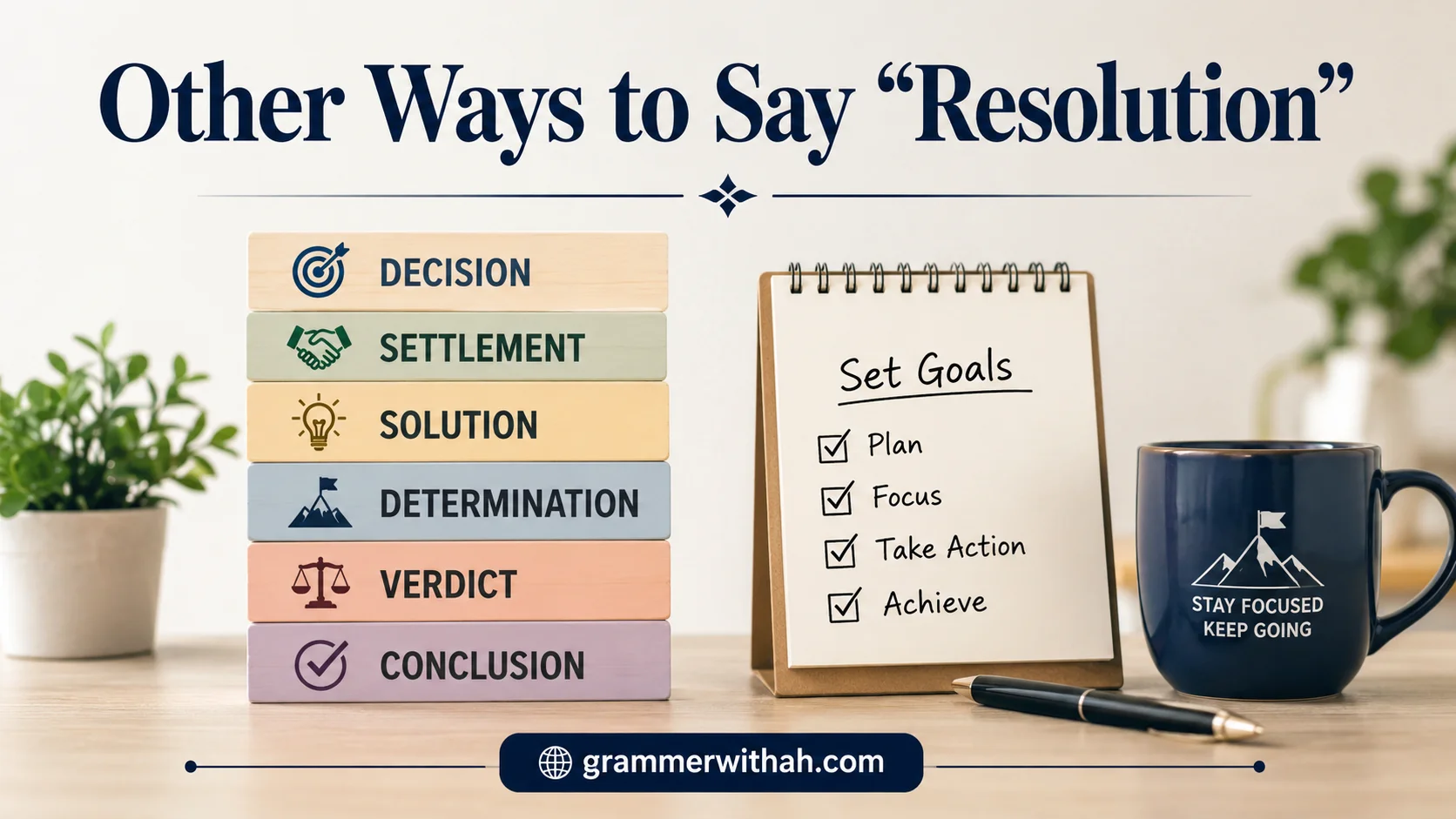
Looking for Other Ways to Say “Resolution” (With Examples)? This guide explores useful synonyms and alternative words that can help you express determination, commitment, and a firm decision in a more natural and effective way. Whether you mean a personal goal, a solution to a problem, or a clear intention, these alternatives can improve your communication.
The word resolution has different meanings depending on the context. It can describe purpose, dedication, or the final solution of a conflict or mystery. In this article, you will discover carefully selected words with examples to understand their tone, meaning, and best use in everyday writing and conversations.
What Does “Resolution” Mean?
Resolution usually means a firm decision, a promise to act, or a solution that ends a problem in a peaceful way. In everyday language, people use it when they talk about personal goals, clear choices, or fixing disagreements with care.
Is It Professional or Polite to Say “Resolution”?
Yes, resolution is both professional and polite in most situations. It works well in business, writing, and thoughtful conversation, especially when you want to sound calm, serious, and respectful.
Pros and Cons of Using “Resolution”
Pros: It sounds clear, mature, and thoughtful, and it works in both formal and personal settings. Cons: It can feel a little serious or broad, so sometimes a more specific word can sound warmer or easier to understand.
“Resolution” Synonyms
- Determination
- Resolve
- Decision
- Commitment
- Intention
- Plan
- Goal
- Aim
- Objective
- Purpose
- Solution
- Settlement
- Agreement
- Compromise
- Understanding
- Pledge
- Promise
- Conviction
- Dedication
- Perseverance
- Willpower
- Firmness
- Conclusion
- Outcome
- Final Decision
1: Determination
Scenario: Use determination when you want to show strong effort, steady energy, and a clear commitment to reach something important.
Meaning: Determination means a strong inner drive that helps a person keep going, even when the path feels difficult or uncertain.
Examples:
- Her determination helped her finish the project, even after several hard and tiring days.
- He showed determination by practicing every morning before school began.
- Their determination gave the whole team confidence during a stressful week.
- My determination stayed strong, even when the first attempt did not work well.
- With enough determination, small steps can still lead to real and lasting success.
Tone: This word sounds strong, positive, and motivating, especially in personal growth writing.
Details Explanation: It works well when you want to highlight inner strength, steady effort, and emotional courage.
Best Use: Use it in speeches, personal writing, encouragement, and success-focused conversations.
2: Resolve
Scenario: Use resolve when someone has made a serious choice and plans to stay committed to it.
Meaning: Resolve means a firm decision or a strong mental attitude that keeps a person focused on one path.
Examples:
- She made a quiet resolve to speak more honestly in difficult conversations.
- His resolve helped him stay calm when the situation became stressful and confusing.
- Their shared resolve kept the group moving forward together.
- I felt a strong resolve to improve my habits before the new month started.
- That moment gave her the resolve to stop doubting herself and begin again.
Tone: This word sounds serious, thoughtful, and confident without sounding harsh.
Details Explanation: It is a good choice when you want to show inner strength and clear purpose.
Best Use: Use it in formal writing, self-improvement topics, and meaningful personal reflections.
3: Decision
Scenario: Use decision when you want to talk about choosing one option after careful thought.
Meaning: Decision means the final choice a person makes after looking at different options, feelings, or results.
Examples:
- She made a decision to change her schedule so life felt more balanced.
- His decision came after many careful conversations with people he trusted.
- Their decision helped bring clarity to a confusing and emotional situation.
- I respected her decision because it was thoughtful and honest.
- A good decision often brings peace, even when the choice is not easy.
Tone: This word sounds clear, neutral, and professional, which makes it very useful in daily speech.
Details Explanation: It works best when the main idea is choosing something, rather than showing emotional strength.
Best Use: Use it in business, school, planning, and everyday communication.
4: Commitment
Scenario: Use commitment when you want to show loyalty, effort, and a promise to stay involved.
Meaning: Commitment means a strong promise to keep supporting, doing, or working toward something important.
Examples:
- Her commitment to the team made everyone feel more supported and valued.
- His commitment to learning helped him grow faster than he expected.
- Their commitment to honesty strengthened the relationship over time.
- I noticed her commitment because she never gave up on the difficult task.
- True commitment often shows up in small actions, not only in big words.
Tone: This word sounds warm, reliable, and mature, especially in meaningful relationships.
Details Explanation: It is useful when you want to describe dedication that lasts beyond one moment.
Best Use: Use it for work, relationships, personal goals, and team responsibilities.
5: Intention
Scenario: Use intention when you want to explain a planned choice or a thoughtful purpose.
Meaning: Intention means the reason behind an action, or the goal a person hopes to achieve.
Examples:
- Her intention was to speak kindly, even during a tense discussion.
- My intention was to finish early so I could rest properly later.
- Their intention was clear, because they wanted peace instead of more conflict.
- He acted with good intention, even though the result was not perfect.
- Every strong habit begins with a small intention that grows over time.
Tone: This word sounds thoughtful, calm, and reflective, which makes it feel gentle and polite.
Details Explanation: It works well when you want to focus on purpose rather than pressure.
Best Use: Use it in planning, communication, personal reflection, and respectful conversations.
6: Plan
Scenario: Use plan when you want to talk about a clear path or organized next steps.
Meaning: Plan means a set of actions prepared in advance to help someone reach a goal or solve a problem.
Examples:
- Their plan gave the project a clear direction from the very beginning.
- My plan was simple, because I wanted to stay calm and finish one task at a time.
- She changed her plan after learning new information that mattered.
- A good plan can reduce stress and make big goals feel easier.
- We followed the plan carefully so nothing important was forgotten.
Tone: This word sounds practical, simple, and helpful in most conversations.
Details Explanation: It is a strong choice when the focus is organization, action, and preparation.
Best Use: Use it for work, study, travel, projects, and personal scheduling.
7: Goal
Scenario: Use goal when you want to talk about something you hope to achieve in the future.
Meaning: Goal means a target or desired result that gives direction to effort and planning.
Examples:
- Her goal was to become more confident in meetings and interviews.
- His goal helped him stay focused when distractions started to build.
- Their goal was clear, and that clarity made teamwork easier.
- I set a small goal so I could build progress without feeling overwhelmed.
- A meaningful goal gives your days more direction and purpose.
Tone: This word sounds hopeful, modern, and encouraging, especially in growth-focused writing.
Details Explanation: It works best when you want to show where someone is trying to go.
Best Use: Use it for personal development, school, fitness, work, and long-term dreams.
8: Aim
Scenario: Use aim when you want to describe a focused target or a clear direction.
Meaning: Aim means the purpose or target someone is working toward with attention and effort.
Examples:
- Her aim was to communicate more clearly in every conversation.
- His aim made the presentation feel organized and easy to follow.
- Their aim was to create a peaceful solution for everyone involved.
- I had one aim for the day: finish my work without rushing.
- A strong aim can keep your attention steady when life feels busy.
Tone: This word sounds simple, direct, and focused, which makes it easy to understand.
Details Explanation: It works well when you want a shorter and more flexible word than goal.
Best Use: Use it in writing, planning, academic work, and clear everyday speech.
9: Objective
Scenario: Use objective when you want to sound structured, formal, and specific about results.
Meaning: Objective means a clear outcome, target, or purpose that someone wants to reach.
Examples:
- The team kept one objective in mind while solving the problem together.
- Her objective was to improve the message without making it complicated.
- His objective gave the meeting a focused and useful direction.
- We shared the same objective, which made cooperation feel easier.
- A clear objective helps people avoid confusion and wasted effort.
Tone: This word sounds formal, organized, and professional, especially in workplace settings.
Details Explanation: It is best when you want to sound precise and businesslike.
Best Use: Use it in reports, presentations, project planning, and academic writing.
10: Purpose
Scenario: Use purpose when you want to show meaning, direction, or a reason behind action.
Meaning: Purpose means the reason something is done, or the meaningful goal behind a choice.
Examples:
- Her purpose was to help others feel understood and supported.
- His purpose gave him the patience to keep moving forward.
- Their purpose shaped the whole conversation in a thoughtful way.
- I wanted to live with more purpose, not just move through the day.
- A clear purpose can make hard work feel more meaningful and worthwhile.
Tone: This word sounds deep, thoughtful, and inspiring, especially in personal growth writing.
Details Explanation: It works well when you want to focus on meaning rather than only action.
Best Use: Use it in reflective writing, life goals, motivation, and inspiring speeches.
11: Solution
Scenario: Use solution when you want to talk about fixing a problem in a practical way.
Meaning: Solution means an answer or method that removes difficulty and brings improvement.
Examples:
- They found a solution that made the whole process faster and easier.
- Her solution helped calm the group and reduce the tension.
- His solution was simple, but it worked very well in practice.
- We need a solution that feels fair to everyone involved.
- A careful solution can turn a stressful problem into a manageable one.
Tone: This word sounds practical, useful, and professional in many situations.
Details Explanation: It is best when the main idea is fixing something rather than choosing something.
Best Use: Use it in conflict handling, business, school, and everyday problem-solving.
12: Settlement
Scenario: Use settlement when you want to describe the peaceful end of a disagreement or dispute.
Meaning: Settlement means an agreement that ends conflict and helps both sides move forward.
Examples:
- The settlement brought relief after many long and difficult talks.
- Their settlement helped both sides feel heard and respected.
- We welcomed the settlement because it created peace and clarity.
- The final settlement saved time, stress, and more misunderstanding.
- A fair settlement often matters more than simply being right.
Tone: This word sounds formal, calm, and legal or business-like.
Details Explanation: It is often used when money, disputes, or official agreements are involved.
Best Use: Use it in legal writing, business discussions, and conflict resolution contexts.
13: Agreement
Scenario: Use agreement when two or more people accept the same idea or decision.
Meaning: Agreement means shared understanding or a decision made together with mutual acceptance.
Examples:
- Their agreement showed that both sides were willing to cooperate.
- We reached an agreement after discussing each concern carefully.
- Her agreement made the next step easier for the whole team.
- A clear agreement can prevent confusion later on.
- Good agreement often begins with honest listening and respect.
Tone: This word sounds neutral, clear, and balanced, which makes it very widely useful.
Details Explanation: It works best when the focus is shared decision-making rather than personal will.
Best Use: Use it in business, teamwork, contracts, and peaceful conversations.
14: Compromise
Scenario: Use compromise when both sides give a little so they can move forward peacefully.
Meaning: Compromise means finding a middle ground that allows different people to accept one fair choice.
Examples:
- Their compromise helped end the argument without hurting the relationship.
- We made a compromise that respected both schedules and needs.
- Her compromise showed kindness, patience, and emotional maturity.
- A good compromise does not always feel perfect, but it often feels fair.
- They reached a compromise that gave everyone something valuable.
Tone: This word sounds practical, fair, and relationship-friendly.
Details Explanation: It is especially useful when you want peace without forcing one side to win.
Best Use: Use it in relationships, teamwork, family discussions, and negotiations.
15: Understanding
Scenario: Use understanding when you want to show agreement, empathy, or shared clarity.
Meaning: Understanding means a thoughtful awareness of a situation, or a peaceful agreement between people.
Examples:
- Their understanding made the conversation feel calmer and more respectful.
- We reached an understanding after explaining our feelings honestly.
- Her understanding helped others feel safe and heard.
- A strong understanding can grow when people listen without rushing.
- Their quiet understanding said more than many long conversations could.
Tone: This word sounds warm, gentle, and emotionally intelligent.
Details Explanation: It works very well when you want to show care, patience, and mutual respect.
Best Use: Use it in personal relationships, customer care, team communication, and diplomacy.
16: Pledge
Scenario: Use pledge when someone wants to make a serious promise or public commitment.
Meaning: Pledge means a firm promise to support, do, or protect something important.
Examples:
- Her pledge showed that she was serious about making a positive change.
- He made a pledge to stay honest, even when the truth felt difficult.
- Their pledge gave others confidence in the plan ahead.
- I took the pledge seriously because it came from the heart.
- A meaningful pledge can build trust when words match actions.
Tone: This word sounds formal, sincere, and strong.
Details Explanation: It works well when you want to stress honesty, duty, and lasting promise.
Best Use: Use it in speeches, campaigns, promises, and formal commitments.
17: Promise
Scenario: Use promise when you want to speak about a personal commitment or assurance.
Meaning: Promise means a declaration that something will be done, given, or kept.
Examples:
- Her promise to help gave the other person comfort and hope.
- He kept his promise, which built trust over time.
- Their promise sounded simple, but it meant a great deal.
- I made a promise to stay patient and speak kindly.
- A sincere promise is strongest when it is supported by action.
Tone: This word sounds warm, human, and emotionally honest.
Details Explanation: It is one of the most natural choices for caring and personal communication.
Best Use: Use it in relationships, family talk, emotional writing, and everyday speech.
18: Conviction
Scenario: Use conviction when someone strongly believes in something and stands by it.
Meaning: Conviction means a deep belief or certainty that guides someone’s choices and actions.
Examples:
- Her conviction helped her speak with confidence and respect.
- He acted with conviction, even when not everyone agreed with him.
- Their conviction gave the message strength and honesty.
- I admired her conviction because it came from deep thought, not pride.
- Strong conviction can help a person stay steady under pressure.
Tone: This word sounds serious, strong, and thoughtful.
Details Explanation: It works best when belief, confidence, and moral strength are important.
Best Use: Use it in essays, speeches, leadership writing, and meaningful discussion.
19: Dedication
Scenario: Use dedication when someone gives time, energy, and heart to something important.
Meaning: Dedication means steady devotion and loyal effort toward a person, goal, or responsibility.
Examples:
- Her dedication made the long project feel possible and worthwhile.
- His dedication to learning inspired the people around him.
- Their dedication kept the team strong during the hardest days.
- I saw her dedication in every careful and thoughtful action.
- True dedication is often quiet, but it makes a lasting difference.
Tone: This word sounds warm, respectful, and admiring.
Details Explanation: It is a powerful word when you want to praise effort and loyalty.
Best Use: Use it in appreciation messages, work praise, and motivational writing.
20: Perseverance
Scenario: Use perseverance when you want to show patient effort over a long and difficult period.
Meaning: Perseverance means continuing to try, even after setbacks, delays, or discouragement.
Examples:
- Her perseverance helped her finish what others thought was too difficult.
- His perseverance showed in the way he kept learning every day.
- Their perseverance turned a hard situation into a meaningful lesson.
- I admire your perseverance because you keep going with quiet strength.
- Real perseverance is not loud, but it is powerful and lasting.
Tone: This word sounds inspiring, respectful, and strong.
Details Explanation: It is ideal when the main idea is staying steady through repeated challenges.
Best Use: Use it in success stories, motivation, education, and personal growth writing.
21: Willpower
Scenario: Use willpower when you want to show inner control and the strength to resist distractions.
Meaning: Willpower means mental strength that helps a person make good choices and stay disciplined.
Examples:
- Her willpower helped her stay focused when distractions were everywhere.
- His willpower made it easier to keep his new routine.
- Their willpower was strong enough to support lasting change.
- I needed more willpower to avoid quitting too early.
- Good willpower often turns small efforts into long-term progress.
Tone: This word sounds strong, practical, and self-controlled.
Details Explanation: It works well when the emphasis is on discipline, self-control, and focus.
Best Use: Use it in habit-building, health goals, productivity, and self-improvement writing.
22: Firmness
Scenario: Use firmness when you want to show a steady, clear, and unshaken position.
Meaning: Firmness means staying steady in a belief, choice, or boundary without becoming harsh.
Examples:
- Her firmness helped the group understand the importance of the issue.
- His firmness was respectful, calm, and easy to trust.
- Their firmness kept the discussion focused and honest.
- I appreciated her firmness because it brought clarity to the conversation.
- Gentle firmness can be kinder than uncertain or confusing answers.
Tone: This word sounds steady, calm, and confident.
Details Explanation: It works well when you want to show strength without sounding aggressive.
Best Use: Use it in leadership, boundaries, parenting, and professional communication.
23: Conclusion
Scenario: Use conclusion when you want to describe the final point, ending, or result of something.
Meaning: Conclusion means the ending part of a process, discussion, or thought after everything has been considered.
Examples:
- The conclusion of the meeting gave everyone a clear next step.
- Her conclusion was careful, honest, and based on strong evidence.
- Their conclusion helped close the topic with peace and clarity.
- I reached a simple conclusion after thinking about every option.
- A thoughtful conclusion can help people move forward with confidence.
Tone: This word sounds formal, thoughtful, and organized.
Details Explanation: It is best when you want to talk about the final outcome of thinking or discussion.
Best Use: Use it in essays, reports, meetings, and structured conversations.
24: Outcome
Scenario: Use outcome when you want to focus on the result that comes after an action or decision.
Meaning: Outcome means the final result, effect, or consequence of a situation or choice.
Examples:
- The outcome of the conversation was calmer than anyone expected.
- Her hard work led to a positive outcome in the end.
- We hoped for a fair outcome that respected everyone involved.
- His careful planning improved the outcome of the whole project.
- A good outcome often begins with careful choices and patient effort.
Tone: This word sounds neutral, clear, and professional.
Details Explanation: It is useful when the focus is on results rather than the process itself.
Best Use: Use it in research, work, planning, and analysis writing.
25: Final Decision
Scenario: Use final decision when you want to show a completed choice that will not change easily.
Meaning: Final decision means the last and settled choice after considering all important options.
Examples:
- Their final decision brought relief after many days of uncertainty.
- Her final decision was thoughtful and calm, not rushed or careless.
- We respected the final decision because it was made carefully.
- His final decision ended the debate and opened the way forward.
- A good final decision should feel clear, fair, and well considered.
Tone: This phrase sounds clear, serious, and definite.
Details Explanation: It works very well when you want to show closure and certainty.
Best Use: Use it in formal writing, business choices, and important personal matters.
FAQs :
1. What are some common synonyms for resolution?
Common synonyms for resolution include determination, commitment, decision, purpose, intention, and goal. The best choice depends on the meaning and situation where you want to use the word.
2. What is another word for resolution when talking about goals?
When referring to a goal or personal promise, words like commitment, aim, objective, and determination work well because they show a strong desire to achieve something.
3. Can resolution mean a solution to a problem?
Yes, resolution can also mean a solution or answer to a problem, conflict, or mystery. In this context, alternatives include settlement, outcome, conclusion, or result.
4. Which word is the closest replacement for resolution?
The closest replacement depends on the meaning. For a personal decision, determination is a strong alternative. For solving an issue, solution or settlement may be more suitable.
5. Why should I use different words instead of resolution?
Using different synonyms helps make your writing more interesting, clear, and specific. Choosing the right alternative allows you to express your exact meaning with better impact.
Conclusion :
Finding the right alternative for resolution can make your writing more powerful and engaging. Words like commitment, determination, purpose, and solution each carry a slightly different meaning. By understanding these synonyms and their uses, you can communicate your ideas more clearly and choose the best word for every situation.