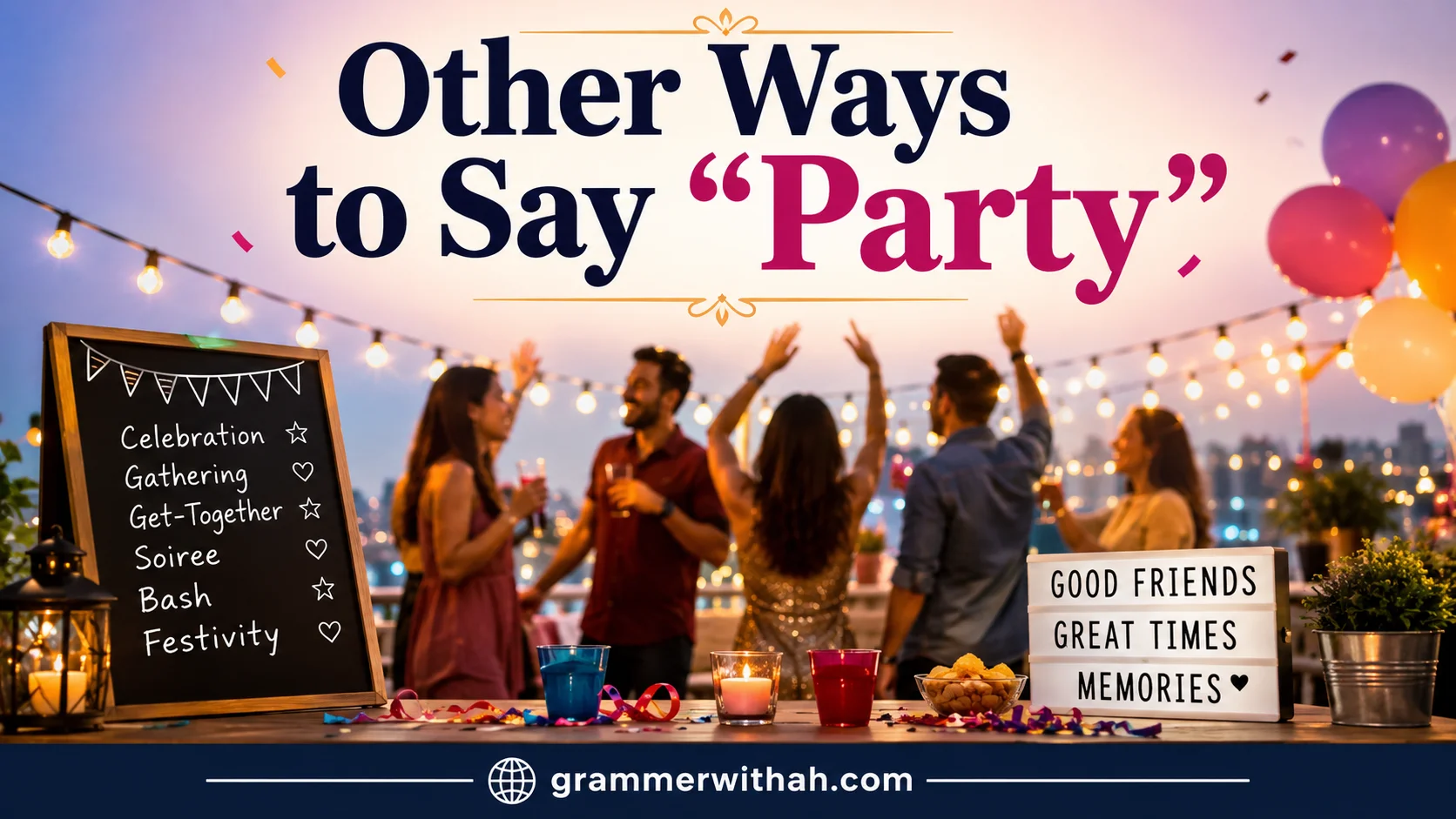
Other Ways to Say “Party” (With Examples) can make your writing and conversations more interesting and natural. Instead of using the word party every time, you can choose words like celebration, gathering, event, or bash to better match the situation. Learning these alternatives helps you express yourself more clearly while making invitations, stories, and everyday communication feel more engaging and enjoyable.
The word party has several meanings, including a social gathering, a group of people, or even a political party with shared beliefs. Using the right synonym adds variety, improves your vocabulary, and makes your message sound more natural. In this guide, you will discover useful alternatives, simple meanings, and practical examples that you can confidently use in real-life conversations and writing.
What Does “Party” Mean?
The word party usually means a social gathering where people meet to enjoy themselves, talk, celebrate, relax, or share time together. It can describe anything from a small birthday event to a large formal celebration, depending on the situation and the feeling you want to express.
Is It Professional or Polite to Say “Party”?
Yes, party is polite in many everyday situations, and it works well in casual writing, friendly messages, and common conversation. However, in more formal writing, words like reception, gala, function, or social event can sound more polished and suitable.
Pros and Cons of Saying “Party”
Pros: The word party is easy, friendly, and widely understood by almost everyone. It sounds natural in casual conversation and works well for many happy social occasions.
Cons: The word party can sometimes sound too casual, too general, or less elegant in formal writing. In professional or special-event writing, a more specific word often creates a better impression.
“Party” Synonyms
- Celebration
- Gathering
- Get-together
- Social Event
- Festivity
- Bash
- Soirée
- Reception
- Function
- Mixer
- Gala
- Shindig
- Affair
- Fiesta
- Banquet
- Meetup
- Rendezvous
- Assembly
- Festival
- Occasion
- Ceremony
- Reception Gathering
- Social Gathering
- Celebratory Event
- Social Function
1. Celebration
Scenario Meaning: Celebration means a joyful event or gathering held to honor a special moment, achievement, holiday, or happy occasion.
Examples:
- We had a celebration for her promotion at work.
- Their wedding celebration lasted late into the night.
- The school arranged a small celebration for the students.
- We joined the family celebration after dinner.
- Everyone smiled during the birthday celebration.
Tone: Warm, cheerful, and positive.
Details Explanation: Celebration feels a little more meaningful than party, because it highlights joy, appreciation, and the importance of the moment. It works beautifully when you want your words to feel heartfelt, respectful, and full of happiness.
Best Use: Use celebration for birthdays, milestones, achievements, holidays, and meaningful happy events.
2. Gathering
Scenario Meaning: Gathering means a group of people coming together in one place for a shared purpose, event, or social moment.
Examples:
- We attended a family gathering on Sunday.
- The office gathering ended with tea and snacks.
- Their small gathering felt relaxed and peaceful.
- The community gathering brought many neighbors together.
- We enjoyed the evening gathering with friends.
Tone: Simple, calm, and friendly.
Details Explanation: Gathering is a gentle and flexible word that works well when you want to sound natural without being too casual. It often feels softer and more thoughtful than party, especially when the event is small, relaxed, or intimate.
Best Use: Use gathering for family meetings, community events, quiet social meetings, and small group occasions.
3. Get-together
Scenario Meaning: Get-together means an informal meeting where people come together to spend time, talk, and enjoy each other’s company.
Examples:
- We planned a small get-together after the exams.
- The old friends had a lovely get-together.
- Our weekend get-together was simple and fun.
- They invited us to a casual get-together at home.
- The team enjoyed a friendly get-together after work.
Tone: Casual, warm, and easygoing.
Details Explanation: Get-together is one of the friendliest alternatives to party, because it feels relaxed and personal. It gives the message a welcoming tone and works very well when the event is informal, comfortable, and not too grand.
Best Use: Use get-together for casual meetups, friendly home visits, and relaxed social plans.
4. Social event
Scenario Meaning: Social event means an organized occasion where people come together for interaction, conversation, and shared enjoyment.
Examples:
- The company hosted a formal social event last night.
- We attended a community social event downtown.
- The charity social event raised a lot of support.
- Her school planned a lovely social event for parents.
- The social event helped everyone connect easily.
Tone: Polite, organized, and respectful.
Details Explanation: Social event sounds more structured and professional than party, so it works well in business, school, or community writing. It feels clear, neutral, and suitable when you want a broader phrase that still sounds pleasant.
Best Use: Use social event for formal invitations, workplace functions, school programs, and community activities.
5. Festivity
Scenario Meaning: Festivity means a happy and lively event, often connected with a holiday, special occasion, or public celebration.
Examples:
- The festivity continued late into the evening.
- We joined the holiday festivity with joy.
- The town was full of festivity and music.
- Their wedding festivity felt bright and cheerful.
- The school’s festivity included songs and dancing.
Tone: Joyful, lively, and slightly formal.
Details Explanation: Festivity adds a festive and cheerful feeling to your words, and it often sounds richer than party. It is useful when you want to describe a happy atmosphere, especially during holidays or special seasonal events.
Best Use: Use festivity for holiday gatherings, public celebrations, traditional events, and lively special occasions.
6. Bash
Scenario Meaning: Bash means a lively, informal party or celebration where people enjoy themselves in a loud, fun, and energetic way.
Examples:
- They threw a big bash for his birthday.
- The office bash went on until midnight.
- We were invited to a fun summer bash.
- Her graduation bash was full of music.
- The neighborhood bash had food and dancing.
Tone: Energetic, playful, and casual.
Details Explanation: Bash feels lively and fun, and it is perfect when you want a more playful word than party. It works best in informal writing, especially when the event is loud, exciting, and full of cheerful energy.
Best Use: Use bash for birthday parties, casual celebrations, music-filled events, and fun social nights.
7. Soirée
Scenario Meaning: Soirée means a refined evening gathering, often social, elegant, and pleasant in style.
Examples:
- We attended a lovely soirée at her house.
- The dinner soirée felt elegant and calm.
- Their birthday soirée was beautifully arranged.
- The charity soirée welcomed many guests.
- We enjoyed the quiet soirée with friends.
Tone: Elegant, graceful, and polished.
Details Explanation: Soirée sounds more stylish and refined than party, so it adds a touch of class to your writing. It is especially useful when you want your message to feel graceful, formal, and a little more sophisticated.
Best Use: Use soirée for dinner events, evening gatherings, elegant invitations, and polished social occasions.
8. Reception
Scenario Meaning: Reception means a formal gathering held to welcome guests, celebrate an occasion, or honor a person or event.
Examples:
- The wedding reception was beautifully decorated.
- We went to the award reception after dinner.
- The school held a welcome reception for parents.
- Their office reception included light refreshments.
- The art reception attracted many visitors.
Tone: Formal, respectful, and organized.
Details Explanation: Reception is a strong choice when the event is official, formal, or planned with care. It sounds more professional than party, and it often fits well in invitations, announcements, and public event writing.
Best Use: Use reception for weddings, business welcomes, award events, exhibitions, and official gatherings.
9. Function
Scenario Meaning: Function means an organized event or formal gathering held for a particular purpose or occasion.
Examples:
- The company arranged a special function for staff.
- We attended a school function last week.
- Their anniversary function was well planned.
- The charity function supported many people.
- The evening function ended with dinner.
Tone: Formal, neat, and practical.
Details Explanation: Function is often used in more formal or organized settings, and it feels less casual than party. It is a useful word when the event has a clear purpose and when the writing should sound composed and professional.
Best Use: Use function for formal ceremonies, workplace events, school programs, and organized public occasions.
10. Mixer
Scenario Meaning: Mixer means a social event where people meet, talk, and interact in a friendly and informal way.
Examples:
- The networking mixer helped everyone meet new people.
- We joined a student mixer on Friday evening.
- The office mixer felt relaxed and friendly.
- Her club hosted a fun mixer for members.
- The community mixer encouraged easy conversation.
Tone: Friendly, social, and active.
Details Explanation: Mixer suggests interaction, connection, and easy conversation, which makes it useful in modern social writing. It is a good alternative when the event is designed to help people meet each other instead of just sit and celebrate.
Best Use: Use mixer for networking events, club meetups, student gatherings, and social introductions.
11. Gala
Scenario Meaning: Gala means a large, formal, and impressive event held to celebrate something important.
Examples:
- The charity gala raised a lot of money.
- We attended the annual gala in the city.
- Her award gala was elegant and memorable.
- The evening gala included speeches and dinner.
- Their fashion gala attracted many guests.
Tone: Grand, formal, and impressive.
Details Explanation: Gala sounds much more formal and glamorous than party, and it often suggests something special, high-end, or important. It is excellent when you want your writing to feel polished, classy, and full of occasion.
Best Use: Use gala for fundraisers, award nights, charity events, and formal celebrations.
12. Shindig
Scenario Meaning: Shindig means a lively, informal party or gathering that is usually fun, relaxed, and cheerful.
Examples:
- They hosted a backyard shindig last weekend.
- The birthday shindig was full of laughter.
- We joined the family shindig after lunch.
- His farewell shindig felt warm and simple.
- The summer shindig had music and food.
Tone: Playful, casual, and lively.
Details Explanation: Shindig gives your writing a fun and lighthearted feeling, and it is a great choice when party feels too plain. It works best in relaxed, friendly, and informal situations where the mood is easy and happy.
Best Use: Use shindig for casual celebrations, backyard events, fun house gatherings, and friendly informal nights.
13. Affair
Scenario Meaning: Affair means an event or gathering, often one that is formal, elegant, or important in style.
Examples:
- The wedding affair was beautifully arranged.
- The charity affair brought many guests together.
- Her graduation affair felt special and memorable.
- The evening affair included dinner and music.
- Their formal affair looked very graceful.
Tone: Formal, refined, and traditional.
Details Explanation: Affair is a classic word that can sound elegant and polished, especially in writing about formal events. It often feels more mature and refined than party, which makes it useful for special occasions and sophisticated descriptions.
Best Use: Use affair for formal celebrations, elegant events, weddings, dinners, and organized social occasions.
14. Fiesta
Scenario Meaning: Fiesta means a lively celebration or festival, usually full of music, joy, food, and cheerful energy.
Examples:
- The neighborhood fiesta lasted all night.
- We enjoyed the colorful fiesta with friends.
- Their birthday fiesta had music and dance.
- The school fiesta was bright and exciting.
- Everyone joined the summer fiesta happily.
Tone: Bright, festive, and energetic.
Details Explanation: Fiesta adds a colorful and exciting feeling to your writing, and it often sounds more vibrant than party. It works especially well when the event feels lively, joyful, and full of celebration.
Best Use: Use fiesta for cultural events, lively celebrations, outdoor gatherings, and colorful social occasions.
15. Banquet
Scenario Meaning: Banquet means a large formal meal or celebration with many guests, often arranged with care and style.
Examples:
- The company hosted a grand banquet last night.
- We attended a wedding banquet in the hall.
- The award banquet was beautifully organized.
- Their charity banquet included speeches and dinner.
- The school banquet honored the best students.
Tone: Formal, rich, and respectful.
Details Explanation: Banquet sounds polished and official, and it usually suggests a full meal with a formal setting. It is a strong alternative when party feels too casual and when the event deserves a more dignified tone.
Best Use: Use banquet for award dinners, weddings, fundraisers, formal meals, and ceremonial gatherings.
16. Meetup
Scenario Meaning: Meetup means a planned meeting where people gather informally to connect, talk, or share interests.
Examples:
- We joined a writers’ meetup downtown.
- The tech meetup was useful and friendly.
- Their weekend meetup felt relaxed and easy.
- Our family meetup ended with dinner.
- The group meetup helped everyone share ideas.
Tone: Modern, casual, and welcoming.
Details Explanation: Meetup feels current and simple, and it works well when the event is about connecting with people rather than hosting a formal celebration. It is especially useful in modern writing, community groups, and friendly online-to-offline events.
Best Use: Use meetup for hobby groups, casual social meetings, networking circles, and friendly community get-togethers.
17. Rendezvous
Scenario Meaning: Rendezvous means a planned meeting place or social meeting, often sounding stylish, private, or slightly special.
Examples:
- We had a quiet rendezvous at the café.
- Their evening rendezvous felt private and calm.
- The couple arranged a sweet rendezvous.
- Our travel rendezvous was easy to find.
- The old friends planned a lovely rendezvous.
Tone: Stylish, soft, and slightly romantic.
Details Explanation: Rendezvous sounds more graceful and distinctive than party, and it often adds charm to the sentence. It works best when you want the moment to feel private, thoughtful, or slightly elegant in tone.
Best Use: Use rendezvous for planned meetups, romantic meetings, quiet social encounters, and stylish gatherings.
18. Gathering place
Scenario Meaning: Gathering place means a location where people regularly or naturally come together for social connection or shared activity.
Examples:
- The park became a gathering place for families.
- Their home is a gathering place on holidays.
- The café is a gathering place for students.
- The hall served as a gathering place for guests.
- The courtyard is a gathering place in summer.
Tone: Warm, descriptive, and community-focused.
Details Explanation: Gathering place is not the same as a direct party word, but it gives a welcoming and thoughtful feeling when describing where people come together. It works very well when you want to focus on the place rather than only the event itself.
Best Use: Use gathering place for community spaces, family homes, public areas, and friendly meeting spots.
19. Dance
Scenario Meaning: Dance means a social event where people gather to dance, enjoy music, and spend time together.
Examples:
- The school dance was full of excitement.
- We went to the winter dance together.
- Their formal dance felt elegant and fun.
- The community dance included live music.
- She looked happy at the evening dance.
Tone: Lively, cheerful, and social.
Details Explanation: Dance works well when movement and music are important parts of the event. It gives a clearer picture than party, especially when the occasion is centered around rhythm, joy, and shared fun.
Best Use: Use dance for school events, formal evenings, community celebrations, and music-based gatherings.
20. Festival
Scenario Meaning: Festival means a large celebration with many activities, performances, traditions, or events happening together.
Examples:
- The food festival attracted many visitors.
- We enjoyed the music festival all day.
- The town hosted a colorful festival.
- Their cultural festival was full of joy.
- The winter festival brought everyone together.
Tone: Bright, lively, and festive.
Details Explanation: Festival is often bigger and more active than party, and it suggests a public or shared celebration. It works very well when the event includes many people, many activities, and a joyful atmosphere.
Best Use: Use festival for cultural events, public celebrations, music events, food events, and seasonal gatherings.
21. Occasion
Scenario Meaning: Occasion means a special event or moment that is important, memorable, or worth celebrating.
Examples:
- It was a happy occasion for the whole family.
- The award occasion felt very meaningful.
- We dressed nicely for the special occasion.
- Their wedding was a beautiful occasion.
- The evening became a memorable occasion.
Tone: Neutral, respectful, and versatile.
Details Explanation: Occasion is a very useful word because it can fit many types of events without sounding too casual or too formal. It is often a smart choice when you want to sound polished, clear, and thoughtful.
Best Use: Use occasion for special events, formal moments, family celebrations, and meaningful gatherings.
22. Reception gathering
Scenario Meaning: Reception gathering means a formal or semi-formal event where guests are welcomed, introduced, or celebrated together.
Examples:
- The wedding reception gathering was beautifully planned.
- We attended the office reception gathering.
- Their welcome reception gathering felt warm.
- The evening reception gathering included light food.
- The art reception gathering was calm and elegant.
Tone: Formal, polished, and welcoming.
Details Explanation: Reception gathering sounds structured and elegant, and it works best when the event has a welcoming purpose. It is useful when you want to describe a formal social setting with extra clarity and respect.
Best Use: Use reception gathering for formal welcomes, weddings, office events, and hosted public functions.
23. Social gathering
Scenario Meaning: Social gathering means a meeting of people coming together for conversation, enjoyment, and shared social time.
Examples:
- The small social gathering felt very pleasant.
- We attended a family social gathering.
- Their evening social gathering was peaceful.
- The community social gathering built strong connections.
- The office social gathering ended happily.
Tone: Friendly, balanced, and polite.
Details Explanation: Social gathering is a clear and flexible phrase that works in both casual and semi-formal writing. It sounds more thoughtful than party, and it gives the reader a gentle, respectful sense of people coming together.
Best Use: Use social gathering for family events, group meetings, community meetings, and polite event descriptions.
24. Celebratory event
Scenario Meaning: Celebratory event means an event held to honor, enjoy, or recognize something special and positive.
Examples:
- The company hosted a celebratory event for the team.
- We joined the celebratory event after dinner.
- Her birthday celebratory event was lovely.
- The school arranged a celebratory event for graduates.
- The award celebratory event felt meaningful.
Tone: Positive, formal, and appreciative.
Details Explanation: Celebratory event sounds thoughtful and complete, and it works well when you want a phrase that feels more descriptive than party. It is especially helpful in writing where the reason for the event matters.
Best Use: Use celebratory event for awards, birthdays, achievements, holidays, and formal happy occasions.
25. Social function
Scenario Meaning: Social function means an organized event where people meet for conversation, networking, or shared social purpose.
Examples:
- The school hosted a social function last evening.
- We attended the company social function.
- Their wedding social function was elegant.
- The charity social function helped many people.
- The club social function brought members together.
Tone: Formal, clear, and professional.
Details Explanation: Social function is a polished phrase that sounds suitable for formal writing, announcements, and organized event descriptions. It is a strong alternative when party feels too casual for the message you want to send.
Best Use: Use social function for business events, formal gatherings, school activities, and organized community occasions.
FAQs :
1. What is another word for party?
Some common alternatives are celebration, gathering, bash, event, and get-together. The best word depends on the type of occasion.
2. Can party mean more than one thing?
Yes, party can mean a social event, a group of people, or a political group with shared views. Context shows the correct meaning.
3. Is it okay to use party in formal writing?
Yes, but in formal writing, words like gathering, reception, or celebration may sound more polished and suitable.
4. What is a casual way to say party?
Casual words include bash, hangout, get-together, and shindig. These sound friendly and relaxed.
5. How do I choose the right synonym for party?
Think about the tone, setting, and purpose. A formal event needs a formal word, while a fun night with friends can use a casual one.
Conclusion :
There are many great ways to say party, and each word adds its own style and meaning. Whether you choose celebration, gathering, bash, or event, the right word can make your writing clearer and more lively. Using different words also helps you sound more natural and confident in everyday English.