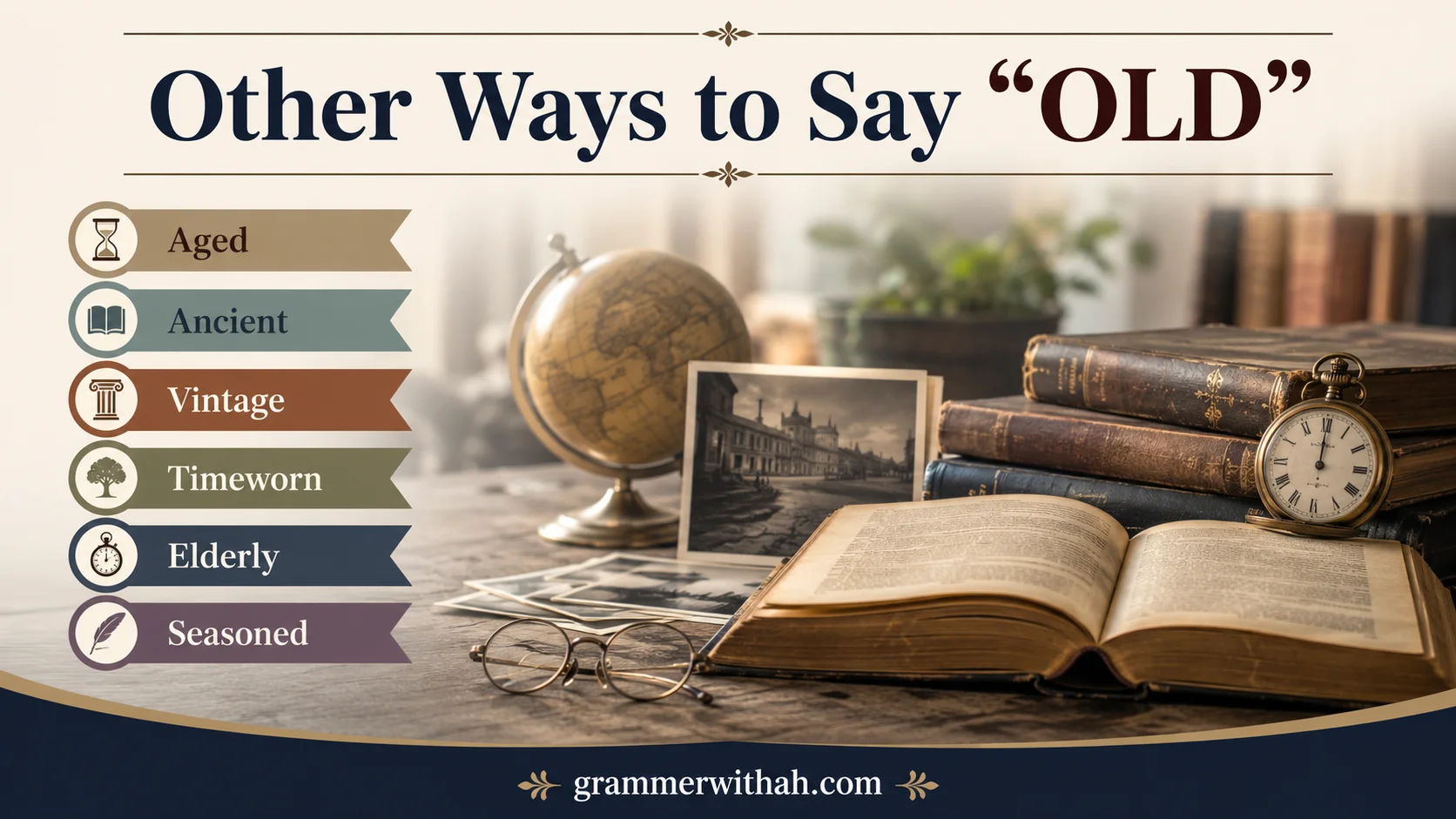
Other Ways to Say “OLD” (With Examples) can make your writing and speaking more natural by giving you better synonyms for different situations. The word old is common, but using it repeatedly can make your sentences sound repetitive. Choosing words like ancient, elderly, vintage, aged, and mature helps you match the right tone and express your ideas with greater clarity, variety, and confidence in everyday communication.
Whether you are writing blog posts, essays, business documents, or having daily conversations, knowing different words for old improves your English vocabulary and readability. Each synonym has its own meaning and works best in a specific context. With simple examples, this guide will help you communicate more precisely, avoid repetition, and choose the most suitable word for people, objects, places, history, and many other situations.
What Does “Old” Mean?
The word “Old” describes someone or something that has existed for a long time, has reached an advanced age, or is no longer new. It can refer to people, objects, buildings, ideas, or even relationships. Depending on the context, the word may sound respectful, neutral, or sometimes insensitive, making it useful to know better alternatives.
Is It Professional/Polite to Say “Old”?
Using “Old” is acceptable in many situations, but it is not always the most professional or polite choice. When talking about people, alternatives like elderly, senior, or experienced often sound more respectful. When describing objects, words such as vintage, antique, or aged can provide a more positive and accurate meaning.
Pros and Cons of “Old”
Pros
- Simple and easy to understand.
- Works in both spoken and written English.
- Fits many different situations.
- Commonly recognized by all English speakers.
Cons
- Can sound impolite when referring to people.
- May seem too general without enough detail.
- Sometimes creates an unintended negative impression.
- Better alternatives often sound more professional and thoughtful.
“Old” Synonyms
- Elderly
- Senior
- Aged
- Mature
- Vintage
- Antique
- Ancient
- Historic
- Timeworn
- Weathered
- Seasoned
- Experienced
- Long-standing
- Traditional
- Classic
- Well-aged
- Former
- Outdated
- Antiquated
- Old-fashioned
- Established
- Veteran
- Ageing
- Centuries-old
- Generational
1. Elderly
Scenario Meaning: Elderly describes a person who has reached an advanced age and is often used respectfully when referring to older adults in polite conversations.
Examples:
- The elderly gentleman shared wonderful stories that inspired everyone during the family gathering.
- Our community always provides additional support for elderly residents who need daily assistance.
- She kindly helped an elderly woman carry several heavy shopping bags across the busy street.
- The hospital offers excellent medical services designed especially for elderly patients with special healthcare needs.
- Everyone greeted the elderly couple warmly because they had been respected community members for many decades.
Tone: Respectful, Polite, Caring
Details Explanation: Elderly is widely used in respectful conversations and professional writing when referring to older people. It emphasizes age while maintaining kindness, dignity, and consideration in communication.
Best Use: Use elderly when discussing older adults respectfully in formal, medical, or everyday conversations.
2. Senior
Scenario Meaning: Senior refers to a person of older age and often highlights respect, experience, or a higher stage of life in positive ways.
Examples:
- The company organized a special event to celebrate its valued senior employees and their achievements.
- Many senior citizens enjoy participating in educational programs that encourage lifelong learning and meaningful friendships.
- Our neighborhood built a comfortable center where senior residents can socialize and stay active together.
- Every senior member contributed valuable knowledge during the important planning meeting with younger colleagues.
- The city introduced additional transportation services to make traveling easier for senior citizens every day.
Tone: Professional, Respectful, Friendly
Details Explanation: The word senior is commonly preferred because it sounds more positive, professional, and respectful than simply saying old when referring to people.
Best Use: Use senior in workplaces, healthcare, public services, and respectful everyday conversations.
3. Aged
Scenario Meaning: Aged describes someone or something that has existed for a long period, often emphasizing the passage of time without sounding negative.
Examples:
- The museum proudly displayed an aged document that revealed fascinating details about local history.
- His aged grandfather continued sharing valuable life lessons with every member of the growing family.
- The beautifully aged wooden table became the centerpiece of the traditional dining room.
- An aged tree provided refreshing shade for visitors throughout every season of the year.
- The chef carefully selected aged cheese because it offered a richer and more enjoyable flavor.
Tone: Neutral, Formal, Descriptive
Details Explanation: Aged often appears in formal writing, history, and product descriptions because it focuses on the passage of time instead of creating an emotional impression.
Best Use: Use aged when describing objects, food, people, or historical items in formal contexts.
4. Mature
Scenario Meaning: Mature describes someone or something that has developed fully through time, experience, or growth, often carrying a positive meaning.
Examples:
- She offered a mature opinion that helped everyone reach a peaceful and practical decision together.
- The garden became beautiful after the mature trees created natural shade across the entire area.
- His mature approach impressed every manager during the important business discussion.
- The company relied on a mature system that had proven dependable for many successful years.
- A mature understanding of the problem allowed the team to find an effective solution quickly.
Tone: Positive, Professional, Encouraging
Details Explanation: Unlike old, mature focuses on development, wisdom, and experience, making it suitable for both people and ideas in positive communication.
Best Use: Use mature when emphasizing growth, wisdom, or experience rather than age.
5. Vintage
Scenario Meaning: Vintage describes an older object that is admired because of its quality, style, or historical value rather than simply its age.
Examples:
- She proudly collected vintage dresses because each design reflected remarkable craftsmanship from previous decades.
- The café displayed beautiful vintage furniture that created a warm and welcoming atmosphere for visitors.
- My grandfather restored a vintage motorcycle that still performed exceptionally well after many years.
- Every collector admired the vintage watch because it represented timeless elegance and outstanding quality.
- The photographer preferred a vintage camera to create unique artistic images with classic character.
Tone: Positive, Stylish, Appreciative
Details Explanation: Vintage highlights beauty, quality, and lasting value, making it an excellent alternative when describing older items with admiration.
Best Use: Use vintage for clothing, cars, furniture, electronics, and collectibles that have lasting appeal.
6. Antique
Scenario Meaning: Antique describes an old object that has significant historical, cultural, or collectible value because of its age.
Examples:
- The family carefully preserved an antique clock that had been passed down through several generations.
- She purchased a beautiful antique cabinet that perfectly matched the traditional interior design.
- The museum displayed numerous antique paintings that attracted visitors from different countries every year.
- Every collector appreciated the antique coins because they represented important moments in national history.
- The beautifully restored antique mirror became the most admired decoration inside the historic home.
Tone: Respectful, Historical, Formal
Details Explanation: Antique is commonly used for valuable items that are typically many decades or even centuries old and appreciated for their historical importance.
Best Use: Use antique when referring to valuable historical objects, furniture, art, or collectibles.
7. Ancient
Scenario Meaning: Ancient describes someone or something that has existed for an extremely long time, often belonging to early history or distant civilizations with great historical importance.
Examples:
- The travelers explored an ancient temple that had remained standing through countless generations of remarkable history.
- Scientists carefully studied ancient artifacts because they revealed valuable information about early human civilizations.
- The village protected its ancient traditions and proudly shared them with younger generations every year.
- Visitors admired the ancient castle because it reflected extraordinary architecture from centuries ago.
- The professor explained how ancient cultures influenced many customs that people continue practicing today.
Tone: Historical, Formal, Respectful
Details Explanation: Ancient is commonly used for historical places, civilizations, objects, and traditions that are many centuries or thousands of years old. It emphasizes impressive age and historical significance.
Best Use: Use ancient when referring to history, archaeology, cultures, or very old landmarks.
8. Historic
Scenario Meaning: Historic describes something that is important in history because of its lasting influence, memorable events, or cultural significance.
Examples:
- The city restored the historic building to preserve its beautiful architecture for future generations.
- Tourists enjoyed visiting the historic battlefield because it represented an important national event.
- The community celebrated the historic anniversary with educational programs and cultural performances.
- Students learned valuable lessons while exploring several historic landmarks across the country.
- The government invested additional resources to protect every historic monument from future damage.
Tone: Professional, Respectful, Educational
Details Explanation: Unlike old, historic focuses on importance rather than age alone. It highlights places, events, and objects that hold meaningful historical value.
Best Use: Use historic for events, buildings, locations, and monuments with historical significance.
9. Timeworn
Scenario Meaning: Timeworn describes something that has become worn, weathered, or aged naturally after existing for many years.
Examples:
- The timeworn wooden bridge continued serving local residents despite its visible signs of age.
- His timeworn notebook contained unforgettable memories collected throughout many meaningful adventures.
- The library proudly displayed several timeworn books filled with fascinating historical knowledge.
- Everyone admired the timeworn stone walls because they reflected remarkable craftsmanship from earlier generations.
- The timeworn pathway reminded visitors of countless people who had walked there before.
Tone: Descriptive, Literary, Warm
Details Explanation: Timeworn creates a vivid picture of natural aging while suggesting character, history, and lasting beauty instead of weakness.
Best Use: Use timeworn in stories, descriptive writing, and historical descriptions.
10. Weathered
Scenario Meaning: Weathered describes something that has changed in appearance because it has been exposed to sun, rain, wind, and time for many years.
Examples:
- The weathered farmhouse still welcomed visitors with its timeless beauty and peaceful surroundings.
- His weathered hands reflected decades of honest work and unwavering dedication to his family.
- The weathered wooden fence continued standing proudly despite many difficult seasons.
- Every visitor admired the weathered lighthouse overlooking the beautiful coastline throughout the year.
- The artist carefully painted a weathered door to create a realistic countryside scene.
Tone: Descriptive, Respectful, Natural
Details Explanation: Weathered often suggests strength, experience, and endurance, making it more meaningful than simply calling something old.
Best Use: Use weathered for buildings, faces, hands, wood, and outdoor objects.
11. Seasoned
Scenario Meaning: Seasoned describes a person who has gained extensive experience, knowledge, and skill over many years.
Examples:
- The seasoned teacher inspired every student through years of dedication and professional excellence.
- Our company hired a seasoned manager to guide the growing team successfully.
- The seasoned traveler confidently planned every detail of the international journey.
- Everyone respected the seasoned engineer because of his outstanding technical expertise.
- A seasoned chef prepared each meal with remarkable creativity and consistent quality.
Tone: Professional, Positive, Respectful
Details Explanation: Instead of focusing on age, seasoned emphasizes valuable experience, making it an excellent professional alternative.
Best Use: Use seasoned when discussing professionals, leaders, or experts.
12. Experienced
Scenario Meaning: Experienced describes someone who has developed valuable knowledge and skills through years of practice and learning.
Examples:
- The experienced doctor quickly recognized the patient’s condition and recommended effective treatment.
- Every experienced employee willingly shared practical advice with newly hired team members.
- The company trusted an experienced consultant to improve overall business performance.
- An experienced guide safely led the tourists through the challenging mountain trails.
- She became an experienced writer after publishing many successful articles over several years.
Tone: Professional, Positive, Encouraging
Details Explanation: Experienced highlights ability, confidence, and expertise, making it much more positive than referring to someone’s age.
Best Use: Use experienced for careers, skills, and professional achievements.
13. Long-standing
Scenario Meaning: Long-standing describes something that has continued successfully or existed for a very long period without interruption.
Examples:
- Their long-standing friendship remained strong despite many years of living in different countries.
- The organization maintained a long-standing tradition of helping families in need every winter.
- Our school enjoys a long-standing reputation for providing excellent education and supportive teachers.
- The business built a long-standing relationship with loyal customers through honest service.
- Every resident appreciated the long-standing community festival celebrating local culture and history.
Tone: Professional, Positive, Respectful
Details Explanation: Long-standing emphasizes continuity, stability, and lasting success rather than simply indicating something is old.
Best Use: Use long-standing for relationships, traditions, businesses, and reputations.
14. Traditional
Scenario Meaning: Traditional describes something that has been followed, practiced, or preserved through many generations because of its cultural or historical importance.
Examples:
- The family prepared a traditional meal that had been enjoyed during celebrations for many generations.
- Visitors admired the traditional clothing because it reflected the region’s rich cultural heritage.
- The school continued its traditional ceremony to honor graduating students every year.
- Many travelers enjoy learning traditional crafts from skilled local artists during cultural festivals.
- The village proudly preserved its traditional music and dances for younger generations.
Tone: Respectful, Warm, Cultural
Details Explanation: Traditional focuses on customs and practices that continue over time, emphasizing heritage instead of simply indicating age.
Best Use: Use traditional for customs, food, celebrations, clothing, and cultural practices.
15. Classic
Scenario Meaning: Classic describes something that remains valuable, stylish, or popular despite the passage of many years.
Examples:
- That classic novel continues inspiring readers with its unforgettable story and meaningful lessons.
- She chose a classic black dress because it always looks elegant and timeless.
- The restaurant became famous for serving a classic recipe loved by generations.
- Every music lover appreciates this classic song because of its lasting emotional impact.
- The designer preferred a classic style that never goes out of fashion.
Tone: Positive, Elegant, Professional
Details Explanation: Classic highlights lasting quality and timeless appeal, making it a much warmer alternative than simply saying something is old.
Best Use: Use classic for books, music, fashion, design, and popular products.
16. Well-aged
Scenario Meaning: Well-aged describes something that has become better, richer, or more valuable because it has matured over a long period of time.
Examples:
- The chef selected a well-aged cheese because it offered a deeper flavor and outstanding quality for every guest.
- Everyone admired the well-aged wooden furniture because it remained beautiful despite many decades of careful use.
- The restaurant proudly served a well-aged steak prepared with exceptional care and professional skill.
- The collector purchased a well-aged violin that produced remarkably rich and beautiful musical sounds.
- Every visitor appreciated the well-aged wine because of its balanced taste and refined character.
Tone: Positive, Professional, Appreciative
Details Explanation: Well-aged suggests that time has improved quality instead of reducing value. It often creates a positive impression when describing food, wood, or valuable items.
Best Use: Use well-aged for food, wine, wood, and valuable items that improve with age.
17. Former
Scenario Meaning: Former describes something or someone that previously existed, held a position, or belonged to an earlier period.
Examples:
- The former principal returned to the school and warmly greeted both teachers and students.
- She visited her former workplace to thank everyone for their continued friendship and encouragement.
- The building served as a former railway station before becoming a popular museum.
- Every former champion inspired young athletes through years of dedication and hard work.
- The organization honored its former leaders during the special anniversary celebration.
Tone: Professional, Neutral, Respectful
Details Explanation: Former focuses on something belonging to the past, not necessarily its age. It is common in professional and historical writing.
Best Use: Use former for positions, roles, jobs, leaders, and previous situations.
18. Outdated
Scenario Meaning: Outdated describes something that is no longer modern, useful, or current because better options now exist.
Examples:
- The company replaced its outdated software to improve productivity and strengthen online security.
- Many schools no longer use outdated teaching methods because modern approaches encourage better learning.
- His outdated phone struggled to support the latest applications and important software updates.
- The office removed several outdated machines to create additional workspace for newer equipment.
- Everyone agreed that the outdated policy required meaningful changes to meet today’s expectations.
Tone: Neutral, Professional, Critical
Details Explanation: Outdated emphasizes that something is behind current standards, making it more precise than simply saying it is old.
Best Use: Use outdated for technology, policies, equipment, and systems.
19. Antiquated
Scenario Meaning: Antiquated describes something that appears extremely old and is usually considered no longer practical or suitable today.
Examples:
- The company replaced its antiquated equipment with faster and more reliable modern technology.
- Many people believe the antiquated rules should be updated to reflect today’s society.
- The office struggled because several antiquated systems slowed daily operations considerably.
- Engineers recommended replacing the antiquated machinery before it caused additional maintenance problems.
- The report suggested removing antiquated procedures to improve workplace efficiency.
Tone: Formal, Professional, Critical
Details Explanation: Antiquated usually carries a stronger meaning than outdated, suggesting that something belongs to an earlier era and no longer meets modern expectations.
Best Use: Use antiquated for systems, equipment, procedures, and technology.
20. Old-fashioned
Scenario Meaning: Old-fashioned describes something that belongs to an earlier style, tradition, or way of thinking, sometimes positively and sometimes critically.
Examples:
- She enjoys wearing old-fashioned clothing because it reflects timeless elegance and personal style.
- The café created a welcoming atmosphere with beautiful old-fashioned decorations and wooden furniture.
- His old-fashioned manners impressed everyone during the formal dinner celebration.
- Some people believe those old-fashioned ideas should be reconsidered for modern society.
- The bakery continues making old-fashioned bread using traditional family recipes.
Tone: Warm, Neutral, Traditional
Details Explanation: Old-fashioned may describe charming traditions or ideas that are no longer modern, depending on the context.
Best Use: Use old-fashioned for styles, traditions, decorations, recipes, and opinions.
21. Established
Scenario Meaning: Established describes someone or something that has existed for many years and has earned trust, stability, and recognition.
Examples:
- The established company earned customer loyalty through decades of reliable products and outstanding service.
- She became an established author after publishing many successful books over several years.
- The established charity continued supporting local families through generous community donations.
- Every established business follows professional standards that inspire customer confidence.
- The university remains an established educational institution respected throughout the country.
Tone: Professional, Positive, Respectful
Details Explanation: Established focuses on reputation and long-term success instead of simply indicating age.
Best Use: Use established for companies, organizations, professionals, and institutions.
22. Veteran
Scenario Meaning: Veteran describes a person with many years of experience, knowledge, and proven ability in a particular profession or activity.
Examples:
- The veteran journalist reported important stories with remarkable accuracy and professionalism.
- Everyone respected the veteran firefighter because of his years of dedicated public service.
- The veteran coach inspired young athletes through valuable advice and practical experience.
- Our company welcomed a veteran engineer to lead the new technical project successfully.
- The audience applauded the veteran performer after an unforgettable stage performance.
Tone: Professional, Respectful, Admirable
Details Explanation: Veteran highlights experience, achievement, and expertise, making it a respectful alternative for people.
Best Use: Use veteran for professionals, employees, athletes, artists, and service members.
23. Ageing
Scenario Meaning: Ageing describes someone or something that is gradually becoming older over time through the natural process of aging.
Examples:
- The ageing bridge required careful repairs to remain safe for public transportation.
- Many communities provide valuable support for their ageing population through healthcare services.
- The ageing building continued attracting visitors because of its beautiful architecture.
- Scientists continue researching healthy ageing to improve quality of life for older adults.
- Every ageing tree added beauty and shade to the peaceful public park.
Tone: Neutral, Caring, Professional
Details Explanation: Ageing describes the ongoing process of becoming older while maintaining a respectful and natural tone.
Best Use: Use ageing for people, buildings, structures, and natural environments.
24. Centuries-old
Scenario Meaning: Centuries-old describes something that has existed for hundreds of years and remains historically or culturally important.
Examples:
- The tourists admired a centuries-old fortress overlooking the beautiful coastline throughout the afternoon.
- The museum carefully preserved a centuries-old manuscript filled with historical knowledge.
- Every visitor appreciated the centuries-old cathedral because of its remarkable architectural beauty.
- The village proudly protected its centuries-old traditions through annual cultural celebrations.
- Historians documented the centuries-old bridge to preserve its fascinating history.
Tone: Historical, Respectful, Educational
Details Explanation: Centuries-old clearly emphasizes extraordinary age while highlighting historical importance and cultural value.
Best Use: Use centuries-old for buildings, monuments, traditions, and historical objects.
25. Generational
Scenario Meaning: Generational describes something that is shared, preserved, or passed down through several generations within families or communities.
Examples:
- Their generational family recipe remained a treasured tradition during every holiday celebration.
- The farm represented a generational business successfully managed by the same family for decades.
- Many valuable skills were preserved through generational teaching and patient guidance.
- The community celebrated its generational traditions with music, food, and cultural performances.
- Parents proudly shared generational stories to help children appreciate their family history.
Tone: Warm, Respectful, Meaningful
Details Explanation: Generational emphasizes continuity, heritage, and lasting family or community traditions instead of simply referring to age.
Best Use: Use generational for traditions, businesses, stories, customs, and family heritage.
FAQs :
1. What are some common other ways to say “old”?
Some popular alternatives include ancient, aged, elderly, vintage, mature, historic, seasoned, antique, and classic. The best choice depends on the context and tone of your writing.
2. Is it polite to use “old” for a person?
It can be, but words like elderly, senior, or older adult are often considered more respectful and appropriate when referring to people.
3. When should I use “vintage” instead of “old”?
Use vintage for valuable or stylish items from an earlier period, such as clothing, furniture, or cars. It usually has a positive meaning.
4. What is the difference between “ancient” and “old”?
Ancient refers to something from a very distant past, while old simply means something has existed for a long time or has reached an advanced age.
5. Why should I learn other ways to say “old”?
Learning different synonyms helps improve your vocabulary, reduces repetition, and makes your writing and speaking more interesting, accurate, and engaging.
Conclusion :
Using other ways to say “old” allows you to communicate with greater clarity, variety, and confidence. Whether you are describing people, objects, places, history, or experiences, choosing the right synonym can make your message more natural and meaningful. By understanding when to use words like ancient, aged, elderly, vintage, or seasoned, you can improve your English vocabulary, avoid repetition, and create stronger, more engaging writing in every situation.