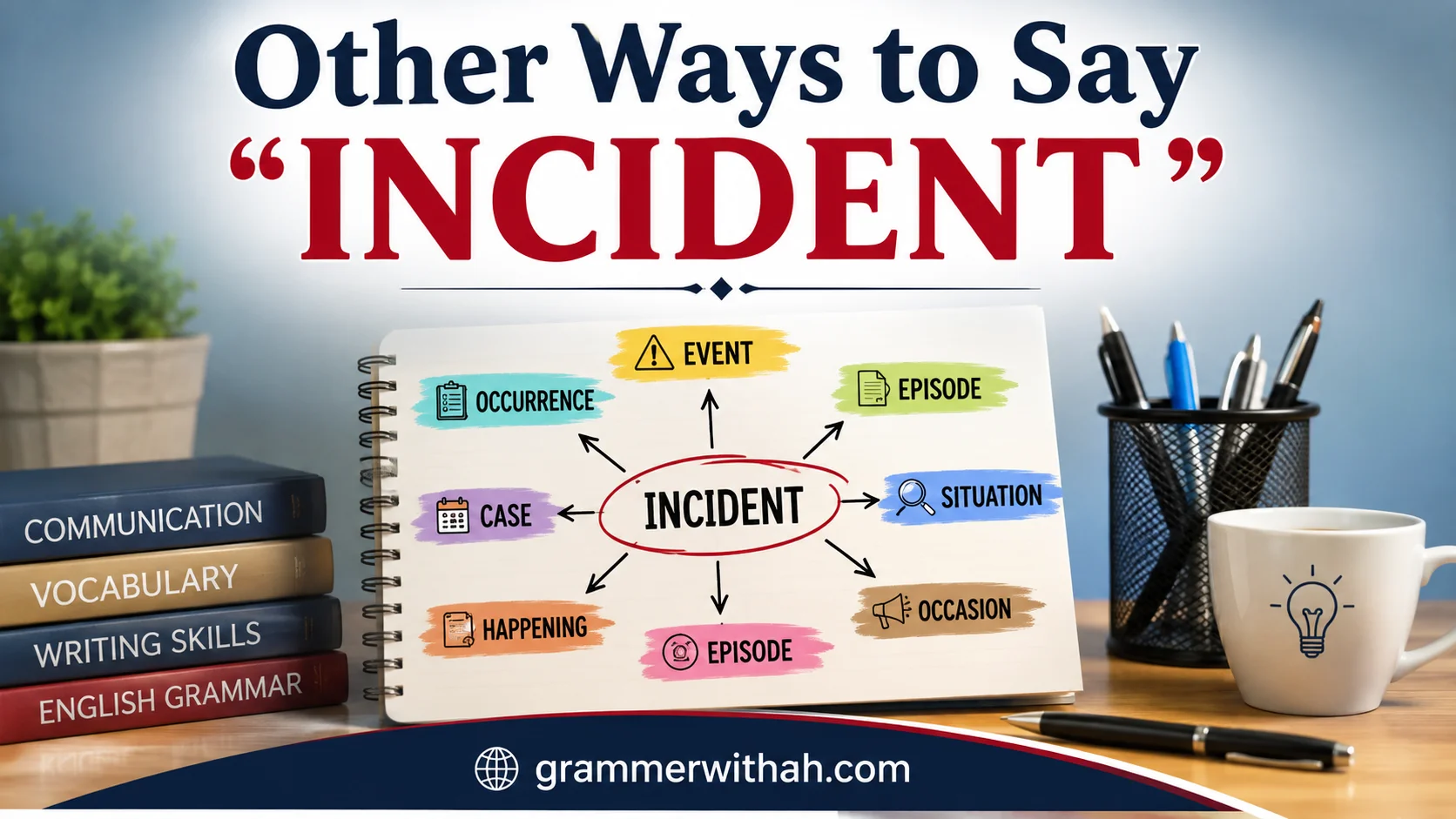
Other Ways to Say “Incident” (With Examples) is a helpful guide for anyone who wants to improve communication with the right words. Using the best alternative in the correct context makes your writing and conversation more clear, natural, and meaningful. This article shares different ways to replace incident, helping you build a stronger vocabulary with simple explanations and practical examples.
The word incident can describe an event, occurrence, accident, or mishap, depending on the meaning and situation. Choosing the correct term, expression, or phrase helps you explain ideas, express emotions, and write with greater clarity and care. From reports to everyday conversations, these alternatives make your English sound more natural, thoughtful, and professional while keeping the original meaning easy to understand.
What Does “Incident” Mean?
Incident means something that happens, often something unexpected, noticeable, or important enough to mention. It can describe a small event, a problem, a mistake, or a more serious situation, depending on the context. The word is common, but the meaning changes a little based on how people use it in daily speech, writing, or formal communication.
Is It Professional or Polite to Say “Incident”?
Yes, incident is usually professional, polite, and widely understood. It is often used in workplaces, schools, reports, and formal conversations because it sounds neutral and clear. Still, sometimes another word may feel softer, warmer, or more specific, especially when you want to show care or avoid sounding too harsh.
Pros and Cons of Saying “Incident”
Pros: The word incident is clear, neutral, and useful in many formal settings. It helps people describe something without adding too much emotion, which can be helpful in reports or serious conversations.
Cons: Sometimes incident can sound a little cold, vague, or distant. In personal conversations, a softer or more specific word may feel kinder and more thoughtful.
“Incident” Synonyms
- Occurrence
- Event
- Episode
- Happening
- Situation
- Case
- Matter
- Affair
- Accident
- Mishap
- Development
- Circumstance
- Issue
- Concern
- Problem
- Emergency
- Disturbance
- Altercation
- Encounter
- Experience
- Setback
- Turn of Events
- Unexpected Event
- Isolated Case
- Unfortunate Event
1. Occurrence
Scenario Meaning: An occurrence is something that happens, especially when it is worth noticing, mentioning, or recording in a clear and simple way. It often sounds neutral, formal, and calm in writing.
Examples:
- The occurrence happened suddenly, and everyone stopped to understand what was going on.
- We noted the occurrence in the report because it needed proper attention.
- That occurrence was small, but it still changed the mood of the room.
- Each unusual occurrence was carefully written down by the team.
- The officer described the occurrence in a calm and professional way.
Tone: Formal, neutral, and clear.
Details Explanation: This word works well when you want a simple and careful term that does not sound too dramatic. It is often useful in reports, notes, and official explanations where exact wording matters.
Best Use: Use occurrence when you want a polite and professional word for something that happened.
2. Event
Scenario Meaning: An event is something that takes place, and it can be small, large, planned, or unexpected, depending on the message and the situation being described.
Examples:
- The event happened quickly, and people needed time to understand it.
- We discussed the event after the meeting ended.
- That event was important because it affected several people.
- The school wrote a short note about the event for the parents.
- Everyone remembered the event because it felt unusual and serious.
Tone: Neutral, simple, and widely understood.
Details Explanation: Event is one of the easiest alternatives because it works in many different situations. It feels natural in both spoken and written English, and it can sound less heavy than incident.
Best Use: Use event when you want a flexible word that sounds easy and clear.
3. Episode
Scenario Meaning: An episode is a particular happening or moment, often one part of a larger story, pattern, or series of related events that deserve attention.
Examples:
- The episode was brief, but it caused a lot of discussion.
- We reviewed the episode carefully during the staff meeting.
- That episode showed why better communication was needed.
- The family talked about the episode with concern and patience.
- Every episode added more context to the full story.
Tone: Thoughtful, structured, and slightly formal.
Details Explanation: This word is useful when you are describing one part of a bigger experience or chain of events. It can make writing feel more organized and complete.
Best Use: Use episode when the situation is one clear part of a larger pattern.
4. Happening
Scenario Meaning: A happening is something that takes place, especially when the focus is on the fact that it occurred and drew attention from people around it.
Examples:
- The happening was unexpected, but everyone stayed calm.
- We spoke about the happening after the class ended.
- That happening made the team more careful the next day.
- People remembered the happening because it felt unusual.
- The report described the happening in simple and direct language.
Tone: Plain, friendly, and easy to understand.
Details Explanation: Happening sounds natural and conversational, so it can feel softer than more formal words. It works well when you want simple language that still tells the truth clearly.
Best Use: Use happening when you want a relaxed and easy word for something that occurred.
5. Situation
Scenario Meaning: A situation is a set of conditions or circumstances surrounding something that happened, especially when the details matter and the context needs explanation.
Examples:
- The situation became serious before anyone had time to react.
- We explained the situation carefully to avoid confusion.
- That situation needed patience, support, and clear communication.
- The manager handled the situation with care and professionalism.
- Everyone understood the situation better after the full explanation.
Tone: Neutral, careful, and practical.
Details Explanation: This word is useful when you want to describe more than just one event. It often includes the background, the conditions, and the feeling around what happened.
Best Use: Use situation when the event needs context and thoughtful explanation.
6. Case
Scenario Meaning: A case is a specific example, instance, or matter that people discuss because it has details that matter and may need attention or review.
Examples:
- The case was handled quietly and respectfully by the team.
- We examined the case before making any decisions.
- That case showed how careful planning can help.
- The report included one case that needed more review.
- Each case was treated with attention and fairness.
Tone: Professional, controlled, and serious.
Details Explanation: This word often appears in formal writing, especially when someone wants to refer to a single situation or example. It sounds clean, organized, and objective.
Best Use: Use case when you want a formal word that feels structured and precise.
7. Matter
Scenario Meaning: A matter is something that deserves attention, discussion, or care, especially when it involves an issue, concern, or important detail.
Examples:
- The matter was handled privately and with respect.
- We discussed the matter after the meeting ended.
- That matter required calm thinking and honest communication.
- The teacher treated the matter with fairness and patience.
- Everyone agreed that the matter should be resolved quickly.
Tone: Formal, gentle, and respectful.
Details Explanation: Matter is useful when you want a broad word that feels serious but not too harsh. It can sound considerate, especially in sensitive conversations.
Best Use: Use matter when you want a polite word for something important that needs attention.
8. Affair
Scenario Meaning: An affair is an event or situation, often one that involves several details, people, or concerns and may need explanation in careful language.
Examples:
- The affair was discussed calmly in the office.
- We tried to understand the affair from every side.
- That affair caused a lot of quiet concern.
- The newspaper described the affair in simple terms.
- Everyone involved wanted the affair resolved quickly.
Tone: Formal, old-fashioned, and slightly serious.
Details Explanation: This word can sound a little traditional, but it still works in writing when you want a broader term for a situation or matter. It often feels more literary than conversational.
Best Use: Use affair when you want a classic, formal word for a complicated situation.
9. Accident
Scenario Meaning: An accident is something unplanned and unwanted that happens by chance, especially when it causes damage, injury, or inconvenience.
Examples:
- The accident happened quickly, and help arrived soon after.
- We reported the accident to the proper office immediately.
- That accident made everyone more careful at work.
- The driver explained the accident with honesty and concern.
- Each accident should be reviewed so future problems can be avoided.
Tone: Serious, direct, and clear.
Details Explanation: This word is best when the incident was unplanned and possibly harmful. It is stronger than some other alternatives, so it should be used with care.
Best Use: Use accident when the event was unintended and may have caused harm.
10. Mishap
Scenario Meaning: A mishap is a small mistake, unlucky event, or minor problem that interrupts things and usually causes trouble, but not always serious damage.
Examples:
- The mishap was annoying, but it did not last long.
- We laughed later about the small mishap.
- That mishap made the trip a little harder.
- The team fixed the mishap before it grew worse.
- Everyone handled the mishap with patience and good humor.
Tone: Soft, light, and slightly casual.
Details Explanation: This word is helpful when the problem is small and you do not want the language to sound too heavy. It can also make the message feel kinder and less alarming.
Best Use: Use mishap when the problem was minor and you want a gentler word.
11. Development
Scenario Meaning: A development is a new change, update, or happening that affects the situation and may be important enough to follow, explain, or discuss.
Examples:
- The development changed the direction of the whole conversation.
- We shared the development with the team right away.
- That development brought new questions and careful thinking.
- The report included every new development from the morning.
- Each development helped people understand the situation more clearly.
Tone: Professional, forward-looking, and balanced.
Details Explanation: This word works well when something new has happened and the focus is on change rather than damage. It sounds modern and useful in news, office, and formal writing.
Best Use: Use development when the incident is really a new update or change.
12. Circumstance
Scenario Meaning: A circumstance is a condition, fact, or surrounding detail that helps explain what happened and why the event should be understood in context.
Examples:
- The circumstance made the situation harder than expected.
- We considered every circumstance before deciding what to do.
- That circumstance changed the way people responded.
- The school explained the circumstance with care and honesty.
- Each circumstance added more meaning to the full story.
Tone: Formal, careful, and thoughtful.
Details Explanation: This word is excellent when the background matters as much as the event itself. It helps people explain complexity without sounding emotional or rushed.
Best Use: Use circumstance when surrounding details are important to the meaning.
13. Issue
Scenario Meaning: An issue is a problem, concern, or matter that needs attention, especially when something has gone wrong or needs to be fixed.
Examples:
- The issue was small, but it still needed a quick response.
- We discussed the issue with honesty and respect.
- That issue created stress for several people.
- The team solved the issue before the day ended.
- Everyone wanted the issue handled in a fair way.
Tone: Practical, neutral, and very common.
Details Explanation: This is one of the most useful alternatives because it works in many settings. It sounds professional, but it is still easy for most people to understand right away.
Best Use: Use issue when the incident involves a problem that needs attention.
Read More: 25 Other Ways to Say “Brave” (With Examples)
14. Concern
Scenario Meaning: A concern is something that causes worry, attention, or careful thought, especially when people want to handle it gently and responsibly.
Examples:
- The concern was discussed in a calm and respectful way.
- We raised the concern before it became bigger.
- That concern needed a clear and honest answer.
- The manager listened carefully to every concern.
- Each concern was treated with patience and understanding.
Tone: Gentle, respectful, and thoughtful.
Details Explanation: This word is helpful when you want to show care instead of blame. It can soften the message and make it feel more human, especially in sensitive conversations.
Best Use: Use concern when you want a softer word that shows care.
15. Problem
Scenario Meaning: A problem is something difficult, unwanted, or troubling that needs to be solved, managed, or understood with attention and patience.
Examples:
- The problem appeared suddenly and needed a quick response.
- We worked together to solve the problem.
- That problem was serious enough to affect the whole group.
- The teacher explained the problem with calm clarity.
- Everyone knew the problem had to be handled carefully.
Tone: Direct, clear, and practical.
Details Explanation: This word is easy to understand, and it works when you want to speak plainly. It may sound less formal than incident, but it is often more immediate and easy to follow.
Best Use: Use problem when the incident clearly caused difficulty or trouble.
16. Emergency
Scenario Meaning: An emergency is a sudden and serious situation that needs quick action, immediate attention, or urgent help because something important may be at risk.
Examples:
- The emergency required fast action from everyone nearby.
- We called for help as soon as the emergency began.
- That emergency made the room feel tense and quiet.
- The staff followed the plan during the emergency.
- Everyone stayed focused until the emergency was under control.
Tone: Urgent, serious, and highly important.
Details Explanation: This word should be used only when the situation is truly serious. It carries more weight than many other alternatives and signals the need for immediate attention.
Best Use: Use emergency when the incident requires urgent action and care.
17. Disturbance
Scenario Meaning: A disturbance is something that interrupts peace, order, or calm, often by creating noise, confusion, or tension in a place or group.
Examples:
- The disturbance made it hard for people to stay focused.
- We noticed the disturbance from across the hall.
- That disturbance ended once everyone was calm again.
- The report mentioned the disturbance in simple terms.
- People tried to reduce the disturbance as quickly as possible.
Tone: Serious, controlled, and slightly formal.
Details Explanation: This word is good when the event caused disruption instead of just being a simple happening. It can describe noise, conflict, or general disorder in a careful way.
Best Use: Use disturbance when the incident disrupted peace or order.
18. Altercation
Scenario Meaning: An altercation is a strong disagreement or argument, especially one that feels tense, sudden, or uncomfortable for the people involved.
Examples:
- The altercation lasted only a few minutes.
- We heard about the altercation after the meeting.
- That altercation made everyone feel uneasy.
- The manager stepped in before the altercation grew worse.
- People described the altercation carefully and without exaggeration.
Tone: Serious, formal, and tense.
Details Explanation: This word is useful when the incident involved conflict or argument. It feels more formal than “fight” or “argument,” and it works well in reports or news writing.
Best Use: Use altercation when the incident involved a heated disagreement.
19. Encounter
Scenario Meaning: An encounter is a meeting, meeting-like experience, or unexpected contact with someone or something, especially when it becomes worth mentioning.
Examples:
- The encounter happened unexpectedly in the hallway.
- We spoke about the encounter after lunch.
- That encounter changed how people felt about the situation.
- The traveler described the encounter with great detail.
- Every encounter taught the team something new.
Tone: Neutral, open, and slightly reflective.
Details Explanation: This word works well when the focus is on meeting, crossing paths, or experiencing something unusual. It feels less harsh than many other alternatives and can sound thoughtful.
Best Use: Use encounter when the incident involved an unexpected meeting or contact.
20. Experience
Scenario Meaning: An experience is something a person goes through, especially when it leaves a memory, lesson, emotion, or meaningful impression behind.
Examples:
- The experience was difficult, but it taught everyone something useful.
- We talked about the experience with honesty and care.
- That experience stayed with her for a long time.
- The whole experience felt confusing at first.
- People often remember an experience because it changed their thinking.
Tone: Personal, warm, and reflective.
Details Explanation: This word is especially good when you want to focus on how someone lived through the event. It feels more human and less technical than incident.
Best Use: Use experience when the event is being described from a personal point of view.
21. Setback
Scenario Meaning: A setback is something that slows progress, creates difficulty, or pushes plans backward, especially when people were hoping things would move forward.
Examples:
- The setback delayed the team’s progress for two days.
- We handled the setback with patience and focus.
- That setback was disappointing, but not impossible to fix.
- The company recovered after the setback.
- Every setback gave the team a chance to improve.
Tone: Practical, serious, and forward-looking.
Details Explanation: This word is useful when the incident caused delay or failure, but not total loss. It gives a clear sense of difficulty without sounding dramatic or emotional.
Best Use: Use setback when the incident slowed progress or caused temporary trouble.
22. Turn of Events
Scenario Meaning: A turn of events is a change in what happens next, especially when the direction of the situation shifts in a surprising or important way.
Examples:
- The turn of events surprised everyone in the room.
- We did not expect that turn of events.
- The turn of events made the story more serious.
- That turn of events changed the plan completely.
- Each turn of events brought a new question to discuss.
Tone: Narrative, interesting, and flexible.
Details Explanation: This phrase works well when you want to describe change in a story-like way. It adds movement to your writing and helps the reader see how one moment led to another.
Best Use: Use turn of events when the incident changed the direction of the situation.
23. Unexpected Event
Scenario Meaning: An unexpected event is something that happens without warning, especially when people were not prepared for it and had to respond quickly.
Examples:
- The unexpected event caused immediate concern in the office.
- We responded calmly to the unexpected event.
- That unexpected event changed the mood of the day.
- The family remembered the unexpected event very clearly.
- Everyone tried to manage the unexpected event with patience.
Tone: Clear, neutral, and easy to understand.
Details Explanation: This phrase is helpful when you want to explain that something happened suddenly. It sounds modern, simple, and direct, while still remaining polite and professional.
Best Use: Use unexpected event when you want a plain and careful phrase for something sudden.
24. Isolated Case
Scenario Meaning: An isolated case is one separate example or one event that is not part of a larger pattern, and it often suggests the situation may be limited.
Examples:
- The isolated case was reviewed without delay.
- We believed the isolated case would not repeat.
- That isolated case did not reflect the whole group.
- The manager treated the isolated case with care.
- People saw the isolated case as a rare problem.
Tone: Analytical, formal, and reassuring.
Details Explanation: This phrase is useful when you want to show that the situation is not common. It helps reduce fear or confusion by making the event sound limited and specific.
Best Use: Use isolated case when the incident appears rare and not repeated.
25. Unfortunate Event
Scenario Meaning: An unfortunate event is something sad, difficult, or unpleasant that happens, and the phrase often feels softer and more considerate than harsher wording.
Examples:
- The unfortunate event affected several people deeply.
- We spoke about the unfortunate event with care.
- That unfortunate event was handled with kindness and respect.
- The family needed time after the unfortunate event.
- Everyone hoped the unfortunate event would not happen again.
Tone: Gentle, sympathetic, and respectful.
Details Explanation: This phrase is useful when you want to express care without sounding cold or overly direct. It can soften the message and help the reader feel understood.
Best Use: Use unfortunate event when you want a kinder way to describe something upsetting.
FAQs :
1. What is another word for “incident”?
Some common alternatives to incident include event, occurrence, accident, mishap, episode, and situation. The best choice depends on the context.
2. Is “incident” a formal word?
Yes, incident is suitable for both formal and informal writing. However, a more specific synonym may improve clarity and make your message stronger.
3. When should I use “event” instead of “incident”?
Use event when referring to something that happened without emphasizing a problem or negative outcome. Incident is often used for unusual or significant situations.
4. What is the difference between “incident” and “accident”?
An accident is an unplanned event that usually causes harm or damage, while an incident can describe any notable happening, whether it is positive, negative, or neutral.
5. Why should I use different words instead of repeating “incident”?
Using different synonyms improves vocabulary, makes your writing more engaging, avoids repetition, and helps readers understand your message more clearly.
Conclusion :
Choosing the right alternative for incident can make your writing and communication more clear, natural, and effective. Whether you use event, occurrence, accident, mishap, or another synonym, each word has its own meaning and fits a different context. By learning these other ways to say “Incident”, you can improve your English vocabulary, express your ideas with greater clarity, and communicate with more confidence in both personal and professional situations.