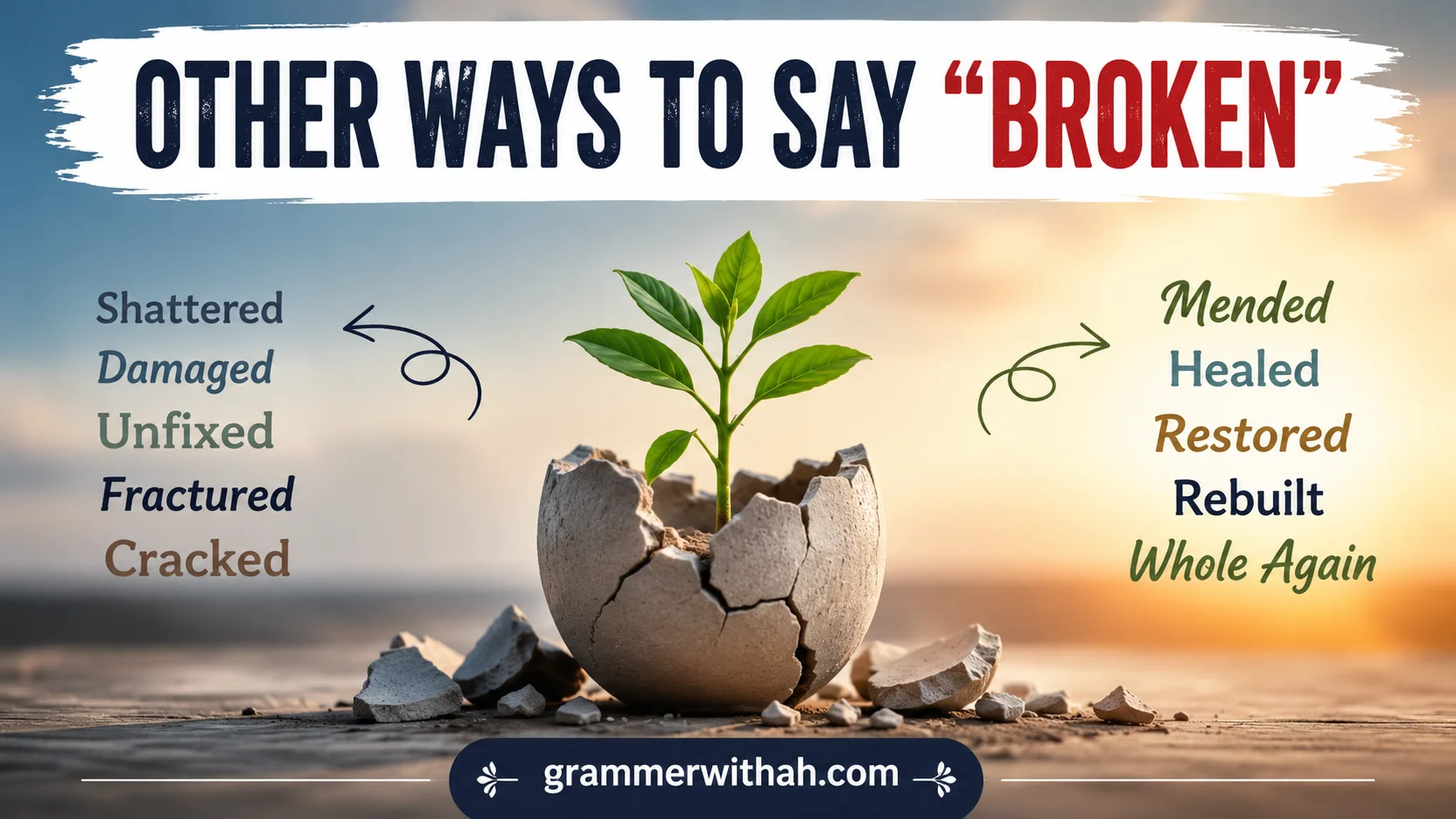
Other Ways to Say “Broken” can make your writing and conversations more natural, clear, and meaningful. Instead of repeating the word “Broken,” you can choose alternatives that better match the situation, whether you are describing a damaged object, a relationship, or emotional pain. Using the right expression improves your vocabulary and helps your message sound more thoughtful, professional, and engaging.
Choosing the correct alternative allows you to express your ideas with greater accuracy and confidence in different situations. Whether you are writing an email, creating content, or having an everyday conversation, these expressions make your communication more effective and easier to understand. Learning these synonyms also strengthens your English skills while helping you connect with readers and listeners in a more meaningful way.
What Does “Broken” Mean?
The word “Broken” describes something that has been damaged, separated, not working, or emotionally hurt. It can refer to physical objects, relationships, promises, systems, or feelings that are no longer complete or functioning properly.
Is It Professional or Polite to Say “Broken”?
Yes, “Broken” is generally polite and professional when describing damaged objects or systems. However, choosing more specific words like damaged, faulty, or malfunctioning often sounds clearer and more professional depending on the situation.
Pros and Cons of Saying “Broken”
Pros
- Easy for everyone to understand.
- Works in both casual and professional conversations.
- Clearly describes something that no longer works correctly.
Cons
- Can sound too general in some situations.
- May sound harsh when describing emotions or relationships.
- More specific alternatives sometimes communicate the meaning better.
“Broken” Synonyms
- Damaged
- Destroyed
- Faulty
- Cracked
- Shattered
- Fractured
- Defective
- Malfunctioning
- Worn Out
- Ruined
- Torn
- Impaired
- Out of Order
- Dysfunctional
- Inoperative
- Busted
- Split
- Crushed
- Bent
- Weak
- Injured
- Unusable
- Disconnected
- Wrecked
- Unsound
1. Damaged
Scenario Meaning: Something that has suffered harm or physical damage but may still be repaired or used with effort.
Examples:
- The package arrived damaged, but the company quickly sent a replacement without any additional charges.
- The heavy rain left several important documents damaged before they could be safely stored indoors.
- His reputation became damaged after the misunderstanding spread across the entire workplace.
- The strong wind damaged several trees throughout the neighborhood during the unexpected evening storm.
- We replaced the damaged equipment before beginning the next phase of the important project.
Tone: Neutral, Professional
Details Explanation: Damaged is a broad and useful alternative that describes something harmed without suggesting complete destruction or permanent loss.
Best Use: Use this word for objects, property, documents, or reputations that have suffered harm.
2. Destroyed
Scenario Meaning: Something that has been completely ruined or unable to be repaired because of severe damage.
Examples:
- The fire completely destroyed the old storage building before firefighters could control the dangerous flames.
- Years of neglect eventually destroyed the historic wooden bridge that once connected both villages.
- The flood destroyed several family photographs that carried priceless emotional memories for everyone.
- Careless decisions nearly destroyed the trust that existed between both longtime business partners.
- The powerful earthquake destroyed many homes and forced hundreds of families to relocate immediately.
Tone: Serious, Strong
Details Explanation: Destroyed emphasizes complete loss and is stronger than broken, making it suitable for severe situations.
Best Use: Use this expression for major damage, natural disasters, or complete destruction.
3. Faulty
Scenario Meaning: Something containing a problem, defect, or error that prevents it from working correctly.
Examples:
- The technician discovered a faulty electrical connection during the final equipment inspection yesterday.
- We replaced the faulty battery because it repeatedly caused unexpected system failures throughout the week.
- The customer returned the faulty product immediately after noticing several performance issues.
- A faulty sensor prevented the machine from completing its normal operating cycle.
- Engineers worked together to identify the faulty component before restarting production safely.
Tone: Professional, Technical
Details Explanation: This word commonly describes products, machines, or systems that have defects affecting their performance.
Best Use: Use for electronics, machines, equipment, and technical systems.
4. Cracked
Scenario Meaning: Something that has developed a visible split or line because of pressure or impact.
Examples:
- The glass became cracked after accidentally falling onto the hard kitchen floor.
- We noticed a cracked wall during the routine safety inspection of the building.
- The old phone screen looked cracked, although it continued working surprisingly well.
- The ceramic bowl became cracked while being transported between different locations.
- He carefully repaired the cracked wooden frame before hanging the family photograph again.
Tone: Neutral, Descriptive
Details Explanation: Cracked describes partial damage instead of complete destruction, making it more specific than broken.
Best Use: Use for glass, walls, screens, wood, and ceramics.
5. Shattered
Scenario Meaning: Something broken into many small pieces, or someone experiencing extreme emotional pain.
Examples:
- The mirror shattered into countless pieces after slipping from the worker’s hands.
- She felt completely shattered after hearing the unexpected and heartbreaking news.
- The strong impact shattered the window within only a few seconds.
- His confidence felt shattered after receiving repeated criticism from several important clients.
- The falling rock shattered the vehicle’s windshield during the mountain journey.
Tone: Emotional, Powerful
Details Explanation: Shattered expresses complete physical destruction or overwhelming emotional distress with stronger emotional impact.
Best Use: Use for glass, dreams, confidence, and strong emotions.
6. Fractured
Scenario Meaning: Something that has developed a break or crack, especially involving bones, materials, or relationships.
Examples:
- The athlete suffered a fractured wrist after falling during the championship match.
- Years of disagreement created a fractured relationship between the neighboring families.
- Engineers replaced the fractured pipe before additional water damage occurred.
- Doctors confirmed the patient had a fractured ankle after completing several medical examinations.
- The pressure eventually caused the fractured beam to require immediate replacement.
Tone: Formal, Professional
Details Explanation: Fractured often appears in medical, engineering, and formal discussions where precise language is preferred.
Best Use: Use for bones, pipes, structures, and relationships.
7. Defective
Scenario Meaning: Something containing a manufacturing fault that prevents proper performance or expected quality.
Examples:
- The company recalled every defective product to protect customer safety.
- Workers removed the defective parts before assembling the remaining equipment.
- A defective switch caused repeated interruptions throughout the production process.
- Customers received immediate refunds for every defective item they returned.
- Engineers carefully tested every defective component before identifying the root cause.
Tone: Professional, Technical
Details Explanation: Defective specifically refers to products with manufacturing problems rather than accidental physical damage.
Best Use: Use for products, equipment, electronics, and manufactured items.
8. Malfunctioning
Scenario Meaning: Something that is not working properly because of a technical problem, mechanical issue, or internal fault affecting normal performance.
Examples:
- The malfunctioning printer delayed several important office tasks during the busy working day.
- Engineers repaired the malfunctioning machine before production continued safely and efficiently.
- A malfunctioning elevator caused temporary inconvenience for visitors inside the building.
- The team replaced the malfunctioning computer to improve workplace productivity immediately.
- The technician carefully inspected every malfunctioning device before recommending a complete repair.
Tone: Professional, Technical
Details Explanation: Malfunctioning describes equipment or systems that operate incorrectly without necessarily being completely damaged.
Best Use: Use for machines, electronics, equipment, and technical systems.
9. Worn Out
Scenario Meaning: Something that has become old, weak, or less useful after long periods of frequent use.
Examples:
- His worn out shoes finally needed replacing after several years of daily walking.
- The worn out carpet made the entire office appear older than expected.
- We replaced every worn out part before restarting the production line safely.
- The worn out furniture reduced the welcoming appearance of the reception area.
- Their worn out equipment required constant maintenance throughout the busy season.
Tone: Casual, Neutral
Details Explanation: This expression suggests gradual damage caused by regular use instead of sudden breakage.
Best Use: Use for clothing, furniture, equipment, and tools.
10. Ruined
Scenario Meaning: Something that has become completely damaged or spoiled, making it difficult or impossible to use again.
Examples:
- Heavy rain ruined the outdoor celebration before guests had fully arrived.
- Careless handling ruined the expensive painting during transportation.
- The spilled coffee completely ruined several important business documents.
- Poor planning nearly ruined the company’s reputation with valuable clients.
- The unexpected accident ruined our carefully prepared travel plans.
Tone: Strong, Emotional
Details Explanation: Ruined highlights serious damage affecting value, usefulness, or overall quality.
Best Use: Use for plans, objects, documents, events, and reputations.
11. Torn
Scenario Meaning: Something that has been ripped or split, especially paper, fabric, or similar materials.
Examples:
- Her torn jacket needed careful stitching before she could wear it again.
- The torn page made the important instructions difficult to understand completely.
- Workers replaced the torn safety banner before opening the construction site.
- The child accidentally brought home a torn library book after school.
- We carefully repaired the torn map before beginning the hiking trip.
Tone: Neutral
Details Explanation: Torn specifically describes materials separated by ripping rather than breaking into pieces.
Best Use: Use for paper, fabric, clothing, and banners.
12. Impaired
Scenario Meaning: Something with reduced ability, strength, or normal performance because of damage or limitations.
Examples:
- Smoke significantly impaired visibility during the emergency evacuation process.
- The accident temporarily impaired the vehicle’s steering performance.
- Poor weather impaired communication between both rescue teams.
- The injury impaired his ability to participate in competitive sports.
- Technical problems impaired the network throughout the afternoon meeting.
Tone: Formal, Professional
Details Explanation: Impaired emphasizes reduced function instead of complete failure or destruction.
Best Use: Use for abilities, systems, performance, and communication.
13. Out of Order
Scenario Meaning: Something that is temporarily unavailable because it requires maintenance or repair.
Examples:
- The elevator remained out of order until the maintenance team completed repairs.
- The public restroom was out of order throughout the entire afternoon.
- Several ticket machines were out of order during the morning rush.
- The office copier stayed out of order for two working days.
- Staff immediately reported the out of order vending machine for inspection.
Tone: Professional, Informative
Details Explanation: This phrase commonly appears on public equipment that cannot currently be used.
Best Use: Use for machines, public facilities, and office equipment.
14. Dysfunctional
Scenario Meaning: Something that is not operating normally because of ongoing problems, making it unable to perform its intended purpose effectively.
Examples:
- The dysfunctional management system created unnecessary confusion throughout the entire organization during several important projects.
- Their dysfunctional communication process prevented the team from achieving its shared goals successfully.
- The company replaced the dysfunctional software after repeated technical issues affected daily operations.
- A dysfunctional relationship often requires honest conversations before trust can gradually return again.
- Everyone agreed the dysfunctional equipment needed immediate replacement before additional problems developed.
Tone: Formal, Professional
Details Explanation: This word describes something with continuous problems that prevent normal performance instead of temporary or minor damage.
Best Use: Use for systems, organizations, relationships, and processes.
Read This: 25 Other Ways to Say “Thrive” (With Examples)
15. Inoperative
Scenario Meaning: Something that is unable to function because it has stopped working or has been intentionally turned off.
Examples:
- The emergency alarm remained inoperative until trained technicians completed the required repairs successfully.
- Several parking meters became inoperative after the severe storm damaged electrical connections.
- The old generator stayed inoperative throughout the entire maintenance inspection period.
- Staff immediately reported the inoperative security camera to the maintenance department.
- An inoperative heating system made the office uncomfortable during the cold winter morning.
Tone: Formal, Technical
Details Explanation: Inoperative is a professional alternative that focuses on something being unable to function rather than physically damaged.
Best Use: Use for equipment, machines, electrical systems, and public facilities.
16. Busted
Scenario Meaning: Something that is broken or damaged, especially in casual conversations and informal situations.
Examples:
- My old bicycle is completely busted, so I need another way to reach work every morning.
- The children laughed after discovering the busted toy could no longer make sounds.
- We finally replaced the busted television after several unsuccessful repair attempts.
- His busted phone screen became difficult to read under bright sunlight.
- The mechanic quickly confirmed the busted engine required a complete replacement.
Tone: Casual, Informal
Details Explanation: Busted is commonly used in everyday English when talking about damaged objects in a relaxed conversation.
Best Use: Use for phones, vehicles, toys, and household items.
17. Split
Scenario Meaning: Something that has opened, separated, or divided because of pressure, force, or natural wear.
Examples:
- The wooden table developed a split surface after many years of regular use.
- A split water pipe caused unexpected flooding inside the building overnight.
- The old leather bag became split along one side during the journey.
- Workers repaired the split fence before the strong winds returned again.
- The heavy weight caused the split beam to require immediate replacement.
Tone: Neutral
Details Explanation: This word describes damage where something separates into parts instead of completely falling apart.
Best Use: Use for wood, pipes, leather, and construction materials.
18. Crushed
Scenario Meaning: Something that has been flattened or severely damaged because of heavy pressure or force.
Examples:
- The cardboard box became crushed during transportation because of excessive weight.
- His hopes felt crushed after receiving disappointing examination results unexpectedly.
- The accident left the front of the vehicle completely crushed beyond repair.
- Several empty cans were crushed before being placed into the recycling container.
- The heavy machinery accidentally crushed the metal frame during construction work.
Tone: Strong, Emotional
Details Explanation: Crushed can describe both physical damage and intense emotional disappointment in different situations.
Best Use: Use for objects, vehicles, metal, and feelings.
19. Bent
Scenario Meaning: Something that has become curved or misshapen after pressure, impact, or accidental force.
Examples:
- The metal rod became bent after falling from a significant height yesterday.
- We carefully straightened the bent shelf before placing heavy boxes on it.
- The accident left the bicycle wheel noticeably bent and difficult to ride safely.
- A bent key no longer fitted properly inside the office door lock.
- Workers replaced every bent support beam before reopening the building.
Tone: Neutral
Details Explanation: Bent describes a change in shape rather than complete breakage or destruction.
Best Use: Use for metal, tools, keys, and bicycle parts.
20. Weak
Scenario Meaning: Something that has lost strength or durability, making it less reliable than before.
Examples:
- The old bridge became weak after decades of continuous exposure to harsh weather.
- The weak structure required immediate reinforcement before additional damage occurred.
- Years of neglect made the wooden floor feel unusually weak under heavy weight.
- The company improved the weak security system after identifying several important risks.
- Engineers carefully repaired every weak section before approving the final inspection.
Tone: Neutral, Descriptive
Details Explanation: This word emphasizes reduced strength instead of complete damage or total failure.
Best Use: Use for structures, systems, materials, and supporting parts.
21. Injured
Scenario Meaning: Someone or something that has suffered physical harm or damage, reducing normal strength, movement, or overall condition.
Examples:
- The injured player received immediate medical attention before safely leaving the football field with assistance.
- Rescue workers carefully transported the injured hiker to the nearest hospital for proper treatment.
- The injured bird slowly recovered after receiving professional care from experienced wildlife volunteers.
- Several injured passengers remained calm while emergency teams quickly arrived at the accident scene.
- The injured employee returned to work only after receiving medical approval from the attending doctor.
Tone: Compassionate, Professional
Details Explanation: Injured is commonly used for people or animals experiencing physical harm instead of describing damaged objects.
Best Use: Use for people, animals, sports, and medical situations.
22. Unusable
Scenario Meaning: Something that cannot be used because it has become damaged, unsafe, or no longer performs its intended purpose.
Examples:
- The heavy flooding left several important office records completely unusable for future reference.
- The old laptop became unusable after repeated hardware failures affected its overall performance.
- Smoke damage made the meeting room unusable until professional cleaning had been completed.
- The broken chair was considered unusable because it could no longer support any weight safely.
- Engineers declared the damaged equipment unusable until every necessary repair had been successfully finished.
Tone: Professional, Neutral
Details Explanation: Unusable emphasizes that something has lost its practical value because it cannot safely or effectively perform its intended function.
Best Use: Use for equipment, documents, buildings, electronics, and furniture.
23. Disconnected
Scenario Meaning: Something that has become separated or no longer connected, preventing normal communication or operation.
Examples:
- The disconnected cable prevented the computer from accessing the office network successfully.
- A disconnected power supply stopped the machine from operating throughout the afternoon.
- Their disconnected communication created misunderstandings between every department within the company.
- The technician quickly repaired the disconnected wiring before restarting the production system.
- A disconnected internet connection interrupted the important online meeting unexpectedly.
Tone: Neutral, Technical
Details Explanation: Disconnected usually describes systems, devices, or relationships that no longer have a working connection.
Best Use: Use for cables, networks, electronics, and relationships.
24. Wrecked
Scenario Meaning: Something that has been severely damaged or completely ruined, often because of an accident or powerful impact.
Examples:
- The vehicle was completely wrecked after the serious highway collision during heavy rainfall.
- Strong winds wrecked several outdoor tents before the festival officially began.
- The unexpected fire wrecked the entire storage area within only a few hours.
- Careless financial decisions nearly wrecked the family’s long-term savings and investment plans.
- The powerful storm wrecked several fishing boats along the crowded coastline overnight.
Tone: Strong, Emotional
Details Explanation: Wrecked highlights extreme damage that leaves something in very poor condition or beyond practical repair.
Best Use: Use for vehicles, buildings, plans, businesses, and major accidents.
25. Unsound
Scenario Meaning: Something that is not strong, stable, or reliable, making it unsafe or unsuitable for normal use.
Examples:
- Engineers determined the old bridge was unsound after completing a detailed structural inspection.
- The inspector declared the building unsound because several supporting walls showed serious weakness.
- An unsound business strategy created unnecessary financial risks for the growing company.
- The old staircase appeared unsound, requiring immediate repairs before anyone could safely use it.
- Experts warned that the unsound foundation needed complete reinforcement to prevent future structural problems.
Tone: Formal, Professional
Details Explanation: Unsound describes something lacking sufficient strength, stability, or reliability, especially in engineering, construction, and formal writing.
Best Use: Use for buildings, structures, plans, foundations, and professional reports.
FAQs:
1. What is the best synonym for “Broken” in professional writing?
Words like damaged, faulty, malfunctioning, defective, and inoperative are excellent professional alternatives because they provide more precise meanings.
2. Which alternative works best for emotional situations?
Shattered, fractured, crushed, and ruined effectively describe emotional pain while expressing stronger feelings than the simple word broken.
3. Can “Broken” describe both objects and emotions?
Yes, broken can describe physical damage, relationships, promises, dreams, and emotional pain, depending on the context.
4. Which synonym should I use for machines or technology?
Malfunctioning, faulty, defective, inoperative, and out of order are the most suitable choices for technical situations.
5. Why should I learn different ways to say “Broken”?
Learning these alternatives improves your vocabulary, writing skills, and communication, helping you express ideas more accurately and confidently.
Conclusion:
Using other ways to say “Broken” helps your writing and conversations sound more natural, clear, and meaningful. Whether you are describing a damaged object, a technical issue, a relationship, or an emotional situation, selecting the most appropriate synonym improves understanding and matches the context more accurately. Building a stronger vocabulary also makes your communication more professional, engaging, and effective in both personal and workplace settings.